
To be fortunate enough to be able to visit Thailand, to eat in Thailand, is a deep dive into a rich, many textured, very old culture containing flavors and colors that go far beyond the familiar spectrum. Given our limited time on this earth, and the sheer magnificence, the near limitless variety of sensory experiences readily available, you don’t want to miss any of it.
Anthony Bourdain
Hello at last, dear Reader! I am sorry to leave you hanging for so long. The last month has been full of adventure but we have fallen behind on the blog for good reasons. Steffi’s job search and a fun-filled family Covid episode have both completed with happy results – and now’s the time for catching up.
Unfortunately the next few posts will be rushed and brief, the writing will be shoddy jotted notes, and I won’t do you or the places we’ve visited any justice. If it’s true that pictures are worth a thousand words, you won’t miss much: I hope the photos at least give you a feel for the place. We will circle back and polish these posts, I promise.
Our last post left you in Bangkok: our next stop is Chiang Mai in the north of Thailand. The city is the beating cultural heart of Thailand, famous for its history and food – and we were here for something special. At the end of the monsoon season (officially, the full moon of the twelfth month in the Thai lunar calendar – usually in November), the Thais celebrate Loy Krathong, the lighting and floating of river lanterns to thank Khongkha, the goddess of water. At the same time, in northern Thailand they have a completely separate celebration, Yi Peng, which is an annual full moon festival where people in their thousands light and launch paper lanterns into the sky. With both festivals running in parallel, Chiang Mai becomes a city of lights, lanterns, dreamers and pyromaniacs.
It’s also a city of wats, or temples. There are twenty-two wats in the old town – less than one square mile – and over 300 in the Chiang Mai district. It’s a great place to immerse yourself in Buddhist and Lanna culture and history, as well as being a bustling modern city with an astonishing variety of food, clothes, crafts and coffee to explore.
Flavours of Chiang Mai
Thailand was famously one of celebrity chef Anthony Bourdain’s favourite destinations – and Chiang Mai was a city he kept returning to. Night markets are dotted around the city and around every corner is something delicious and surprising.
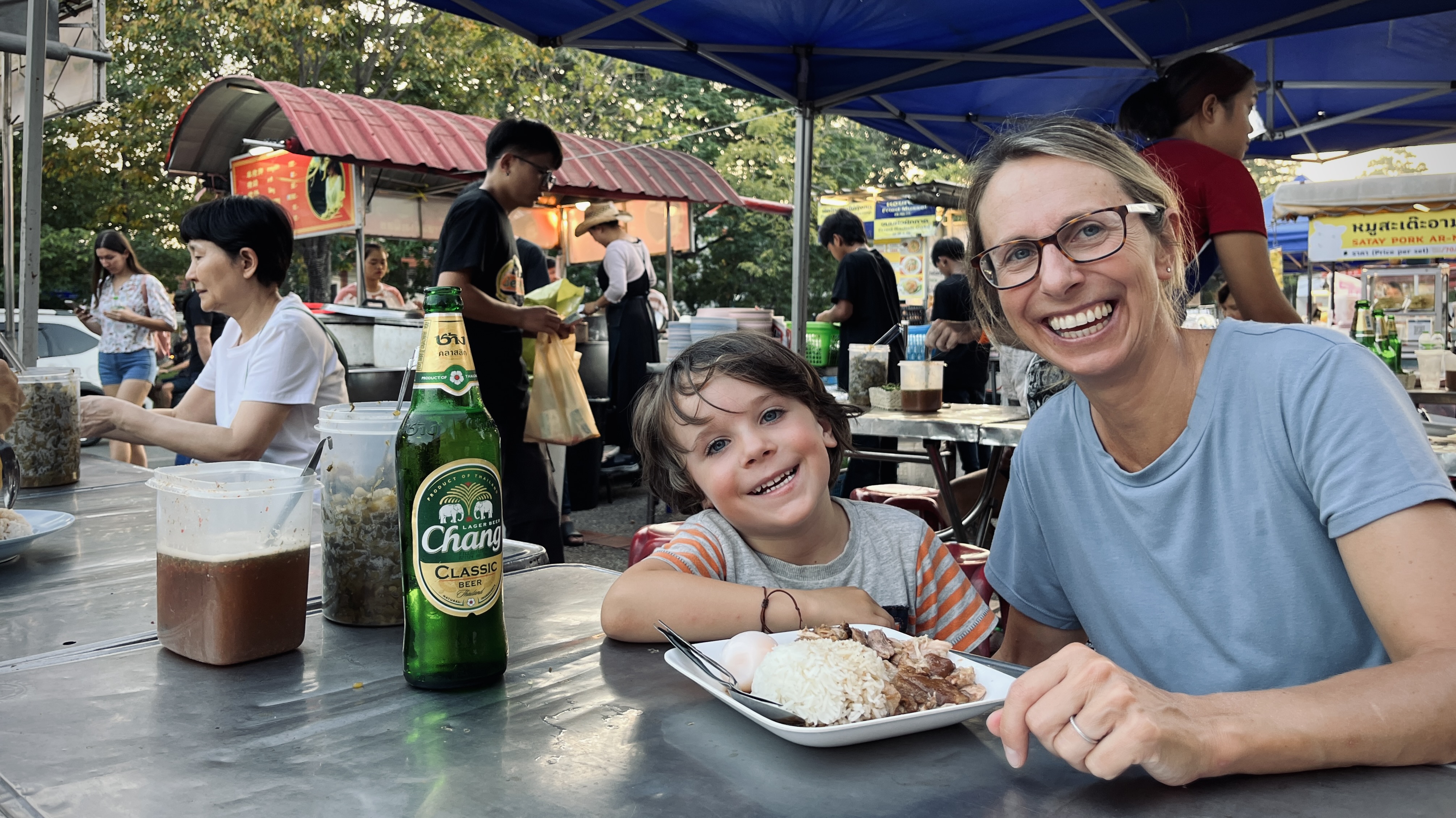
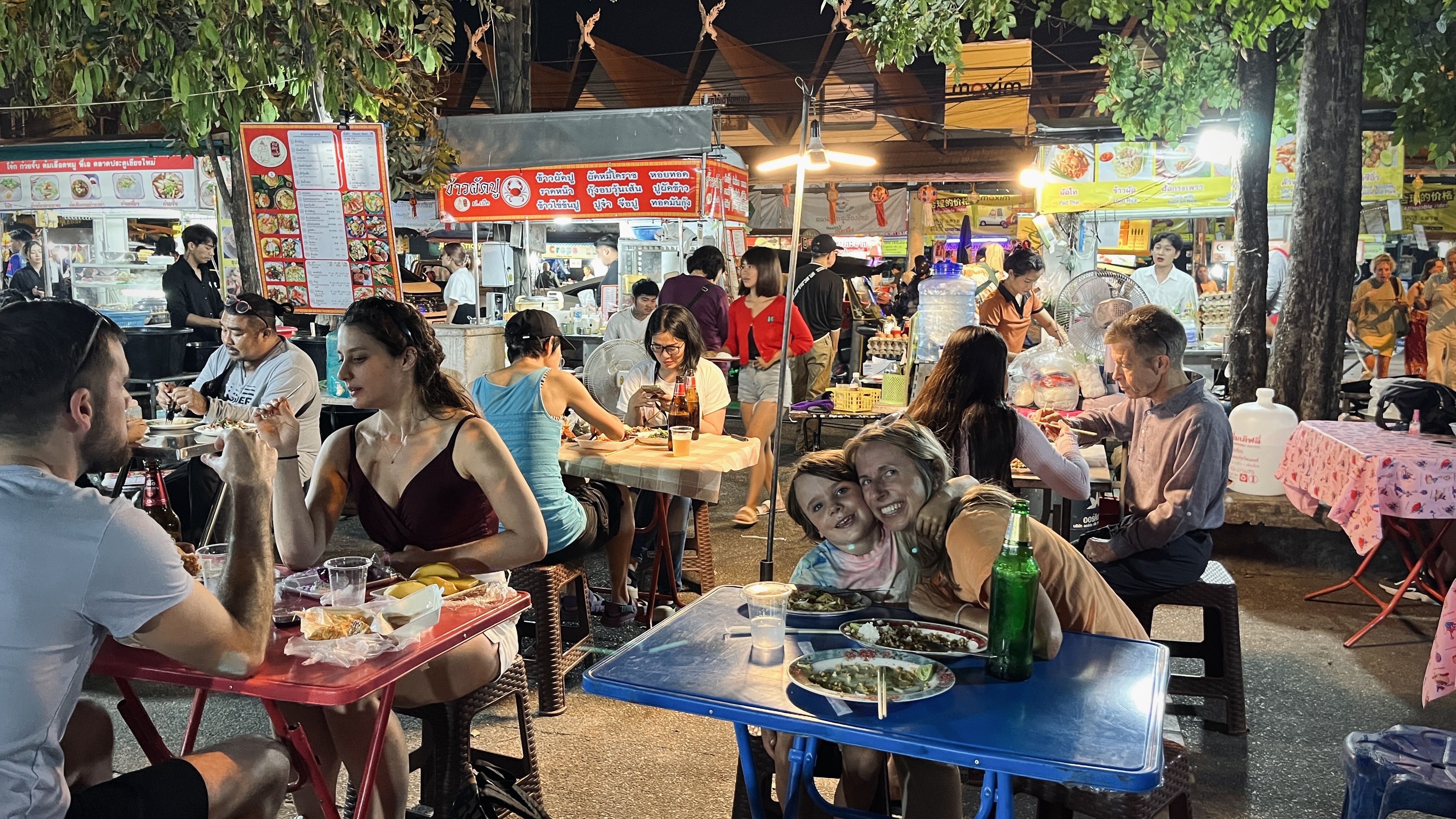
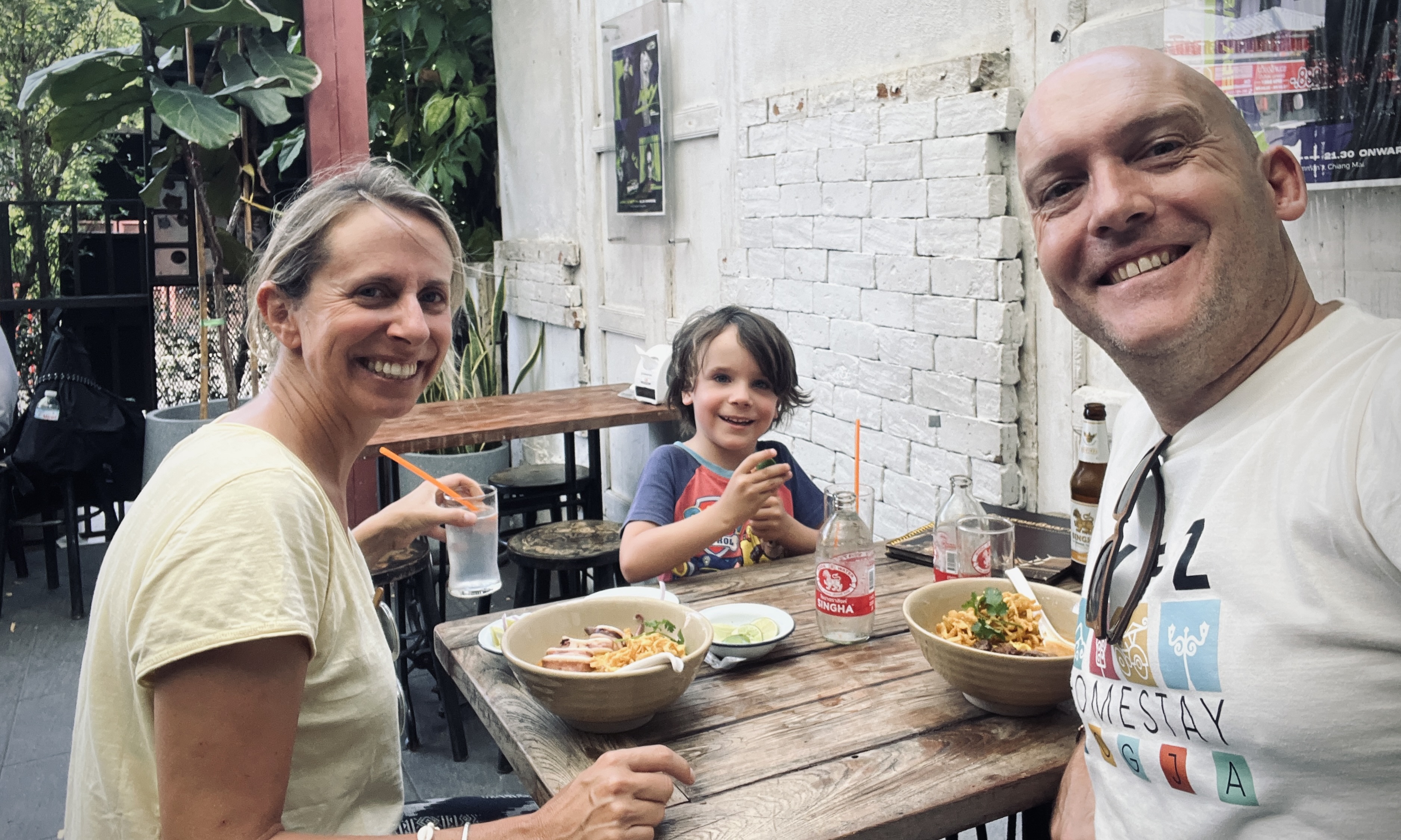
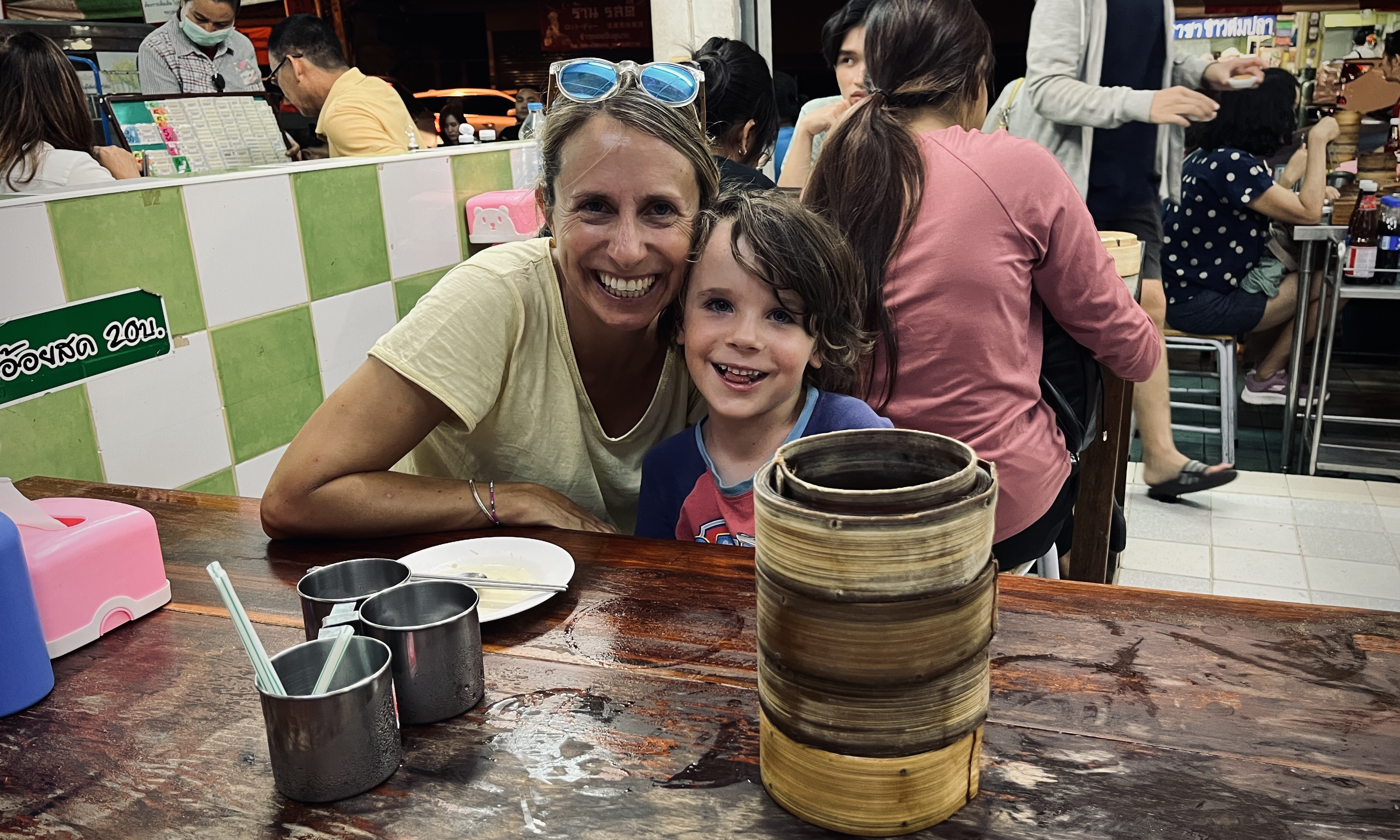
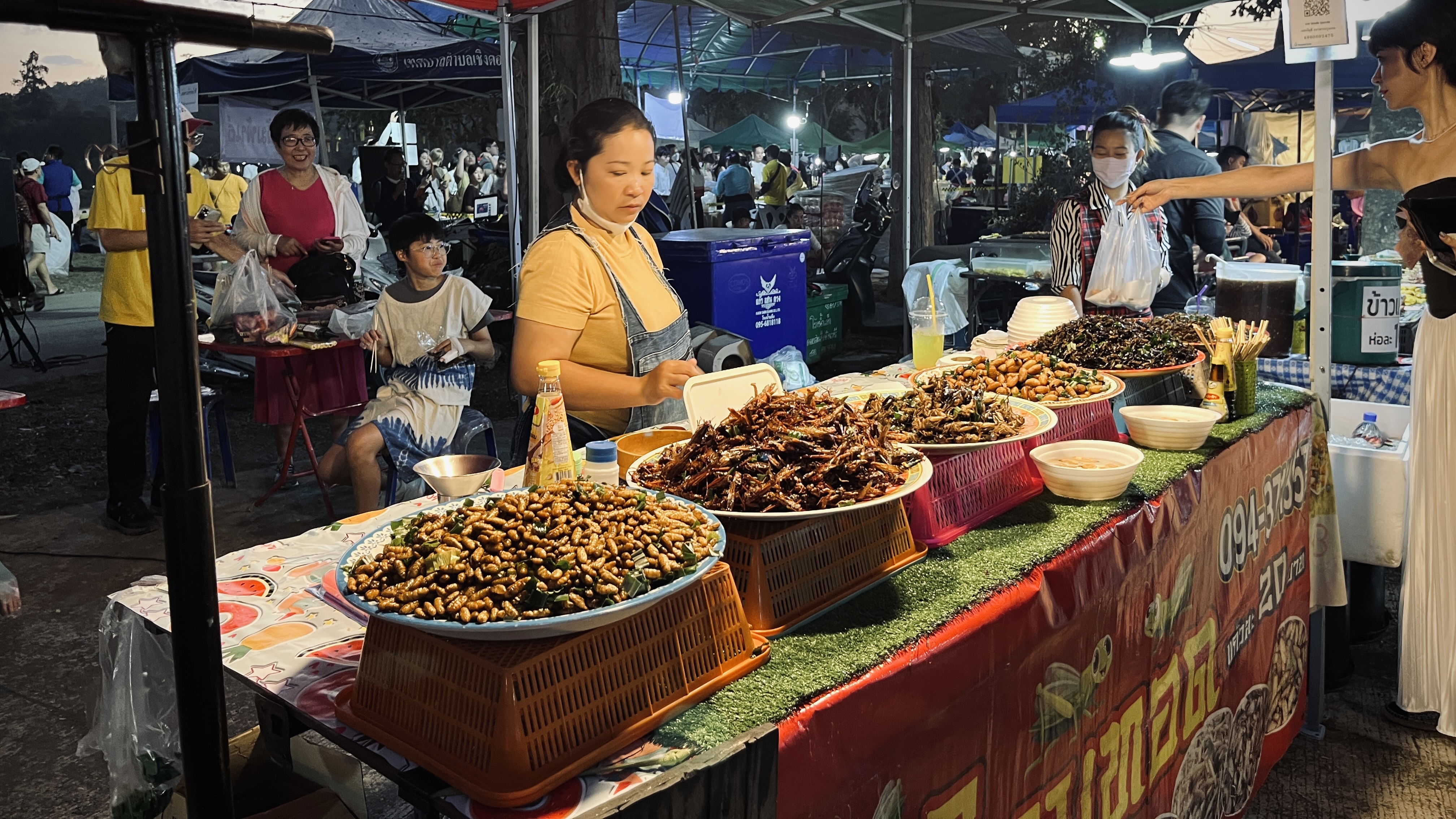
We loved the food so much, Steffi signed us up for a cooking class …
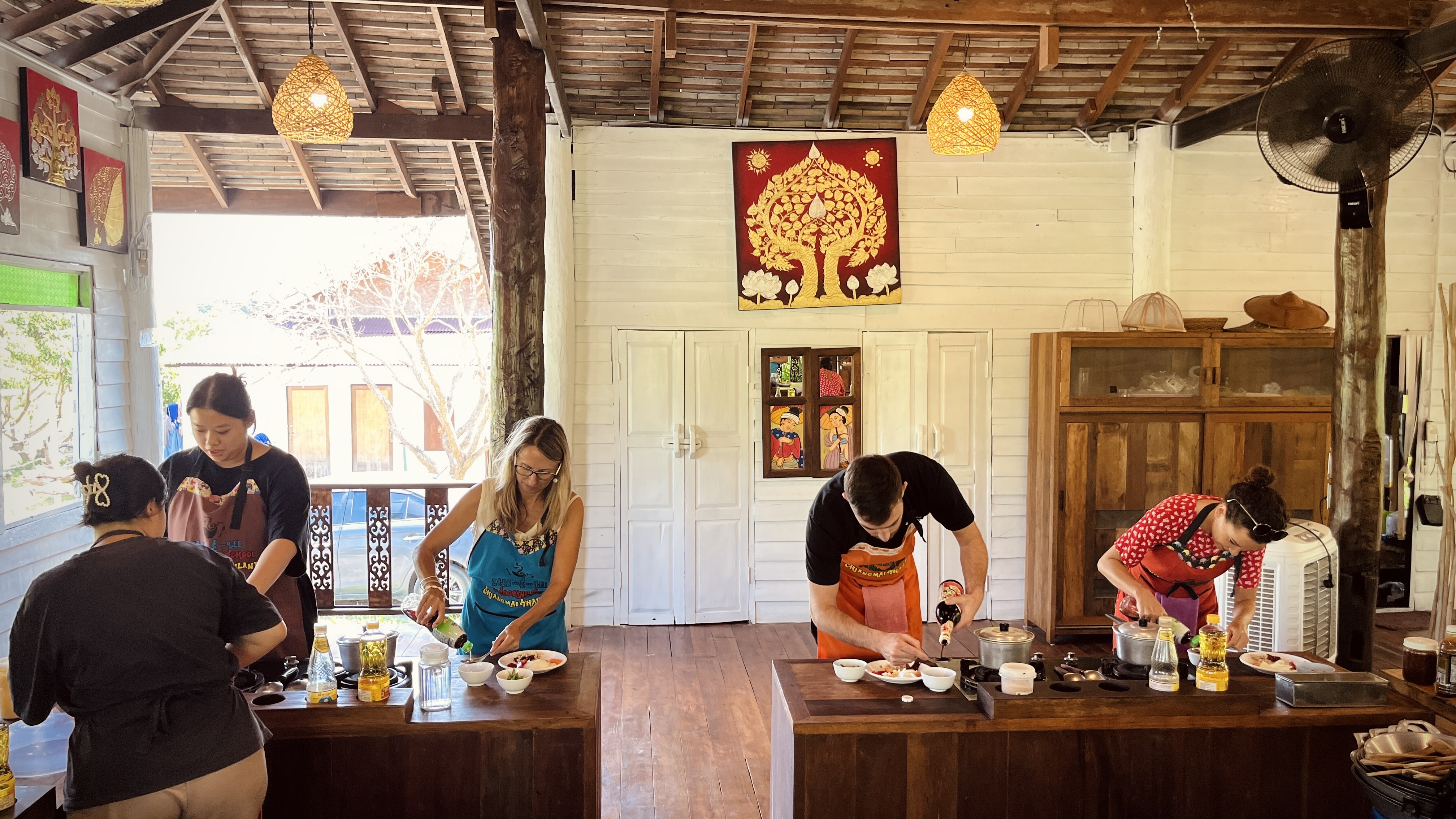
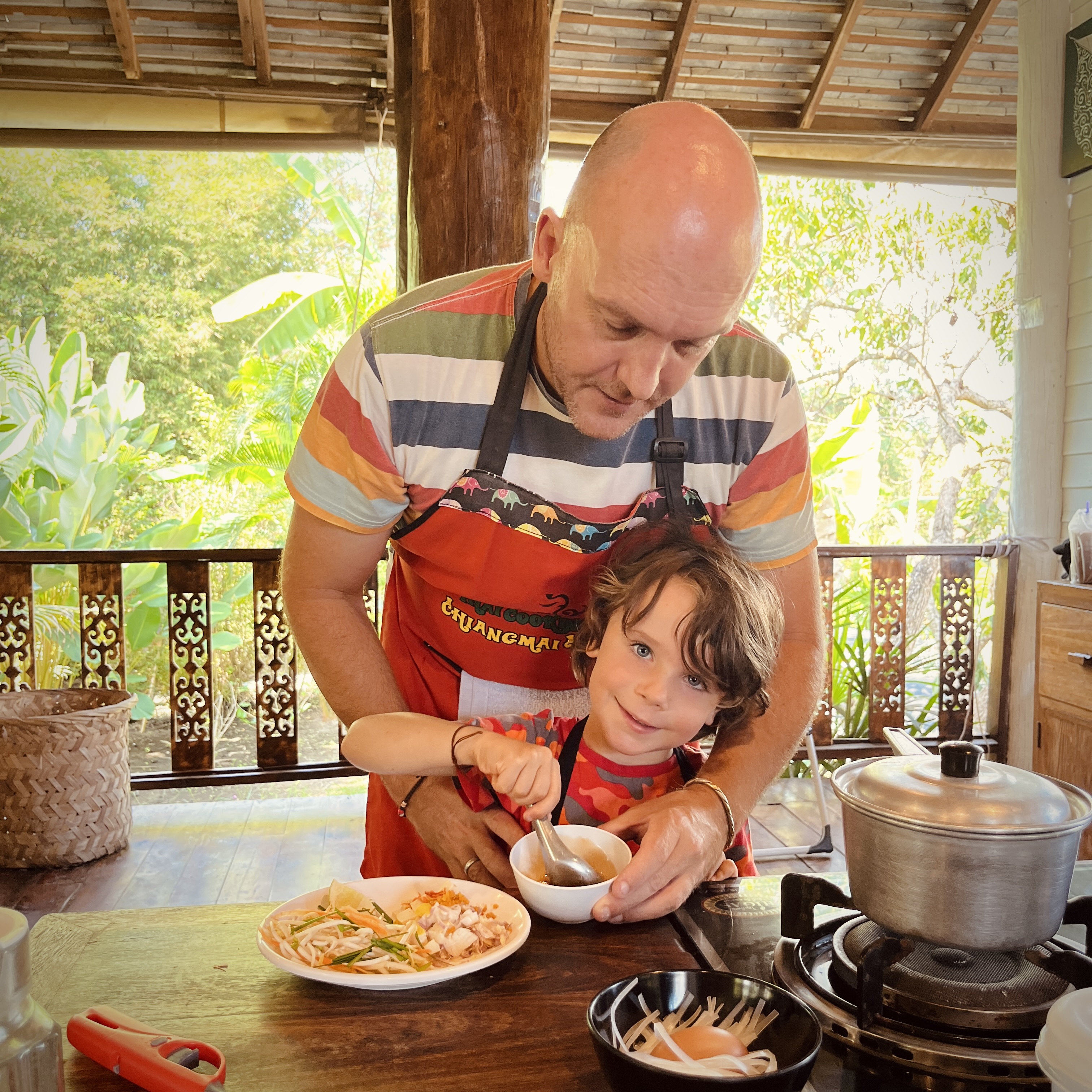
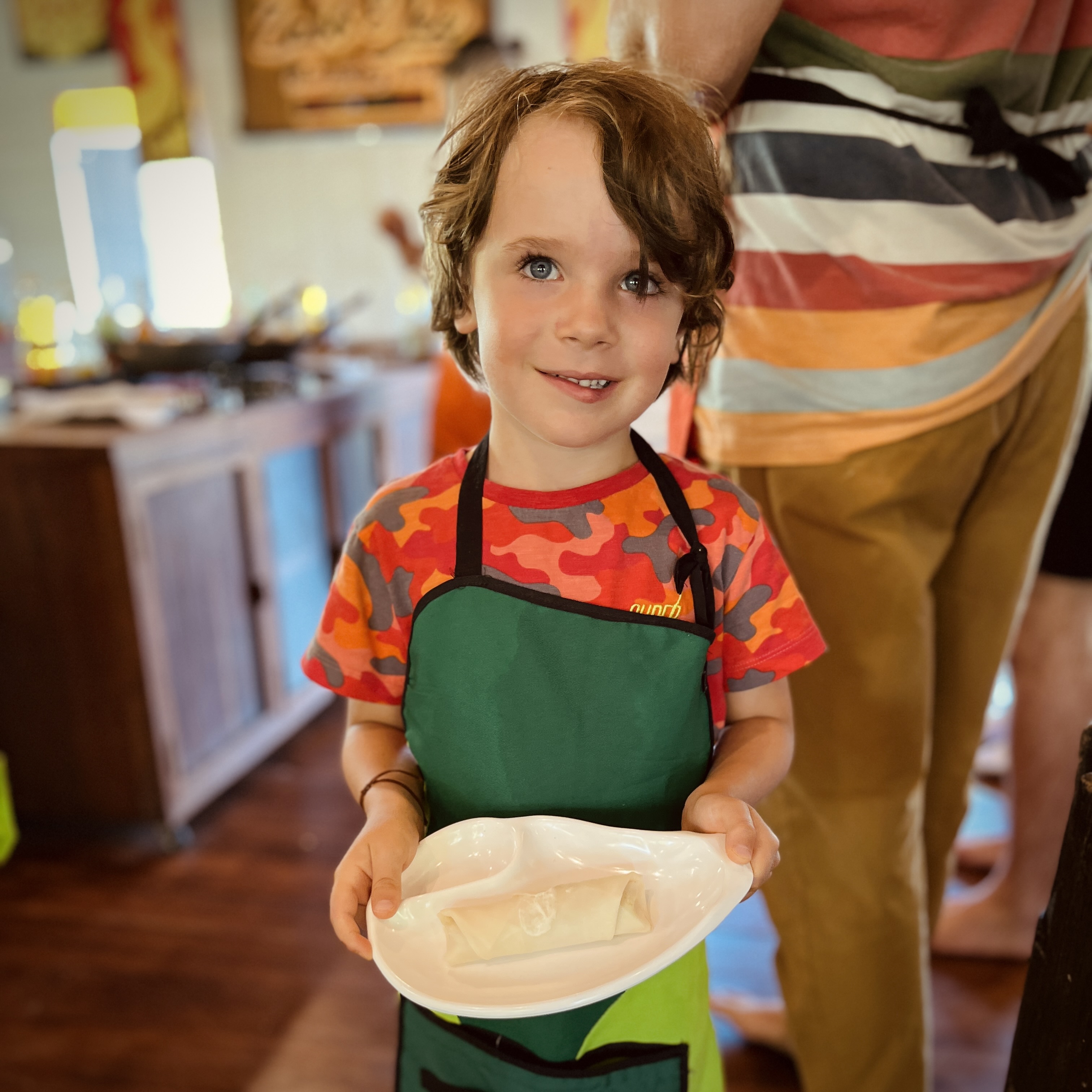
For a more polished and poetic snapshot of the city’s food culture, here’s Anthony Bourdain: A Cook’s Tour – Thailand – Chiang Mai
Around the city
We spent most of our time exploring the square mile of the old city, full of history and wats and bars and cafes.
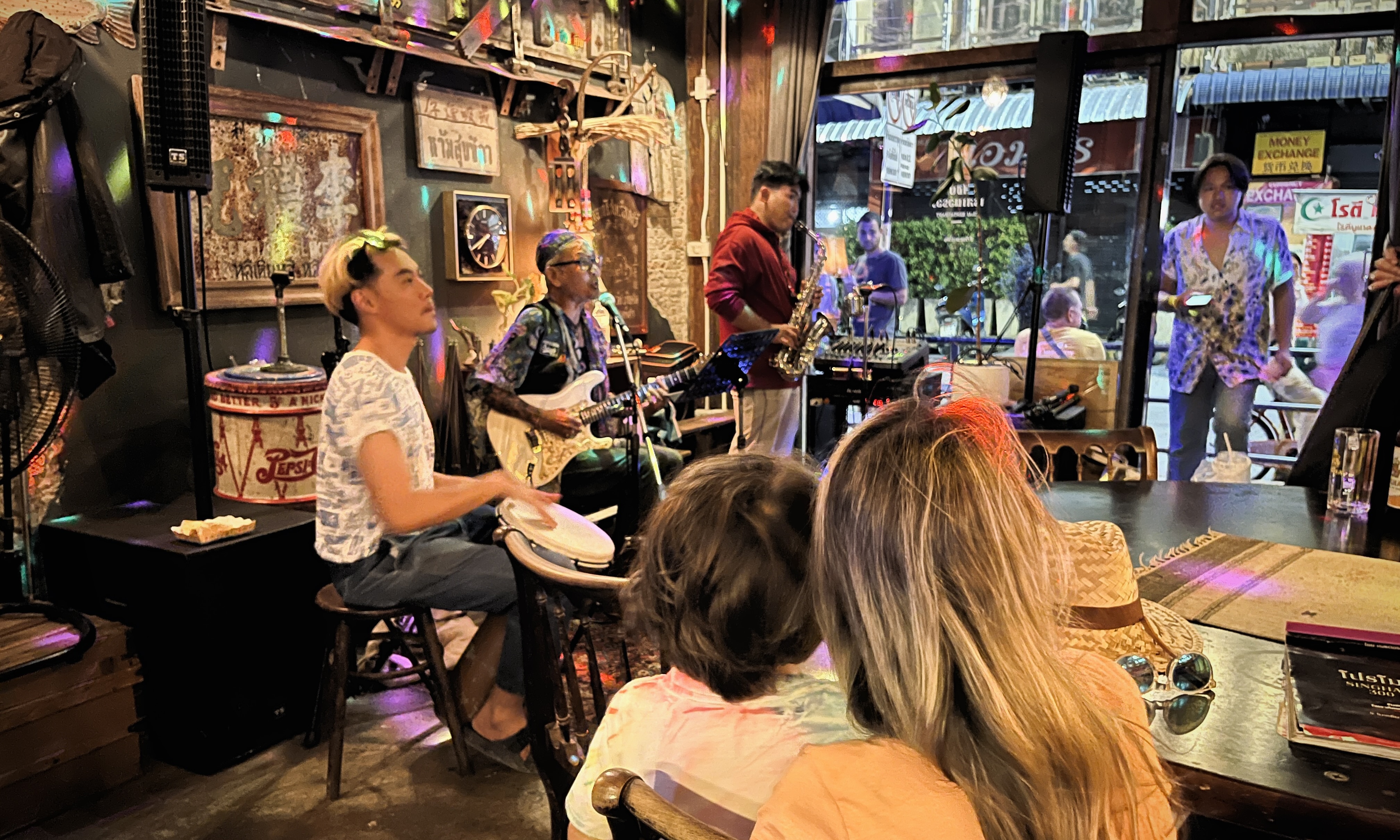
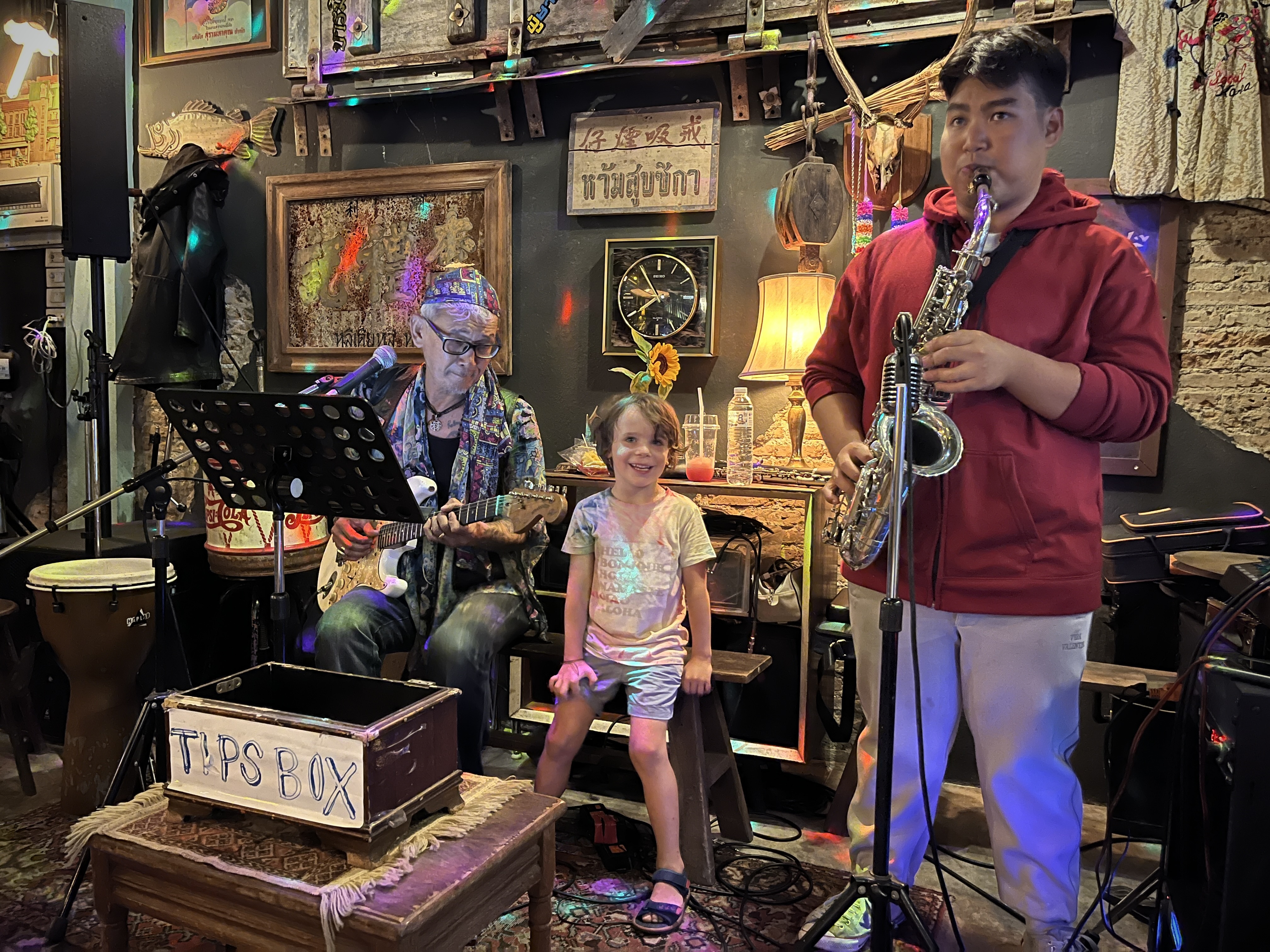
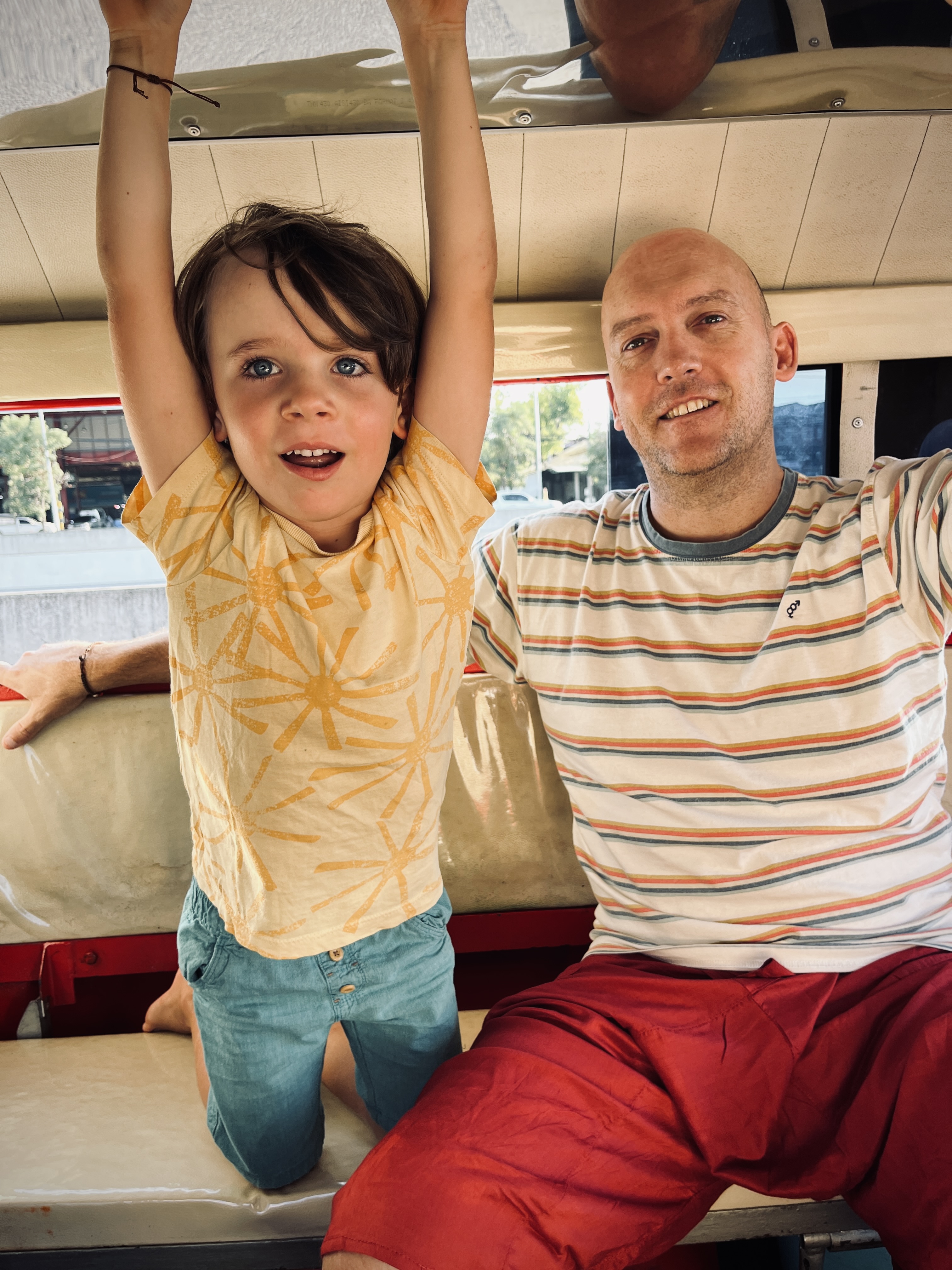
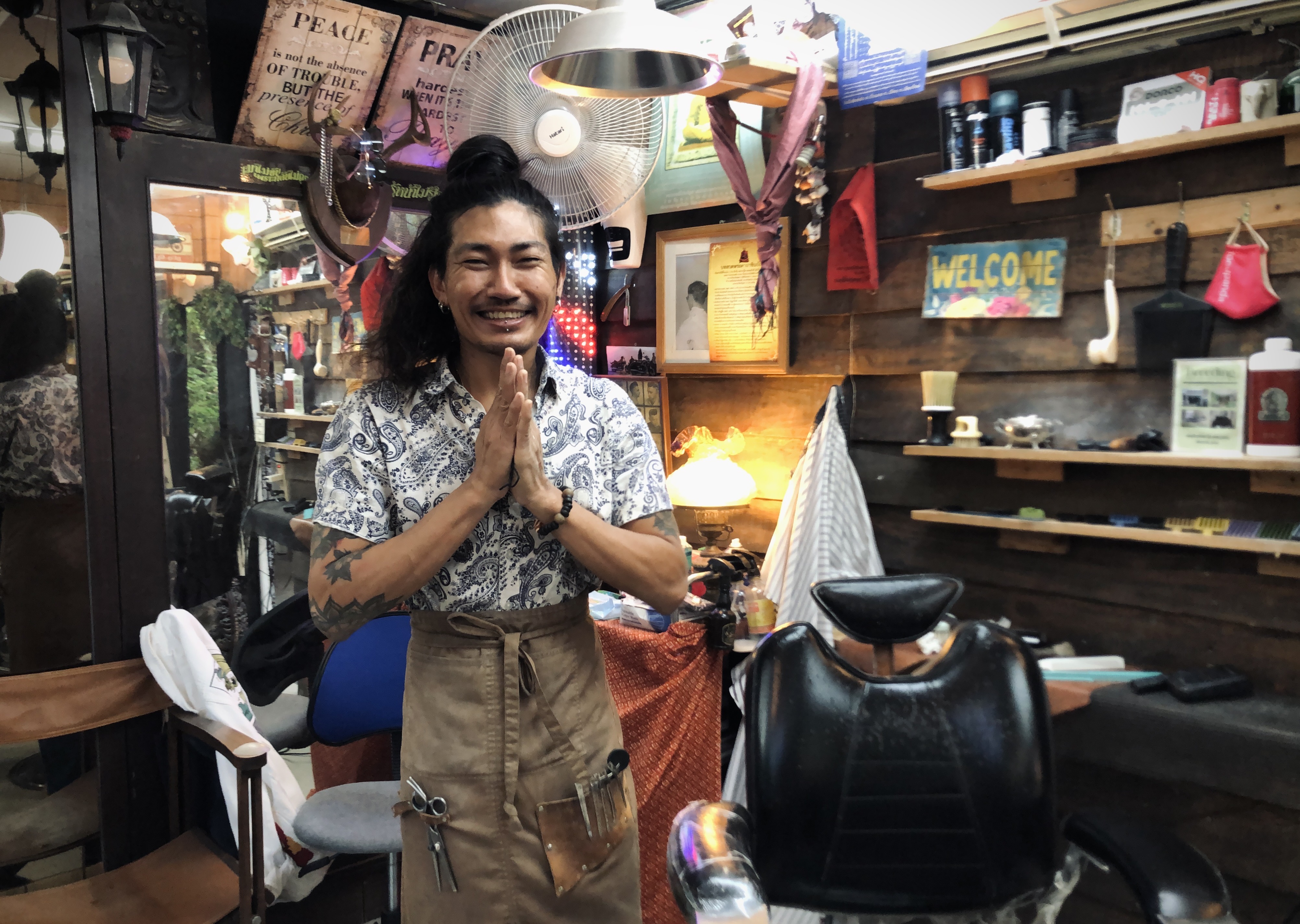
After a month on the road in steamy Indonesia, my hair clippers were rusted through. I discarded them in Bangkok like the rusty dead weight they were, and since then the itinerary for every town or village has included a visit to the local barber. In Chiang Mai I found Chat, a muay thai fighter and a tattoo artist. With those credentials and with a sharp implement in his hands, probably anyone’s conversation would be engaging, but Chat’s was especially so. He was thrilled to have a chance to practice his English and wanted to know all about our travels and life in Australia, and every couple of minutes would interrupt his shaving to strike up a new line of conversation. A different barber would have finished in half the time having half the fun. This was one of Alex’s standout experiences of the trip.
If you’re in Chiang Mai, stop in and say hi: you can find him on Google maps as “the Old Thai Barber”.
Hike to Wat Pha Lat
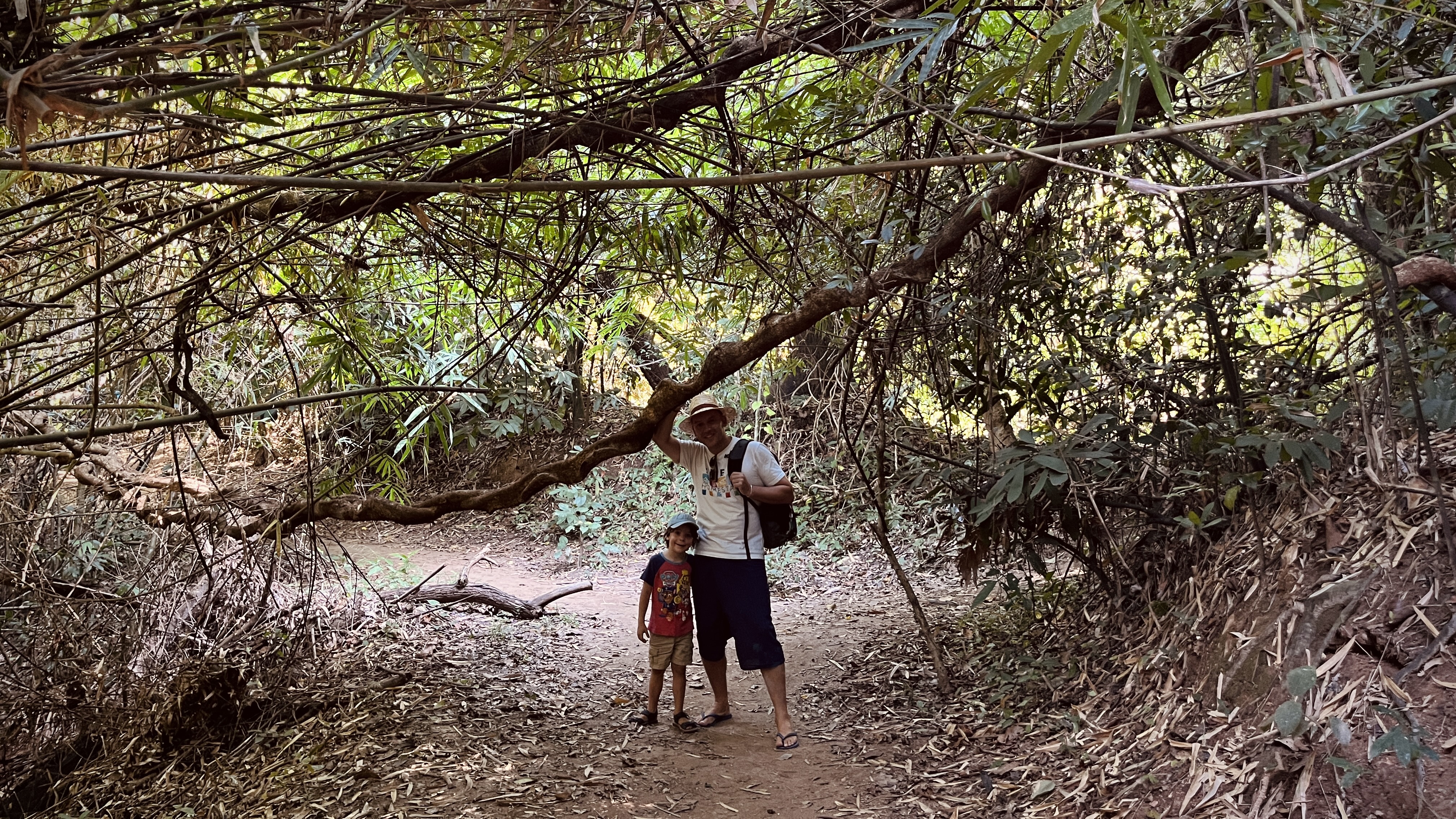
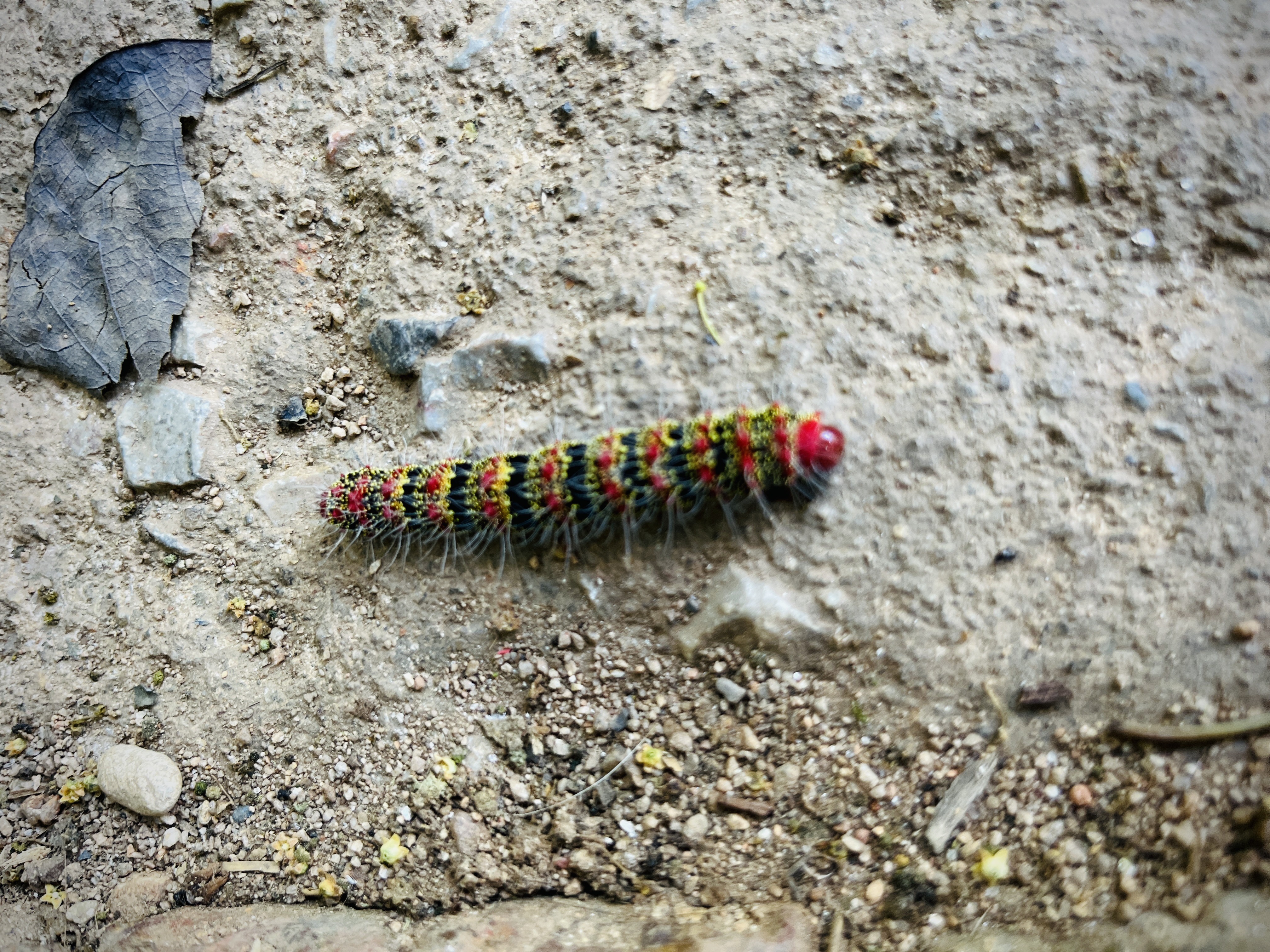
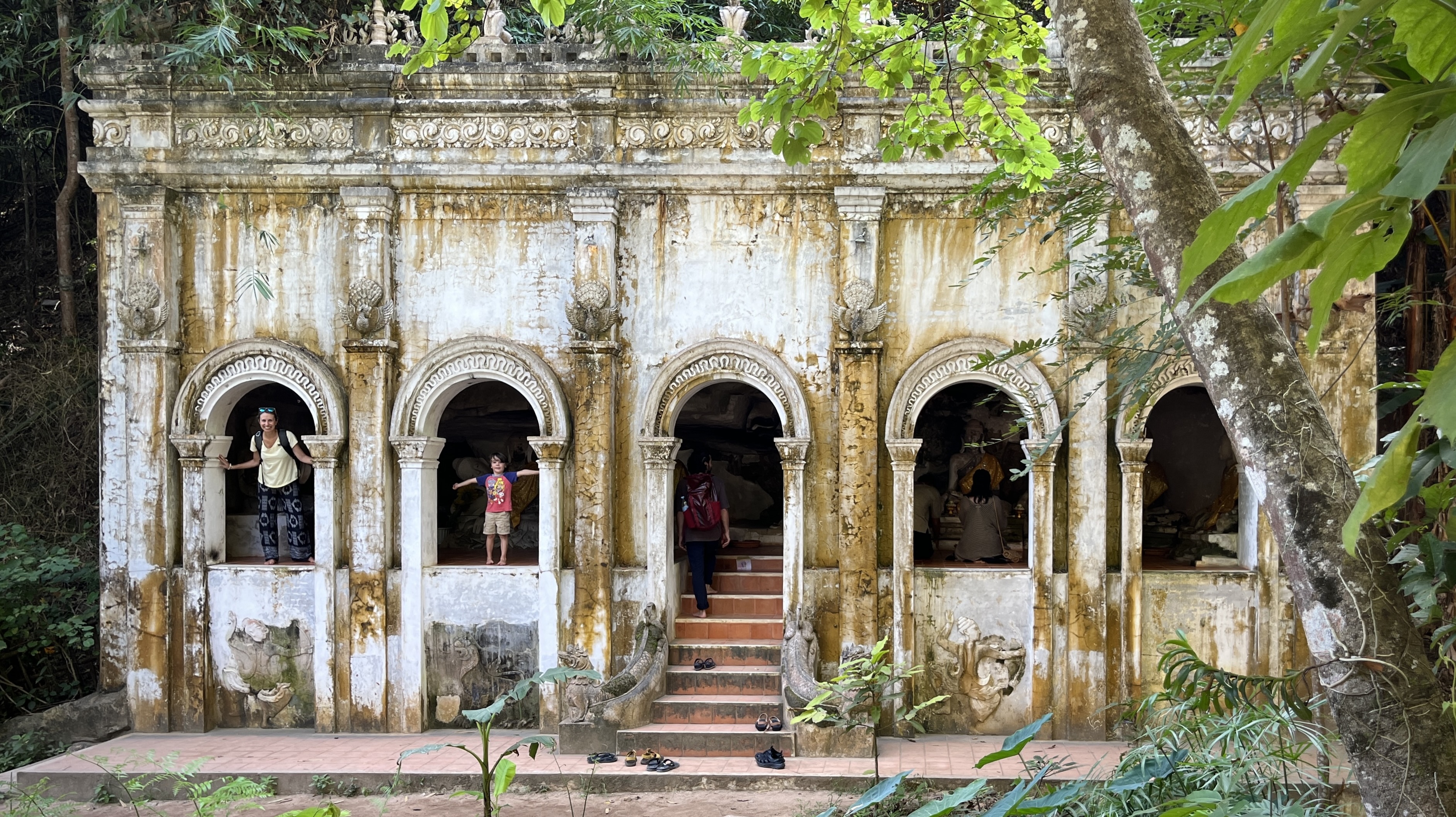
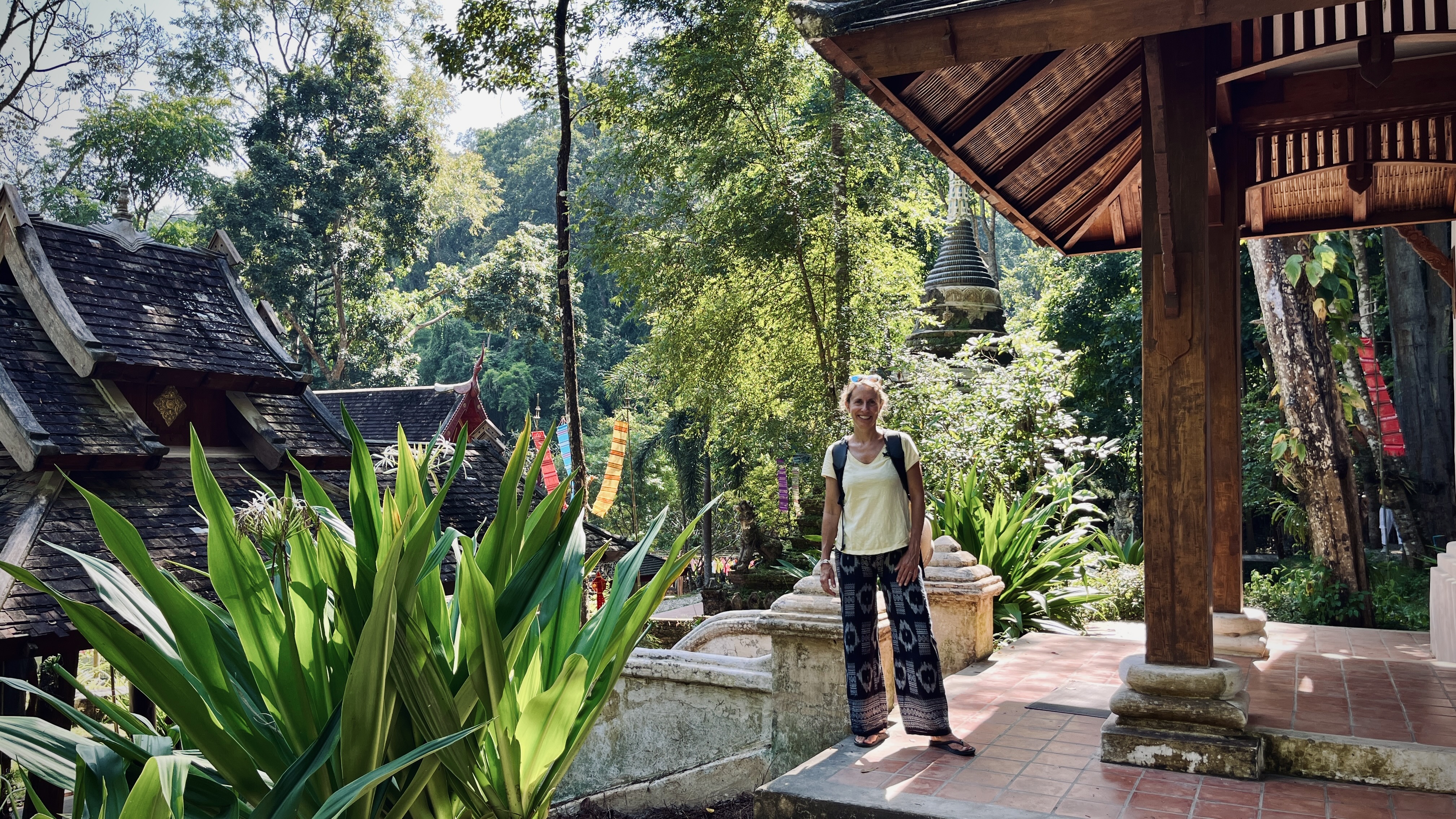
We took a short break from eating and festivals to hike up from the city up to Wat Pha Lat. It is an easy walk but it felt good to stretch the legs out after a lot of eating and not much exercise. The temple and the hike aren’t generally mentioned in “must see” lists but they should be.
Loy Krathong
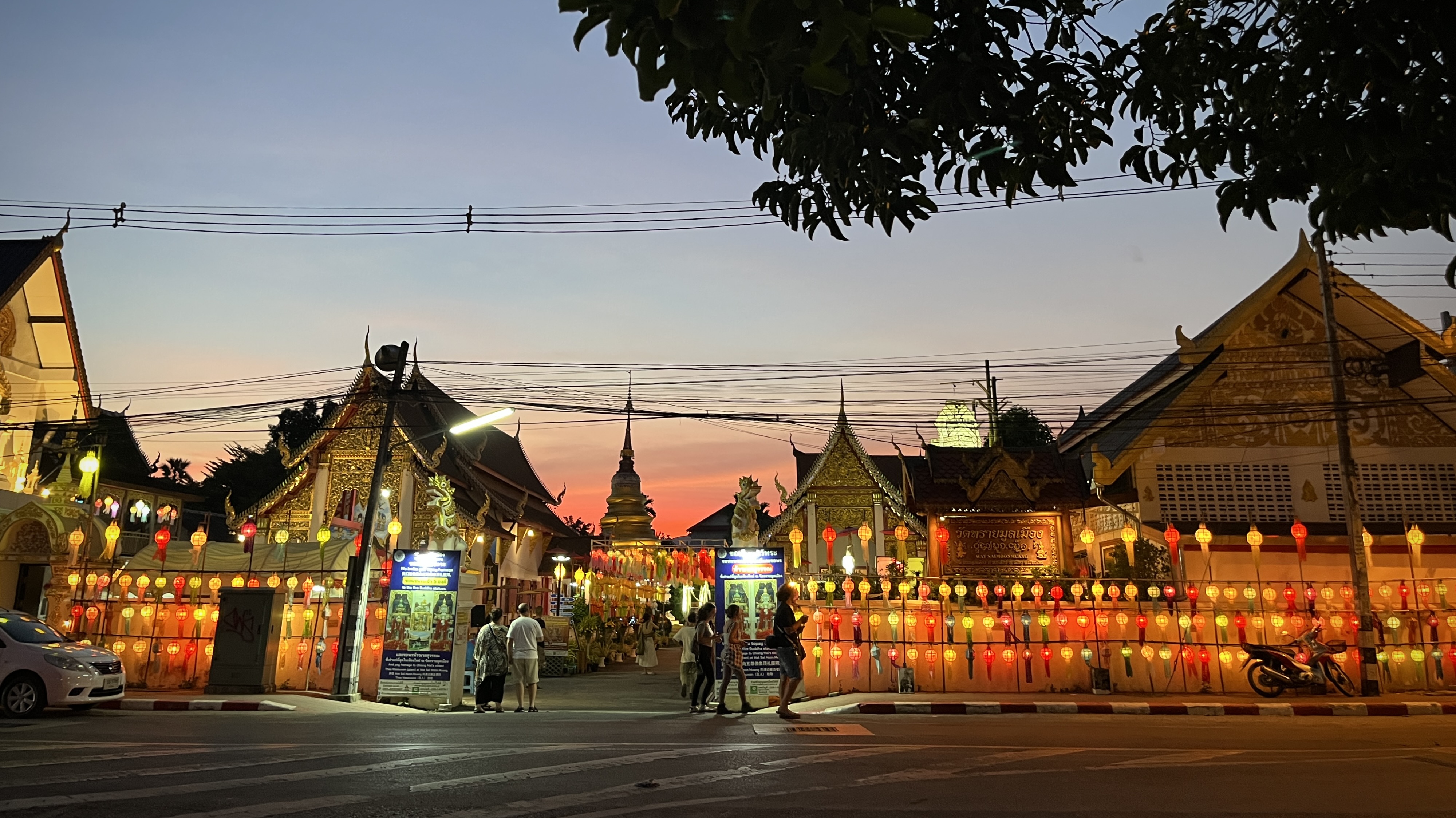
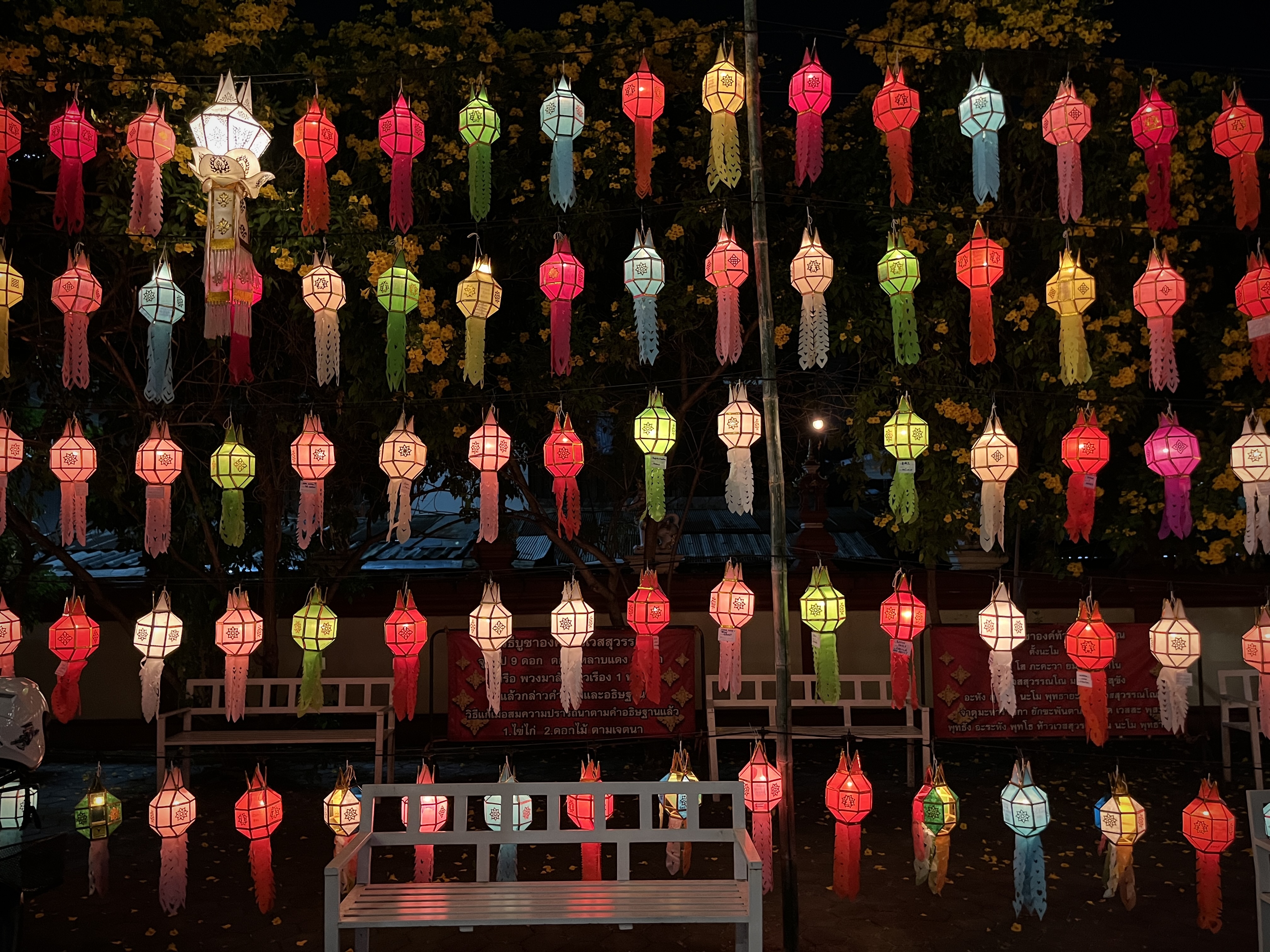
After a week of warming up, the weekend arrived with its festivals. Lanterns go up everywhere: the wats have multi-coloured lanterns hanging on every available wall and corner, and the rest of the city gets in on the act. There are lights, candles and lanterns everywhere.
But as impossible as the lights are to miss, it wasn’t so easy to find out where and how the locals celebrate the event itself. Everywhere we asked, we got shrugs. This was a theme in Thailand: the service is polished but detached, and it’s near impossible to get below the surface. ”What do you enjoy?”, “Where do you like to go?”, “How do you feel about …”; these are questions without an answer. Perhaps the locals are jaded from too many tourists; perhaps it’s a cultural or modesty thing; perhaps we were just unwittingly consistently obnoxious; we couldn’t tell, but it was an adjustment after the deeper, friendlier welcomes of Indonesia. I would love to hear about other people’s experiences as I suspect there’s a trick to getting the Thais to open up, which I just completely missed.
After much digging Steffi found a local network of expats on Facebook and one of them said they had heard from a friend of a friend about an alley along a river which might put on a good show. Detail was vague but we headed to a stream called Khlong Mae Kha, just southeast of the old city, hoping to see something.
This is where the locals go!
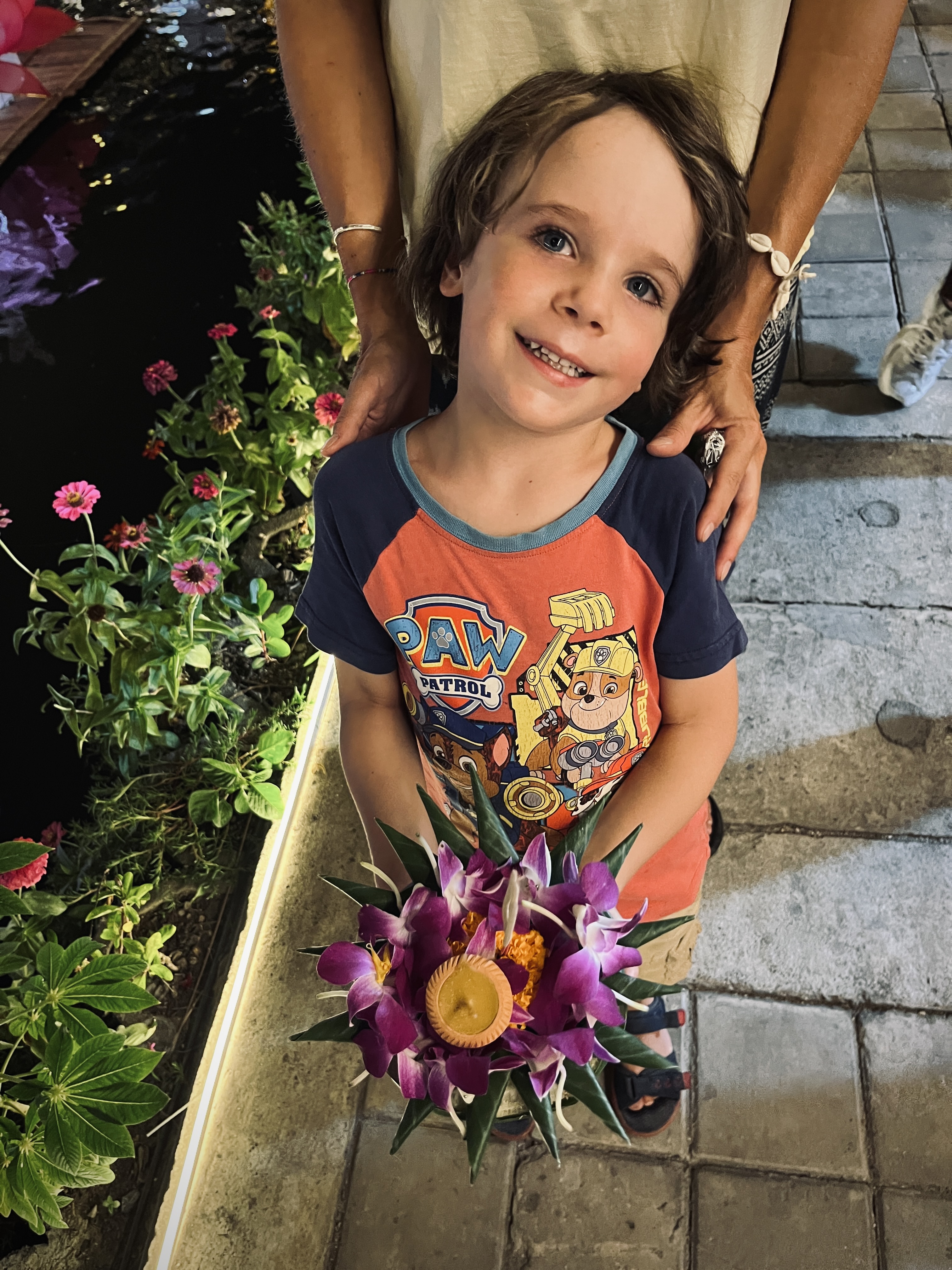
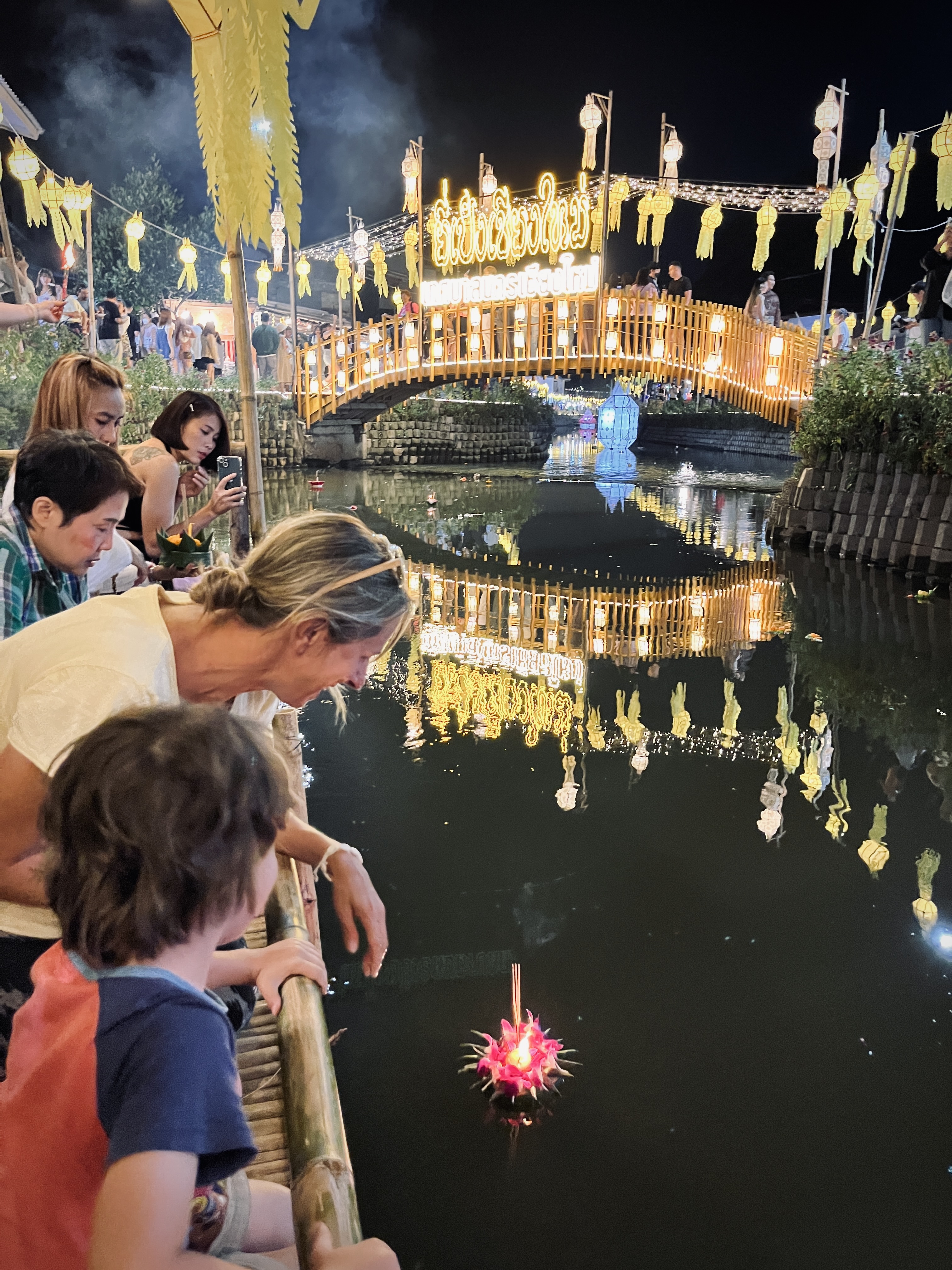
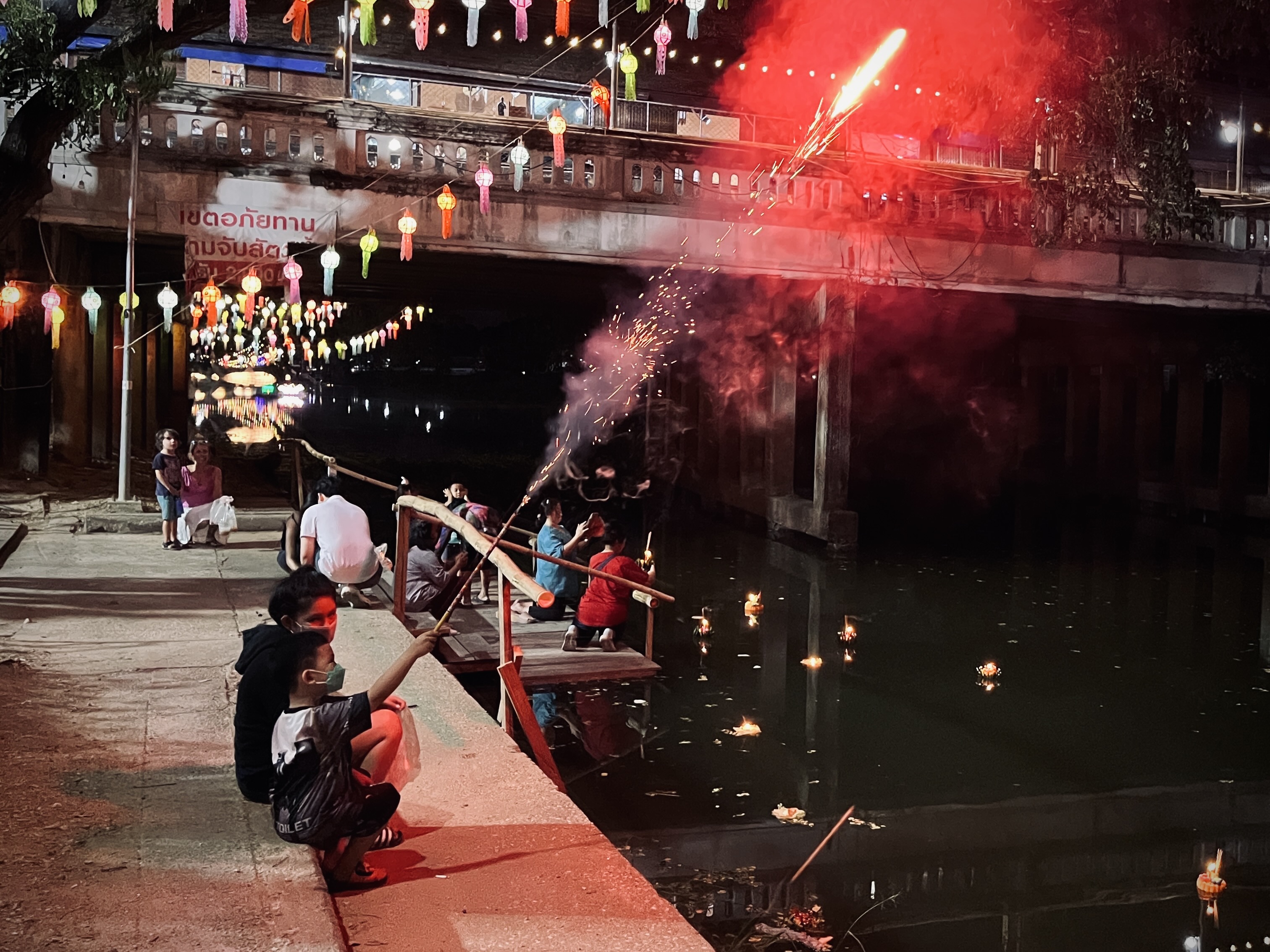
What an experience! The little river has a narrow alley perched above on either side, and each side is bustling with tiny bars, cafes, street food stalls and pop up markets. For the festival there are lanterns and lights lining the river, and temporary bamboo steps down to platforms on the water’s edge, where you can light your krathong – a little home-made raft made of banana stems and leaves and decorated with flowers, incense and candles – and watch it sail away.
Yi Peng
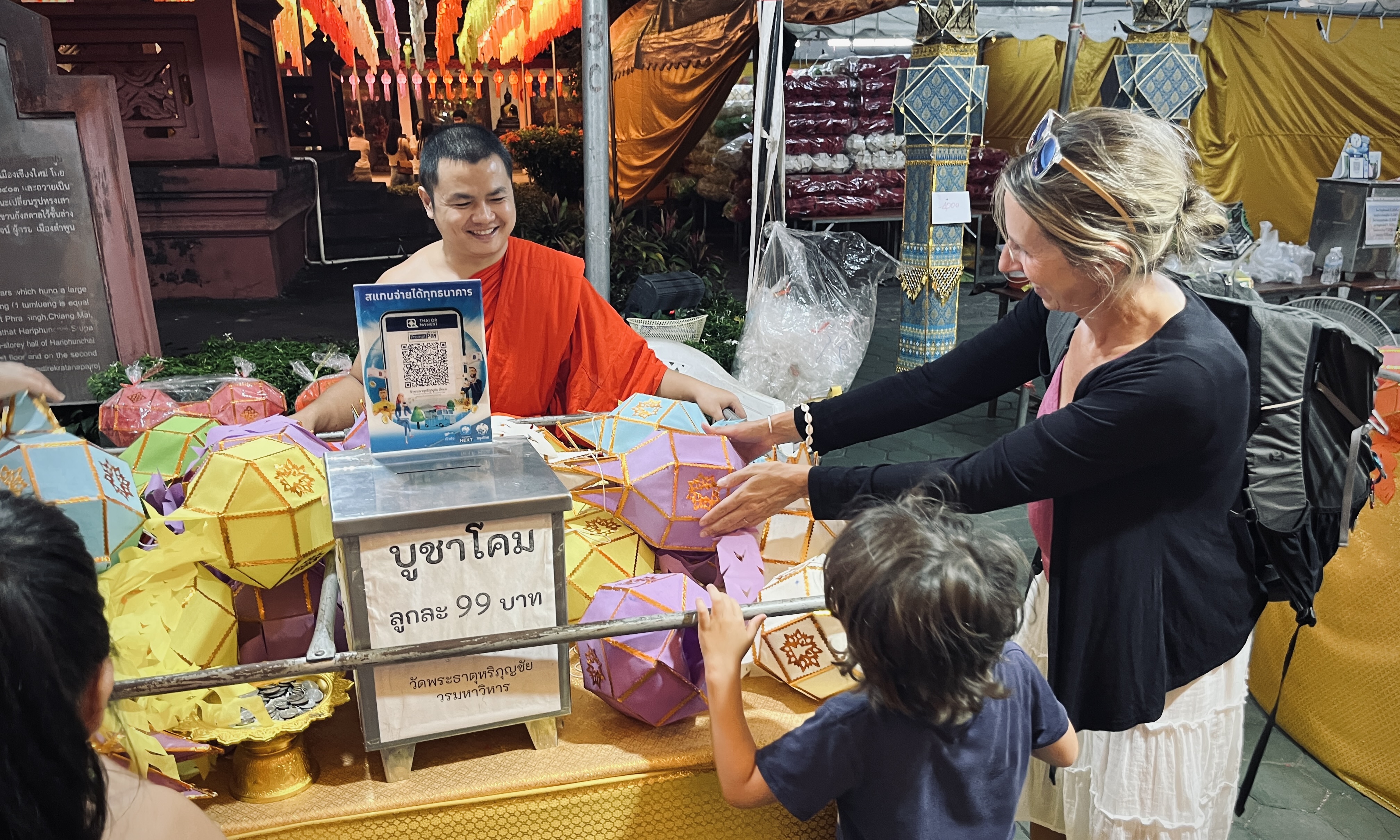
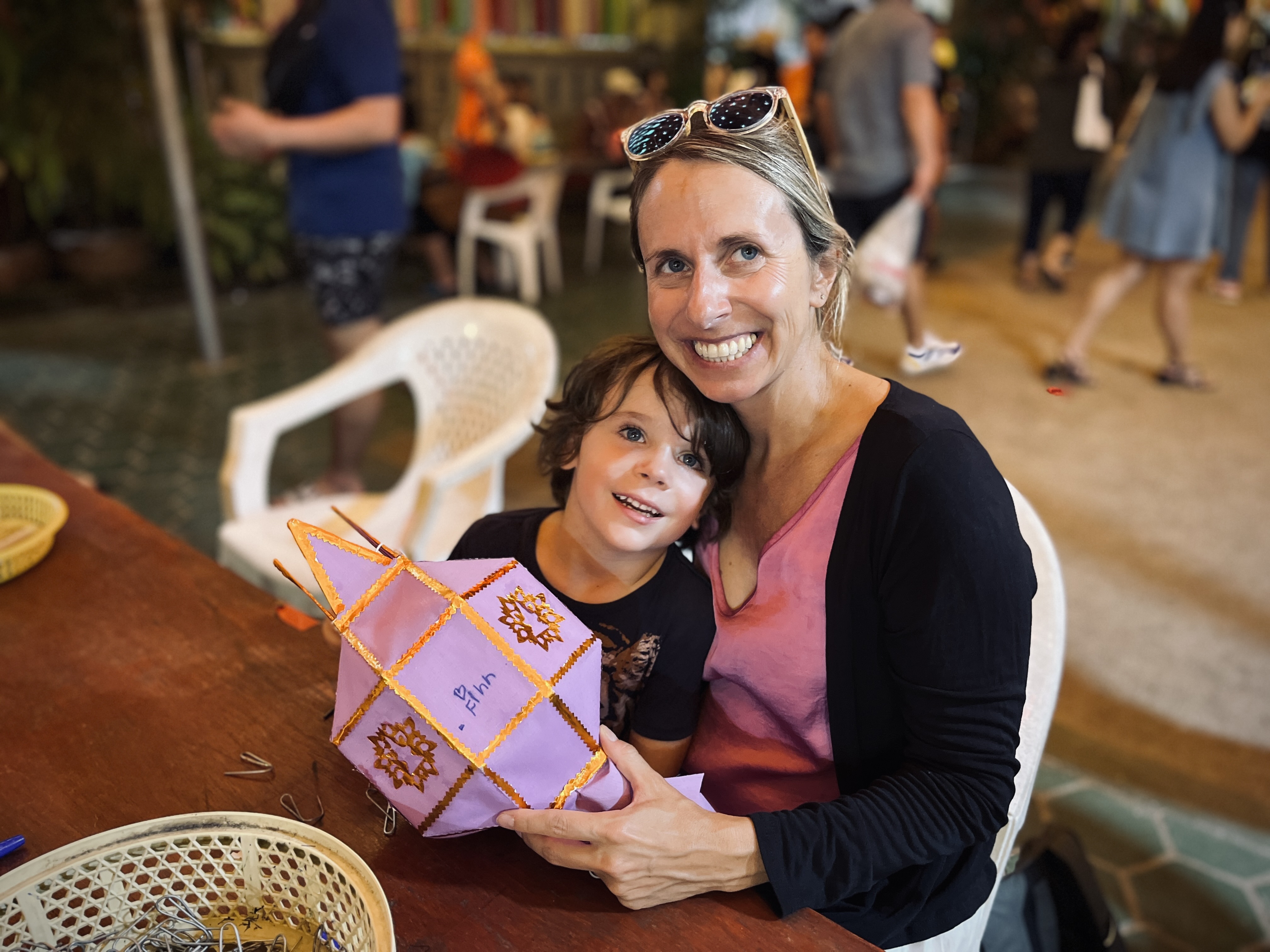
Almost all wats around Chiang Mai deck their walls and open spaces in lanterns, and allow lay people to buy and hang a lantern as a way of sponsoring the wat’s upkeep. Finn has lanterns with his name on them dotted all over Chiang Mai.
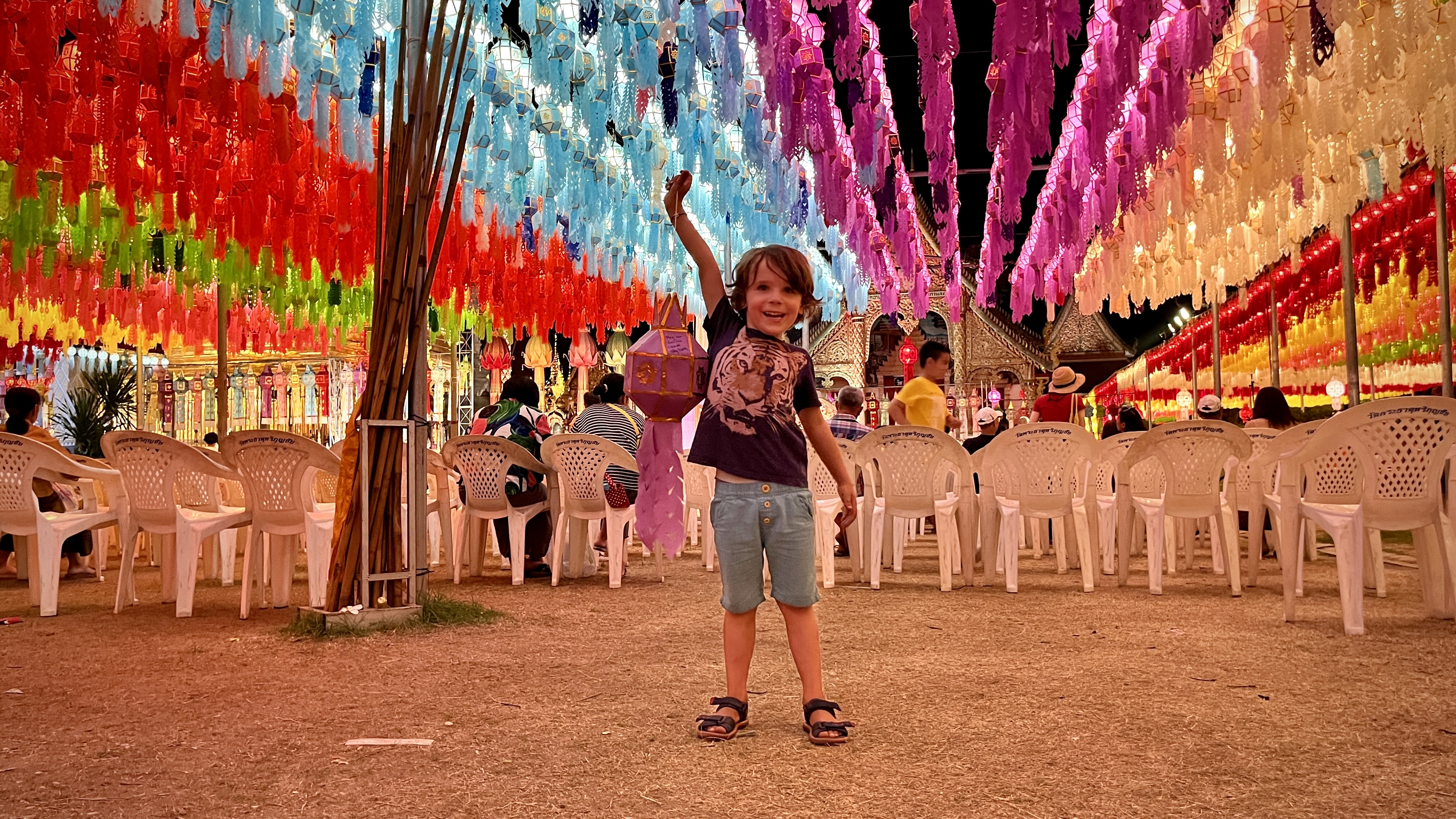
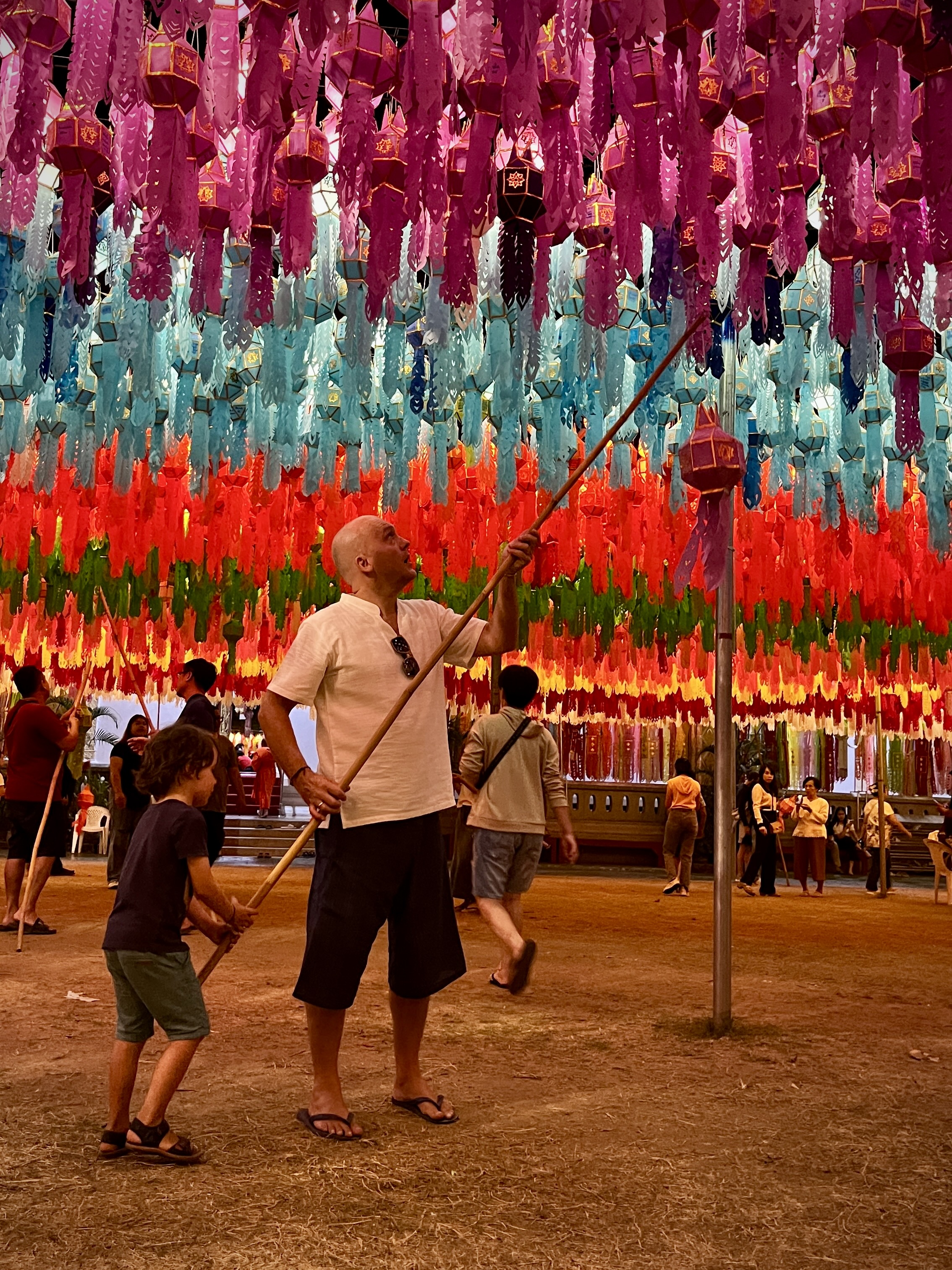
We got a tip from a friendly cafe owner that the best wat for hanging lanterns is Wat Phra That Haripunchai Woramahawihan, in the nearby town of Lamphun. The wat hangs hundreds of thousands of lanterns in a spectacular show of lights.
Well, why not, we took a taxi down to Lamphun to check it out. Lamphun is only half an hour’s drive but you wouldn’t know it: there are no tourists here. It was just us and hordes of locals and a huge street party. At one point a white family walked past and I stopped and gawked because they were so out of place. A moment later it struck me that we were just as out of place, possibly more so considering the ridiculous Thai fishermen’s pants I was wearing.
Thank you, people of Lamphun, for having us!
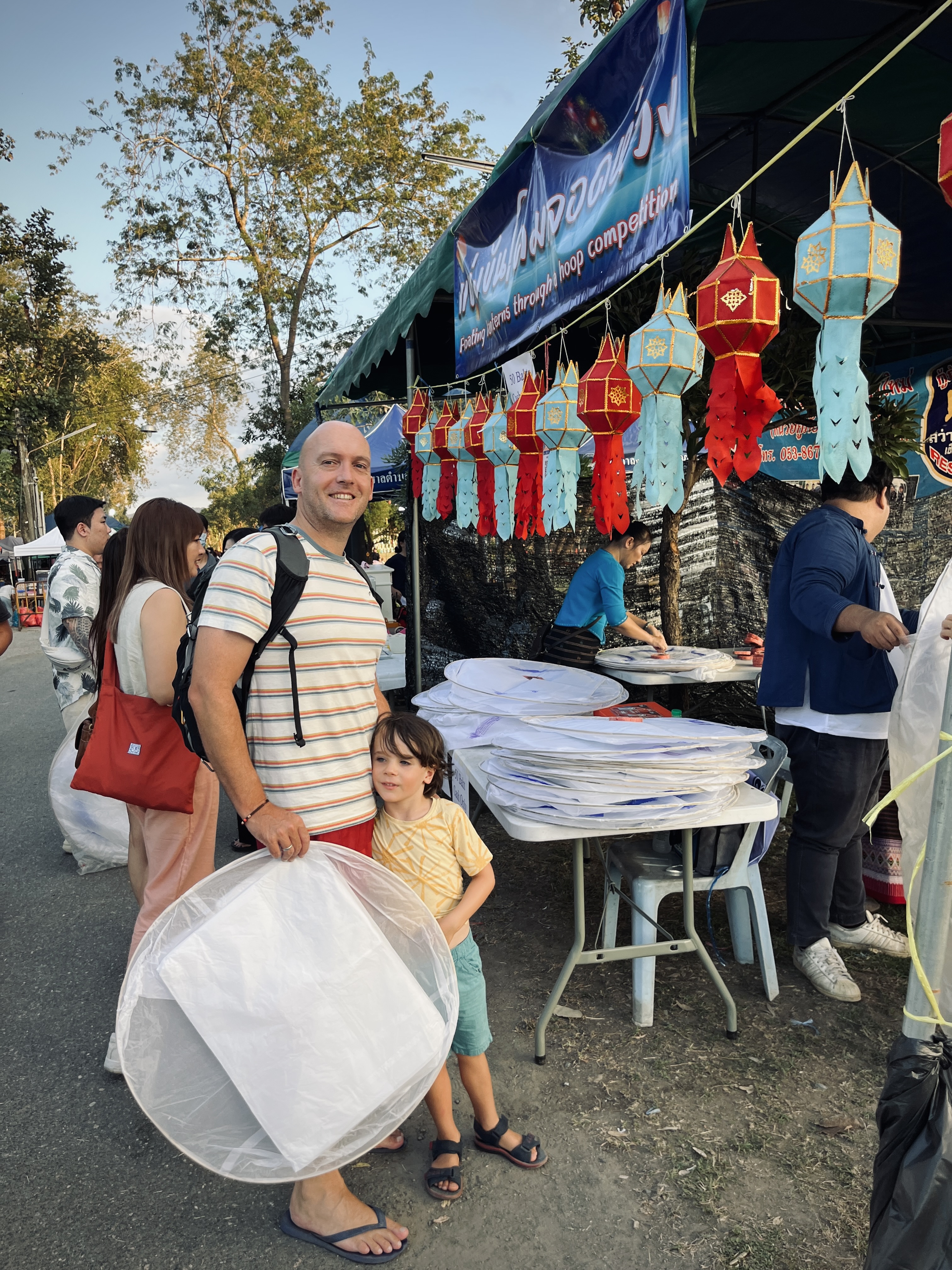
The next night was the big event: the launching of khom loi (paper lanterns) into the sky. This was another triumph for expat word of mouth: it wasn’t clear where in the city or out of it we might be able to see and join in this spectacle of thousands of floating lanterns. It’s illegal in the city of Chiang Mai due to the risk to air traffic, but nobody could tell us where else we might go; apparently everyone would be doing it but no-one could say where. Steffi’s network again produced the goods, suggesting that a lake outside of the city might be a good spot.
How lucky we were to get this tip – the Yi Peng festival by the Doi Saket lakes was the highlight of our month in Thailand, and possibly the whole trip.
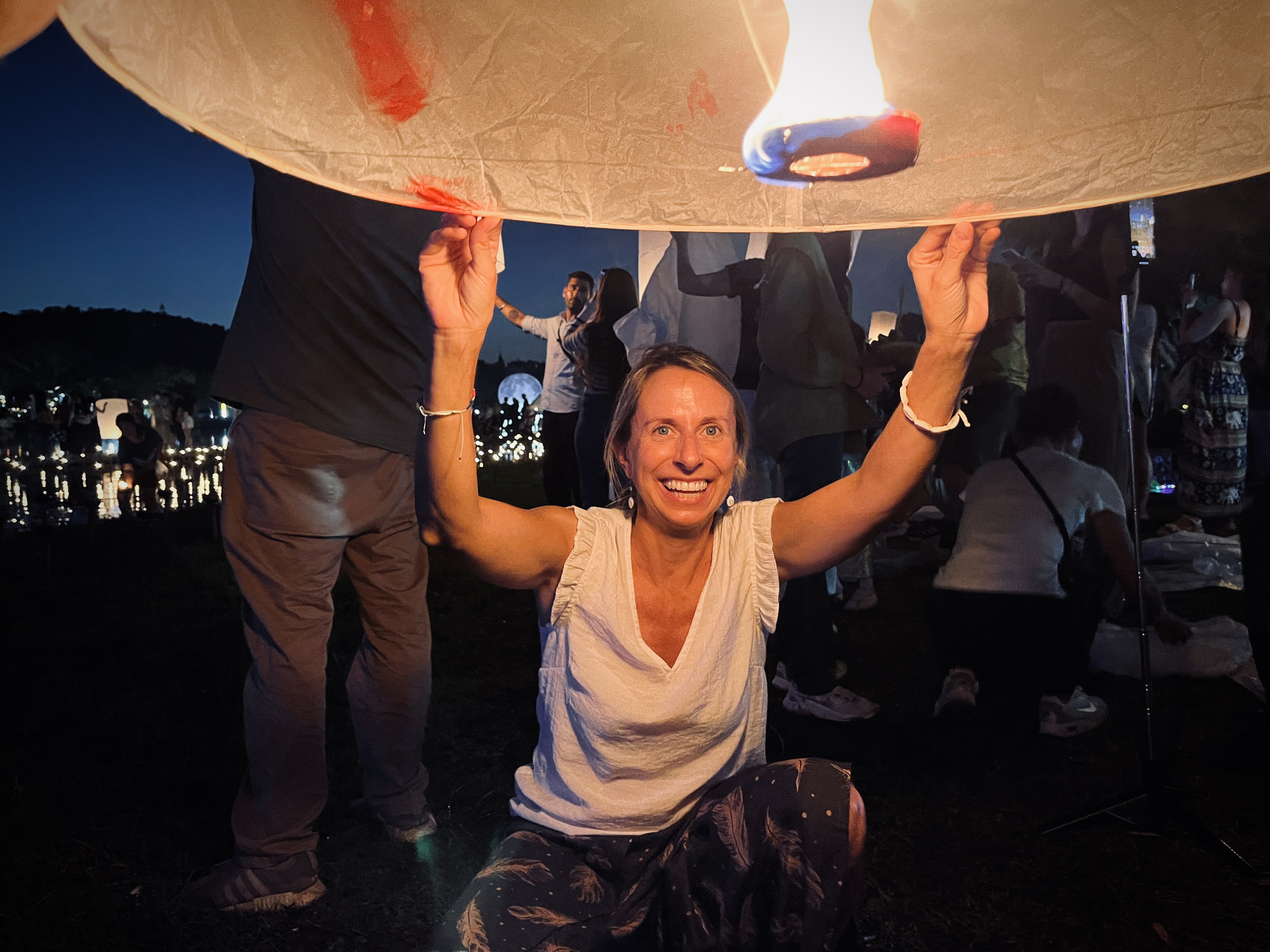
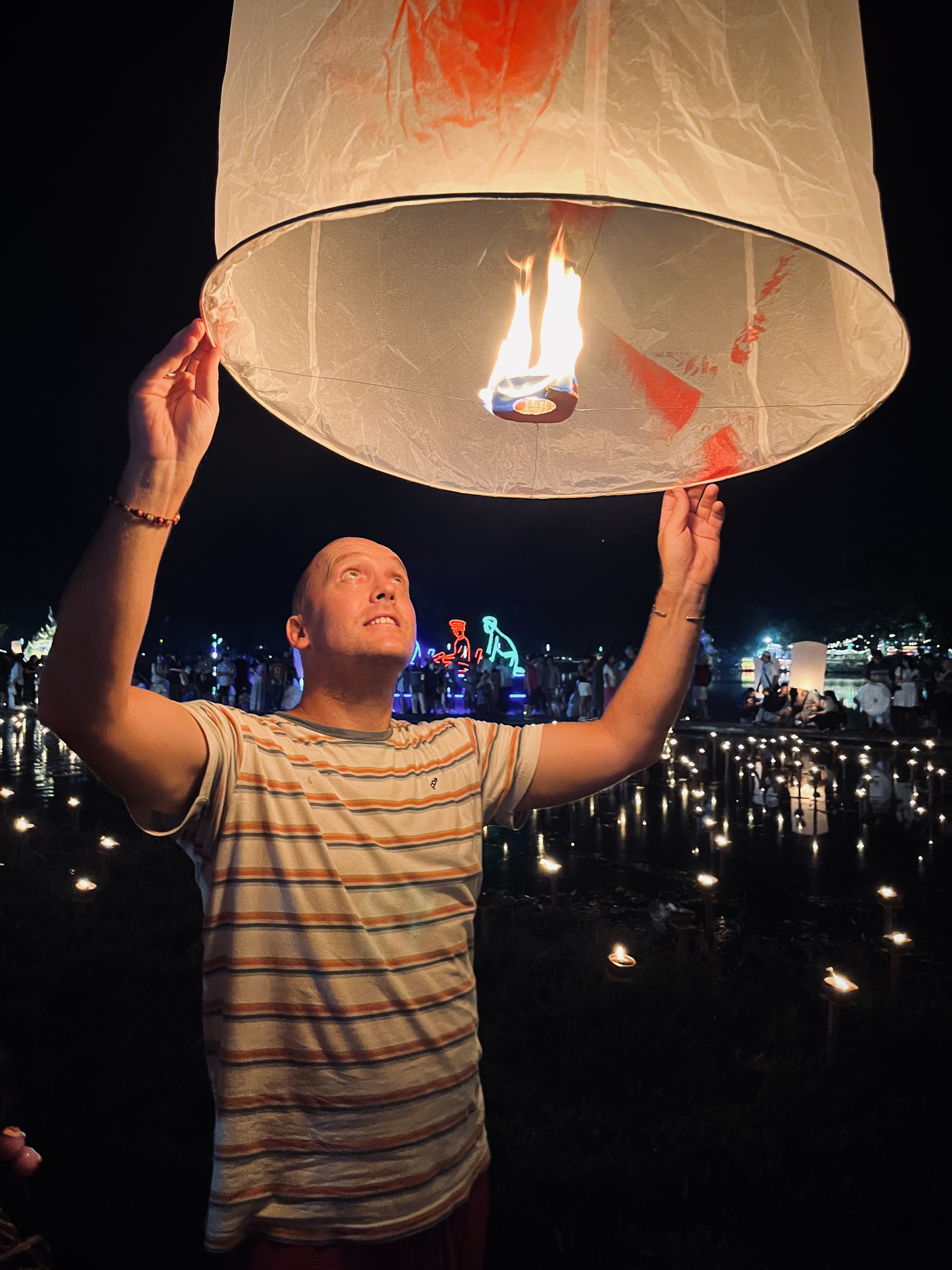
It was joyous anarchy. Starting at sunset, people light paper lanterns in their thousands and launch them into the sky. Every so often somebody sets their lantern on fire by mistake and there’s a brief bonfire in the middle of the crowd. Other times the lanterns blow into the trees, still on fire. At the same time, there are young kids shooting off fireworks haphazardly, sometimes accidentally into the crowd. We really had to be on our toes, and Finn was properly freaked out. We didn’t see anyone injured and we made it home safe, thrilled at the sights and experience and happy to be in one piece.
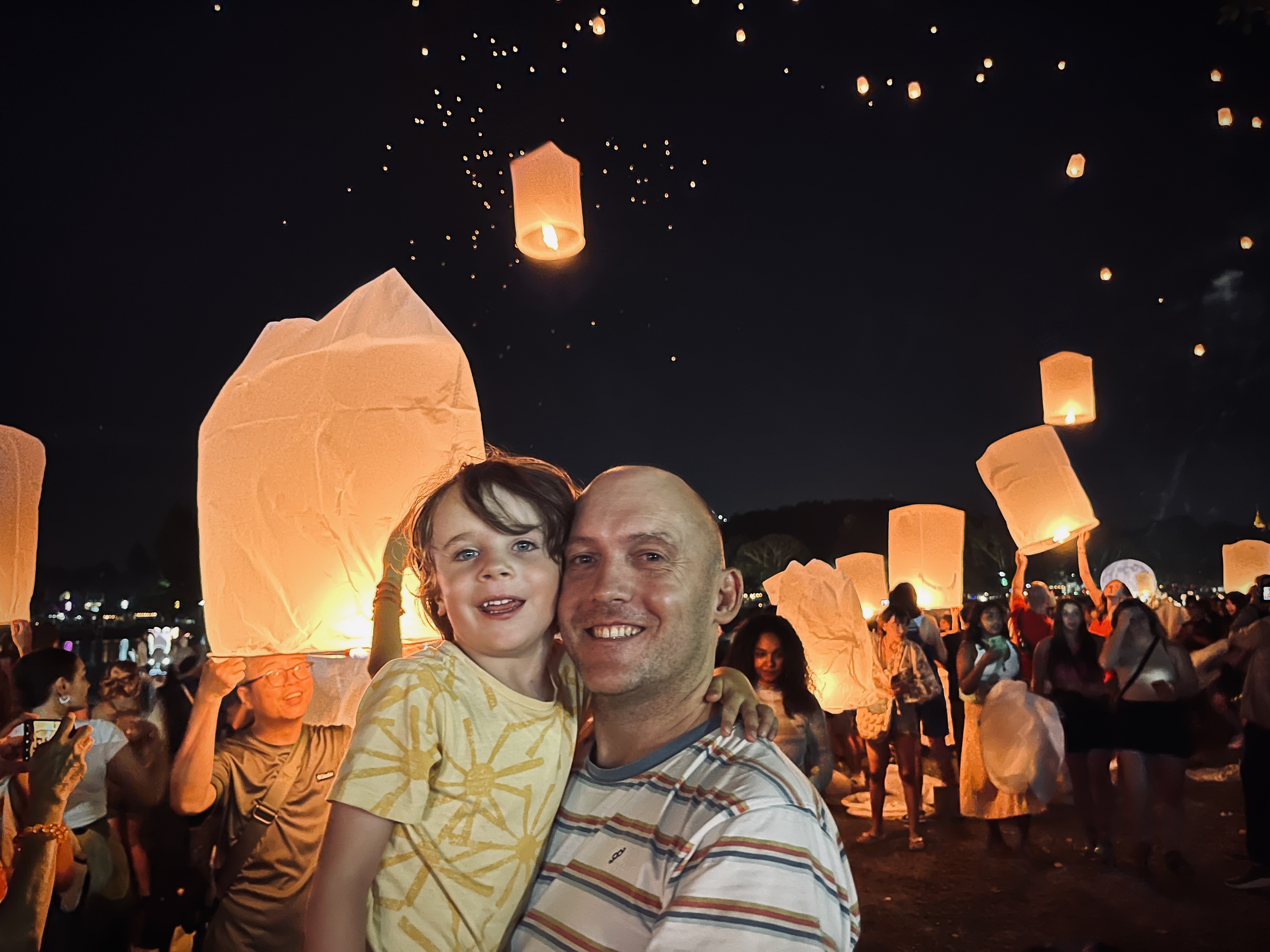

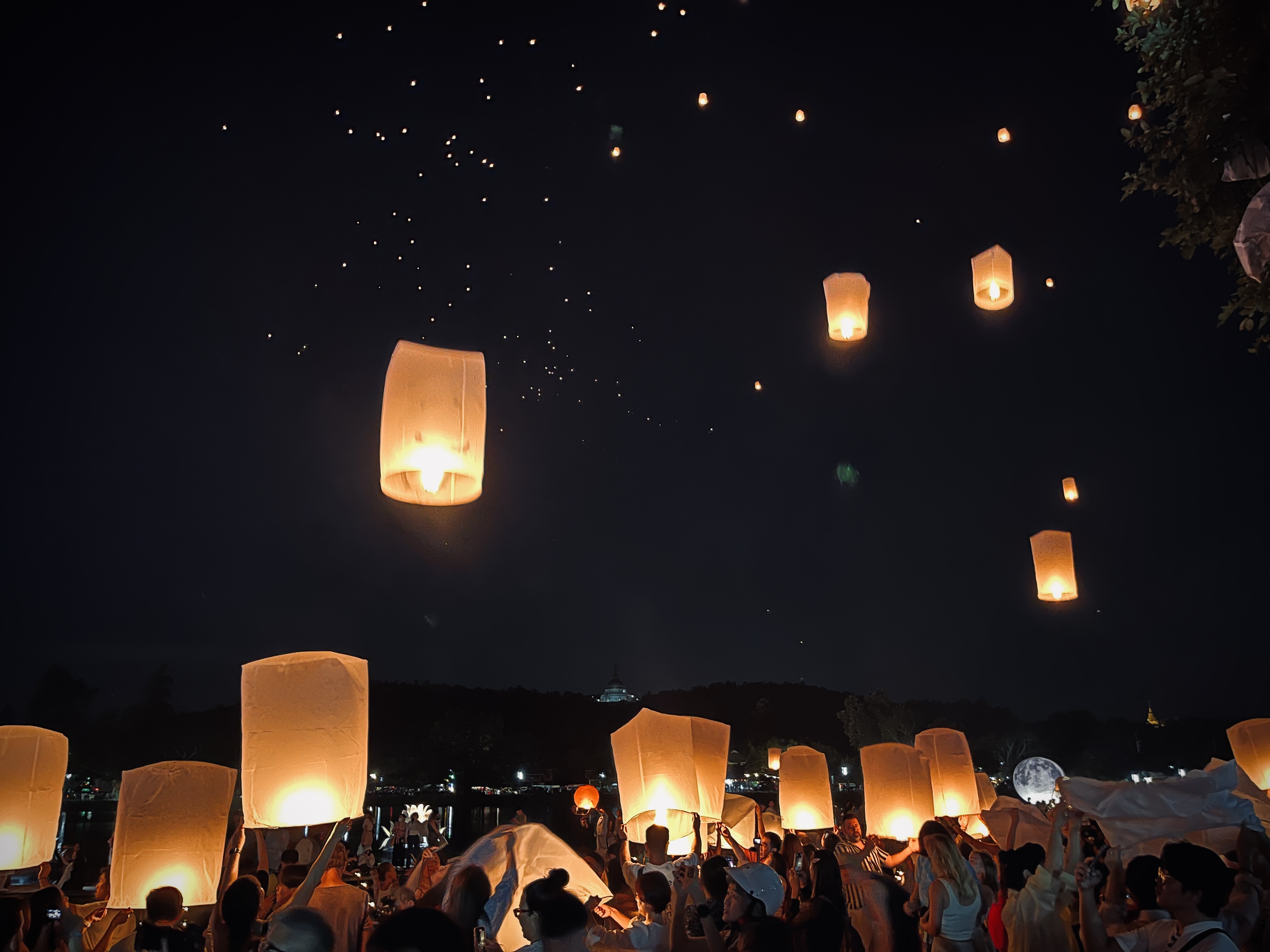
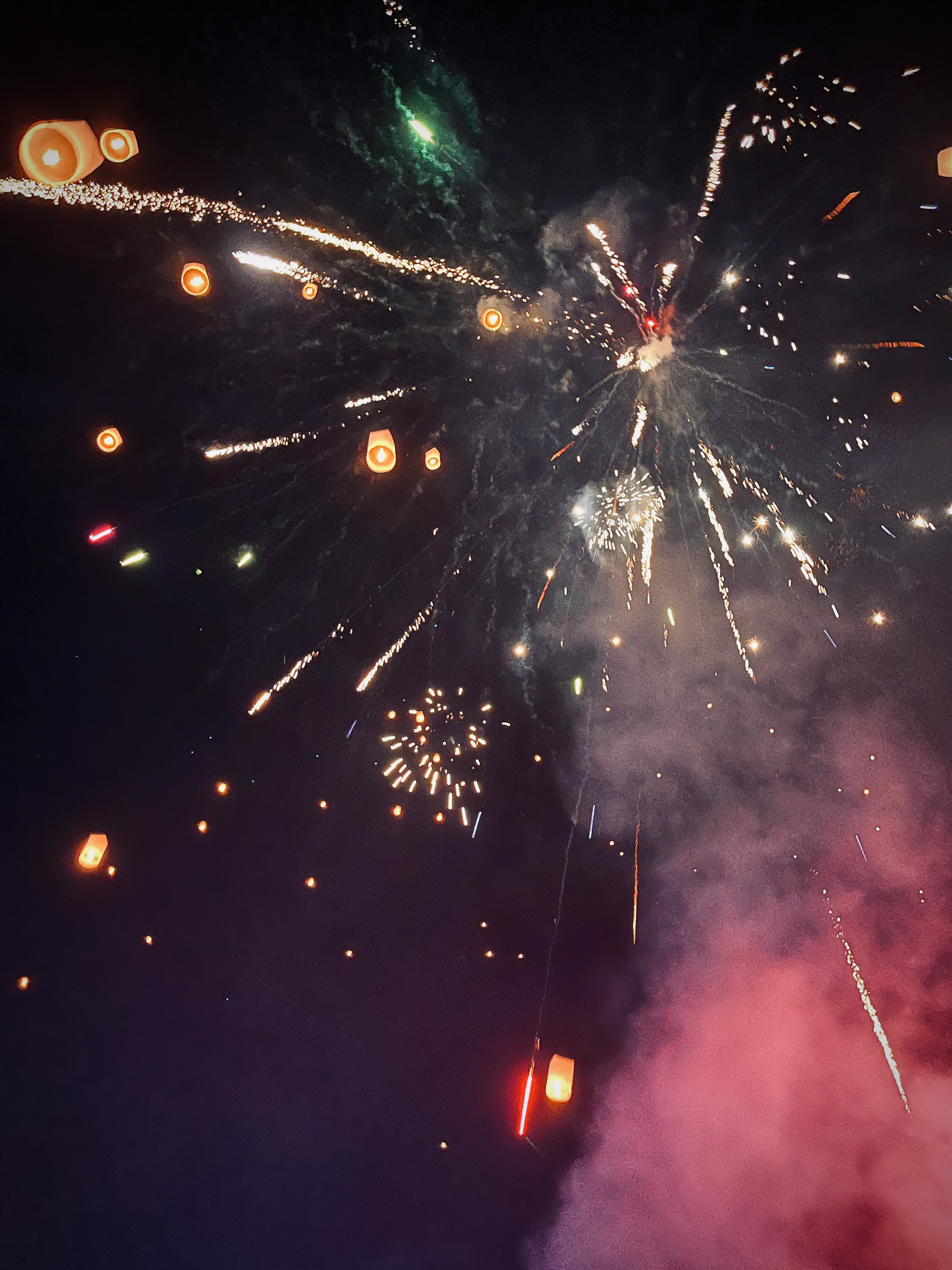
Hopefully this video gives some sense of what it was like to be there: thousands of lanterns going up in the air, random people shooting off their own fireworks, lots of people laughing and celebrating:
This next clip could have been half as long, but you would have missed the best part: the mild panic in the background as someone got it wrong and had their lantern burn to bits in the middle of the crowd. This happens often – you need to stay on the ball!
 The Whiteleys in Asia