
Why do you go away? So that you can come back. So that you can see the place you came from with new eyes and extra colors. And the people there see you differently, too. Coming back to where you started is not the same as never leaving.
Terry Pratchett
Yogyakarta, “Jogja” to its friends, is not for everyone. It is hot, really hot, stinky undignified hot. Street hawkers in the tourist areas are persistent verging on annoying. If you like comfortable travel this is not the place for you.
And yet … and yet.
This was Alex’s pick of Indonesia. Lombok and Karimunjawa were spectacular for their scenery and experiences but were so remote that it was difficult to get fully into the culture: the villages were threadbare and locals often lacked the confidence to really engage with us. We always felt a little bit on the outside. Yogyakarta is the cultural heart of Java and there is a strong sense of history and identity here, it’s a city loved by its people and it handles its tourists well. It’s not hard to get off the tourist track and to find a genuine smile and a happy conversation. As with the rest of Indonesia, the locals are curious and welcoming, and as always Finn was a hit. (“Hello handsome boy!”, “Look your blue eyes!”, “What your name?”)
Walking along the street here is like a game of Super Mario: jump over the cracks in the pavement, dodge the fires of the satay stands, run when the traffic is clear, duck down the alley for a short cut, bob and weave through the bird cages and the hawker stand roofs, jump over the puddles. As with Super Mario, if you hesitate you are lost!
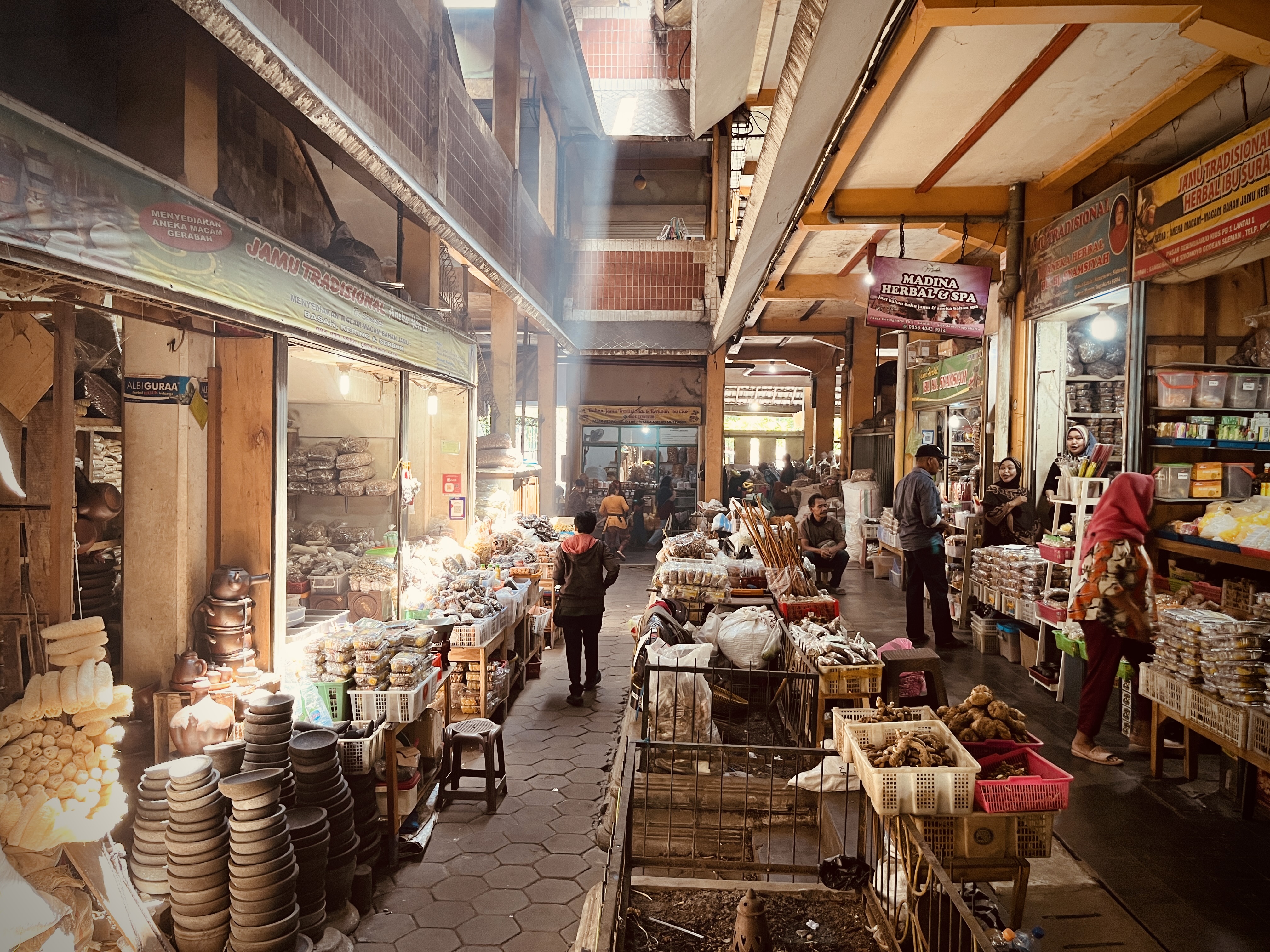
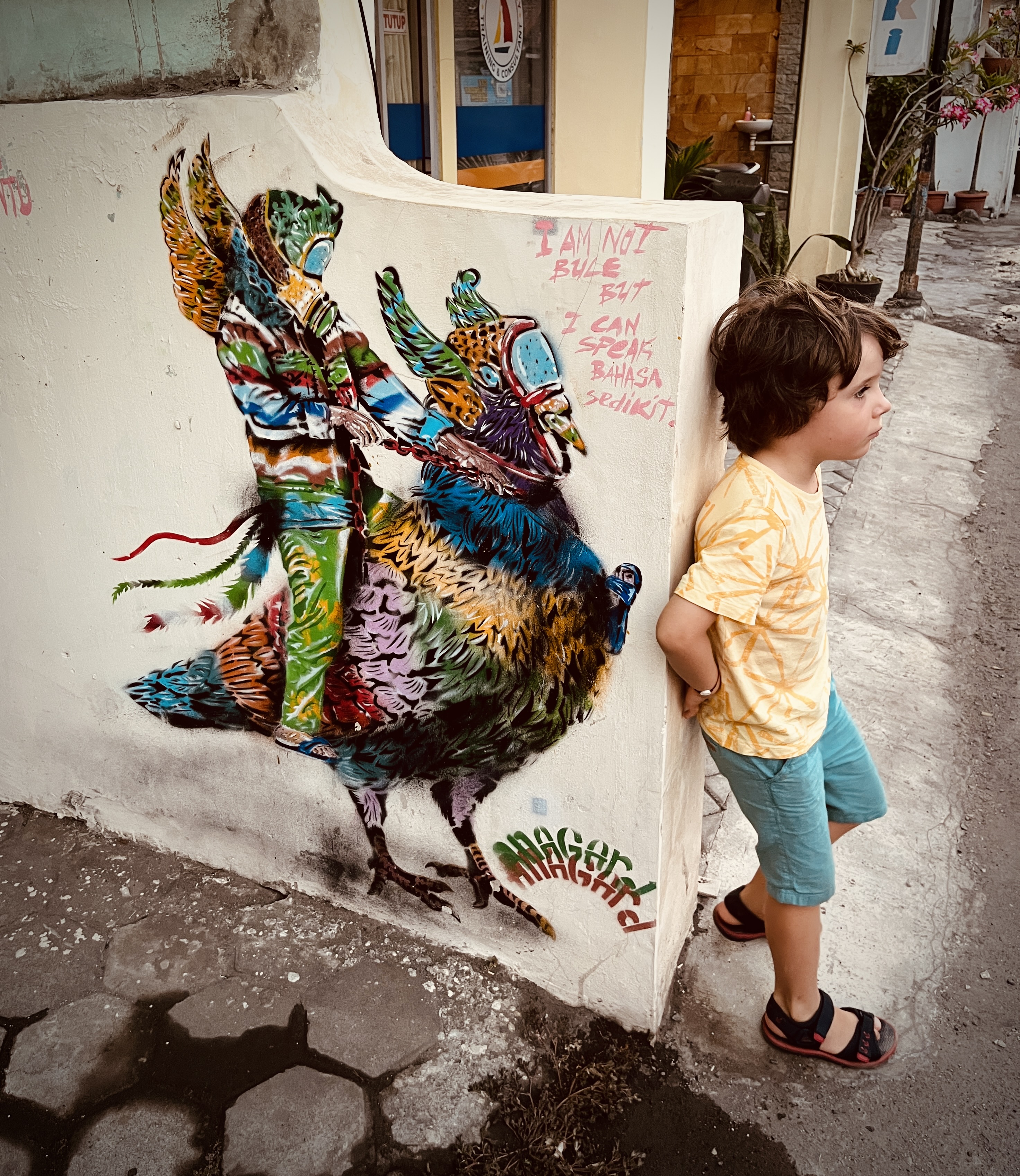
Jogja is a city of history and colour and shapes and smells and textures and tastes, it will challenge you and reward you if you let it. The heat can be stifling, the hawkers and becak drivers are in your face, the shops on Malioboro – the tourist main drag – all sell the same faux-batik shlock and pump out the same tinny elevator muzak, you’ll find yourself asking why you came. The trick is to explore the back streets, especially of the old town: you will find street art and food and history, and interesting shops and friendly faces around every corner.
Inez Homestay
Steffi found a homestay in the centre of Prawirotaman, a lovely quirky neighbourhood just south of the city centre and close to the fortressed old town of Kraton. It was the perfect base to launch our adventures from.
Our hosts live out of town but came to Jogja to take us out for a meal at a true local restaurant. Dinner was a full chicken, head and feet still on, cooked in coconut milk. Thank our lucky stars, the head and feet were our host Wawan’s favourite bits: he took those and the rest of us dodged a bullet.

Around and about in Jogja
We came to Yogyakarta mostly to explore the ancient Buddhist and Hindu temples, Borobudur and Prambanan. We weren’t expecting much from the city itself.
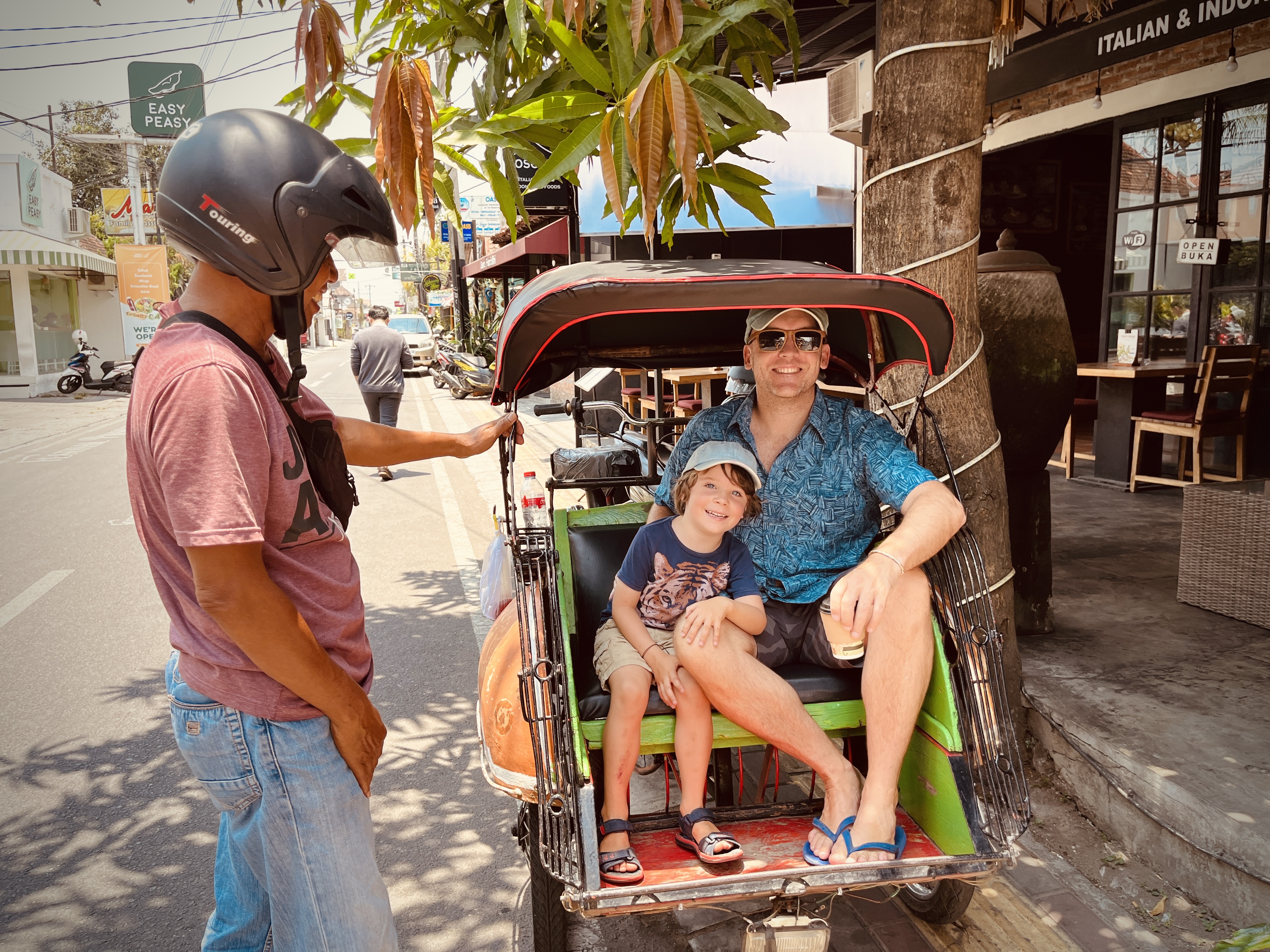
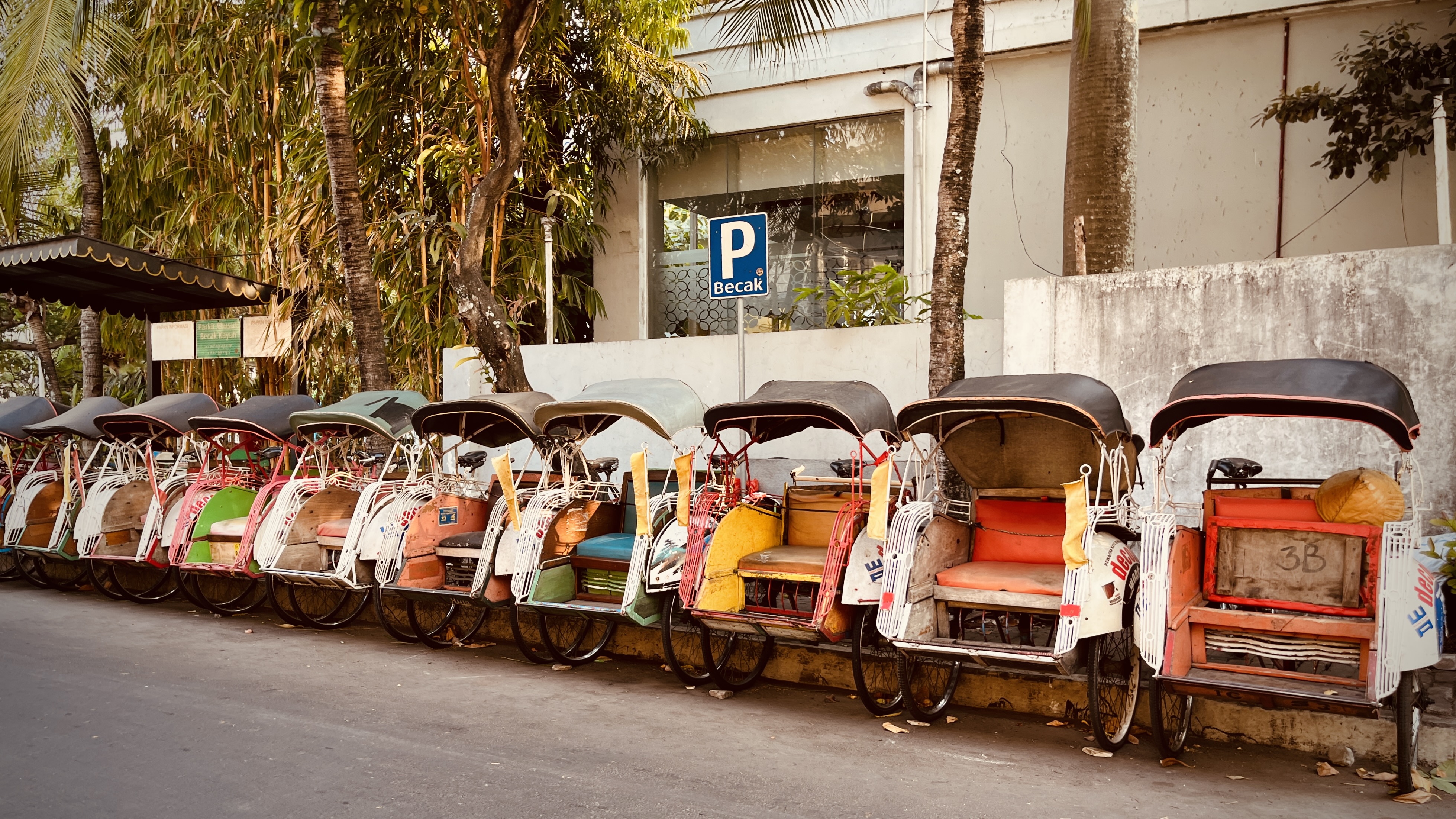
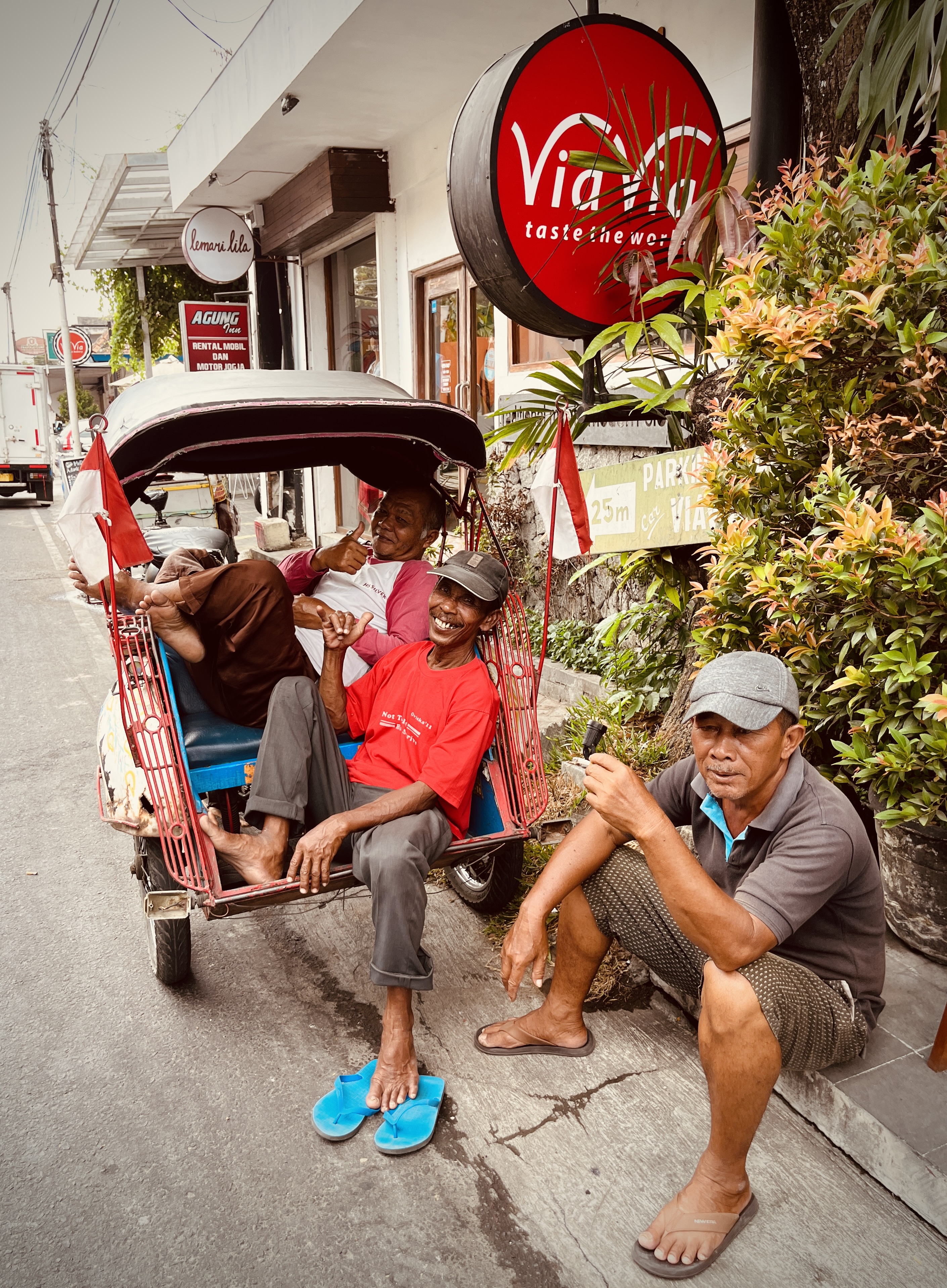
The best and most terrifying way to get around town is by becak (pronounced “bechak”), Jogja’s version of the rickshaw. Passengers sit on a small canopied bench at the front with the driver behind. Originally these were pedal driven but the becak drivers have embraced change and these days they mostly put-put around on anaemic petrol engines with all of the power and grace of your average kitchen blender. Stinky, noisy, uncomfortable and hair-raising like a slow motion rollercoaster – it’s a wonderful experience and a great way to see the city.



Exploring the Kraton district
On our first day we went wandering to see what we could see and we discovered the walled district called the Kraton which surrounds the Sultan’s Palace. The fort was built in the 18th century and the streets are a riddled patchwork of mazy alleys, songbirds in cages, street art and ancient ruins. It is an extraordinary, vibrant place.
We walked 10km in 35 degree heat, Finn was a trooper. We came back several times over the week to explore further and bumped into familiar local faces but didn’t see a single tourist the whole time.



Jogja is hard to describe – you just have to visit this place – but maybe this video will give you some flavour. It was a weekend evening and the locals were out in their village square in the Kraton district, flying kites, browsing street food stalls, catching up with friends. We were on our way home in a becak and passed by the square and filmed this:
Prambanan and surrounding temples
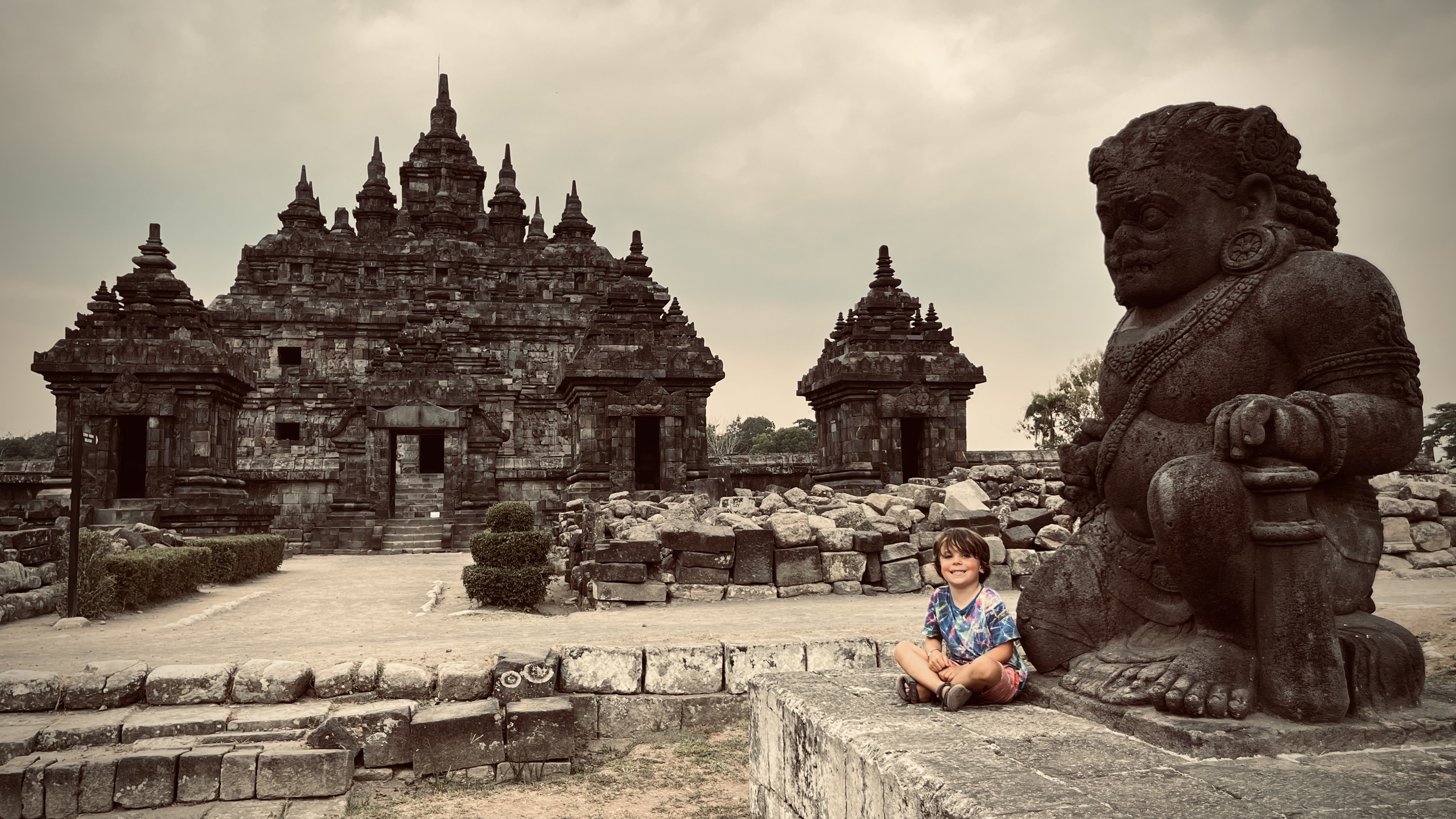
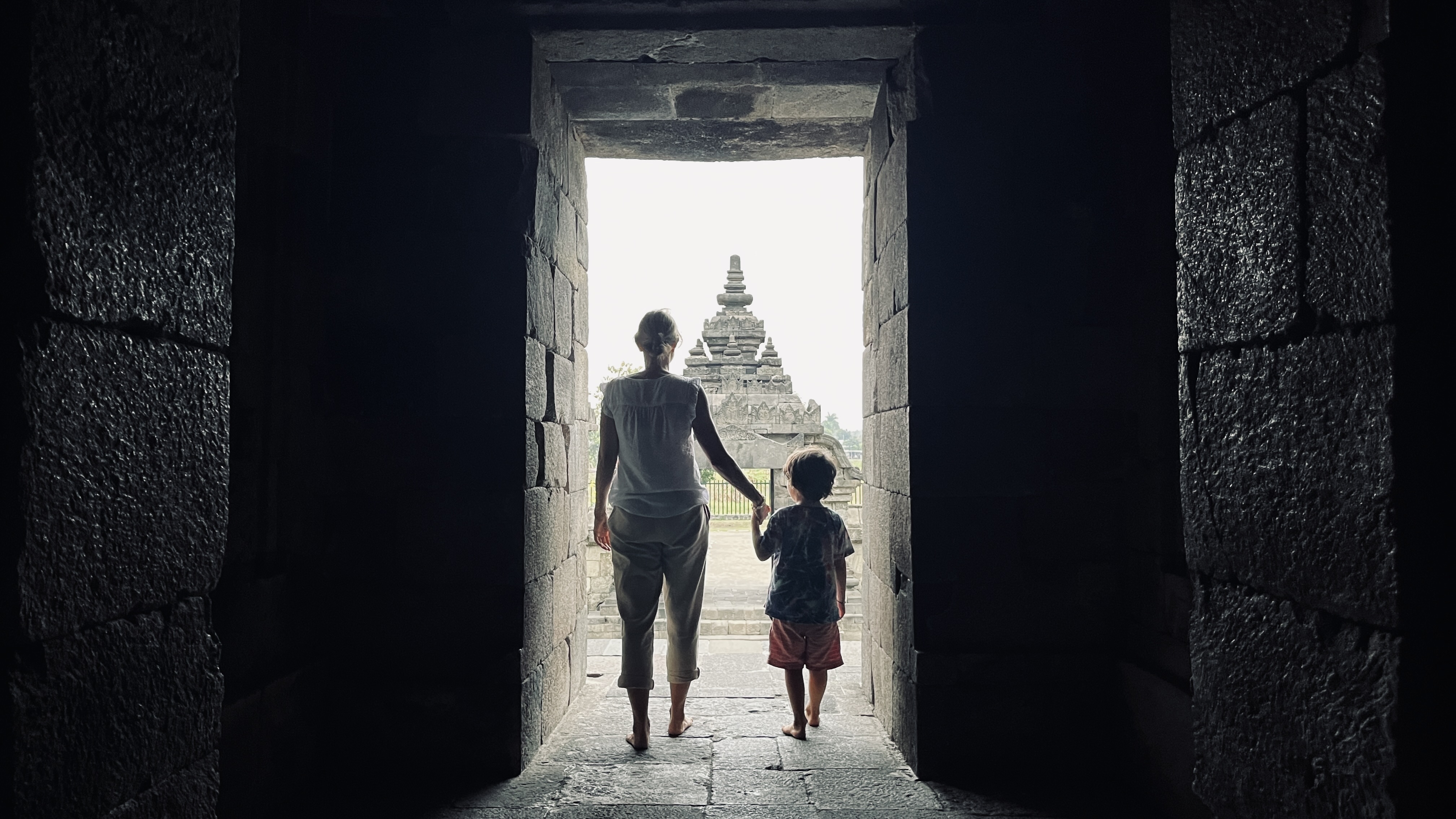
Prambanan is a complex of Hindu temples just outside of Yogyakarta. It was built in the 9th century but fell into disuse and a series of earthquakes and volcanic eruptions more or less destroyed the complex. The larger temples have been rebuilt and the complex was listed by UNESCO in 1991.


Borobudur
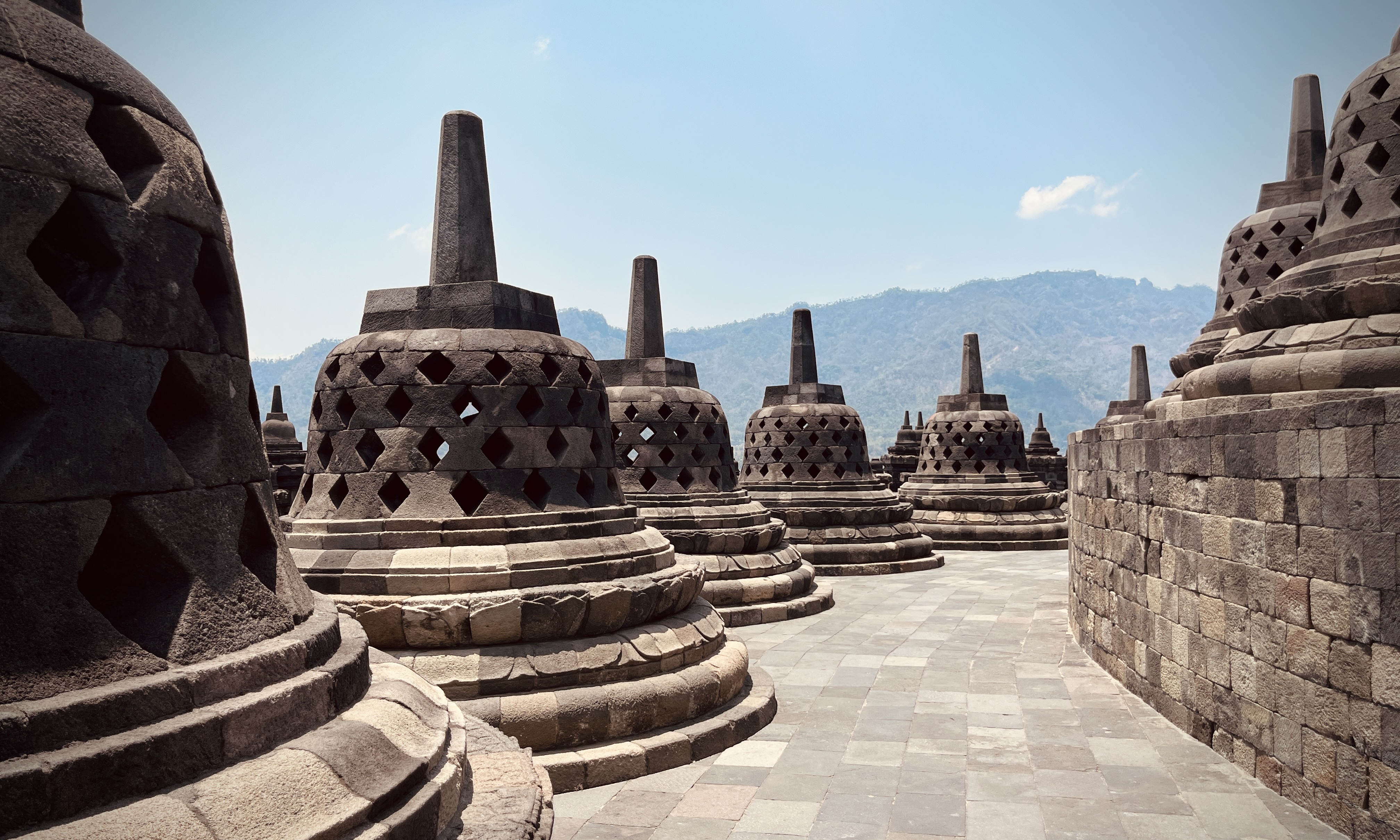
Borobudur is the largest Buddhist temple in the world and was built in the late 8th century, just a few decades before Prambanan. All evidence suggests Buddhists and Hindus co-existed peacefully.
Borobudur is Indonesia’s largest tourist attraction and even in low season there were serious crowds. Below are the three photos from the day miraculously not photobombed by others.
The design and decoration is detailed and angular on the temple’s lower tiers, and becomes smoother, less detailed and more circular as you get higher. This disorientating looping circularity and loss of definition and perspective illustrates to the visiting pilgrim the disappearance of the ego as we achieve nirvana – or something like that.



Adam’s Coffee
You might expect a place called Adam’s Coffee to be owned or established by a guy called Adam, and in this case you would be wrong. The owner Mr Agung named the place after his son.
Not only does Agung make the best coffee in Jogja (extensively tested and certified by Alex), but he used to be a travel agent. What luck! It was Agung who set us up with our drivers during our stay, who recommended the best spots for local food and art, and who suggested the right thank you gift for our homestay hosts. (Alex proposed a bottle of wine which would have been a disaster in this predominantly Muslim nation; the correct answer was a fruit bowl.) Agung and his family adopted Finn during our stay; we saw them every morning for breakfast while we planned the day’s activities.


Our friends


Farewell Indonesia
And just like that – we were gone. Like travel in all of the best places, we have more on the “to explore” list now than when we started. Indo, you and your people have been amazing – terima kasih! We will be back.

 The Whiteleys in Asia