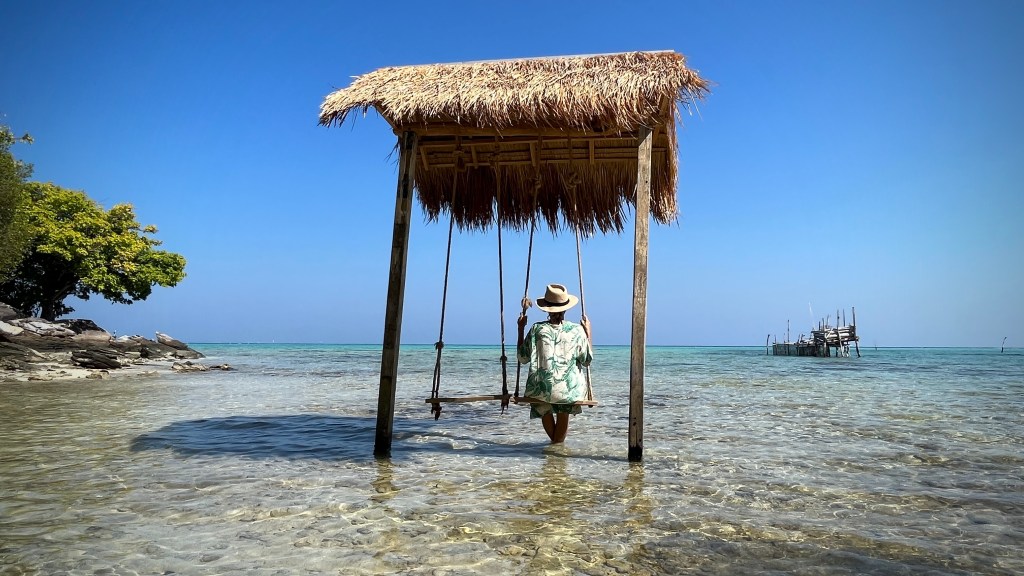
So Long, and Thanks for All the Fish.
Douglas Adams
Karimunjawa is a lot of things; easy to get to is not one of them. Tetebatu is out of the way too, so getting from one to the other required two connecting flights, a 2-hour drive and a 3-hour ferry. It was worth the effort.
Karimunjawa is a working island, primarily fishing and lobsters, and on the drive from the ferry port to the Eco Casa resort we could immediately see that it’s wealthier than the other parts of Indonesia we had seen so far. Houses here are larger, more solid and more complete, with the local version of “Jonesing the Joneses” apparently being a competition for the largest porch covered in the most colourful tiles. Compared to the rest of Indonesia, the streets are cleaner and the general impression is of a very “house-proud” island.
It seems that every beach in Indonesia has its own flavour of animals making themselves at home. Gili Gede has free-roaming goats and cows; in Selong Belanak there were dogs; on Karimunjawa we had chickens.
It’s a relaxed but welcoming and vibrant place, we felt immediately at home before even getting to Eco Casa.
Eco Casa
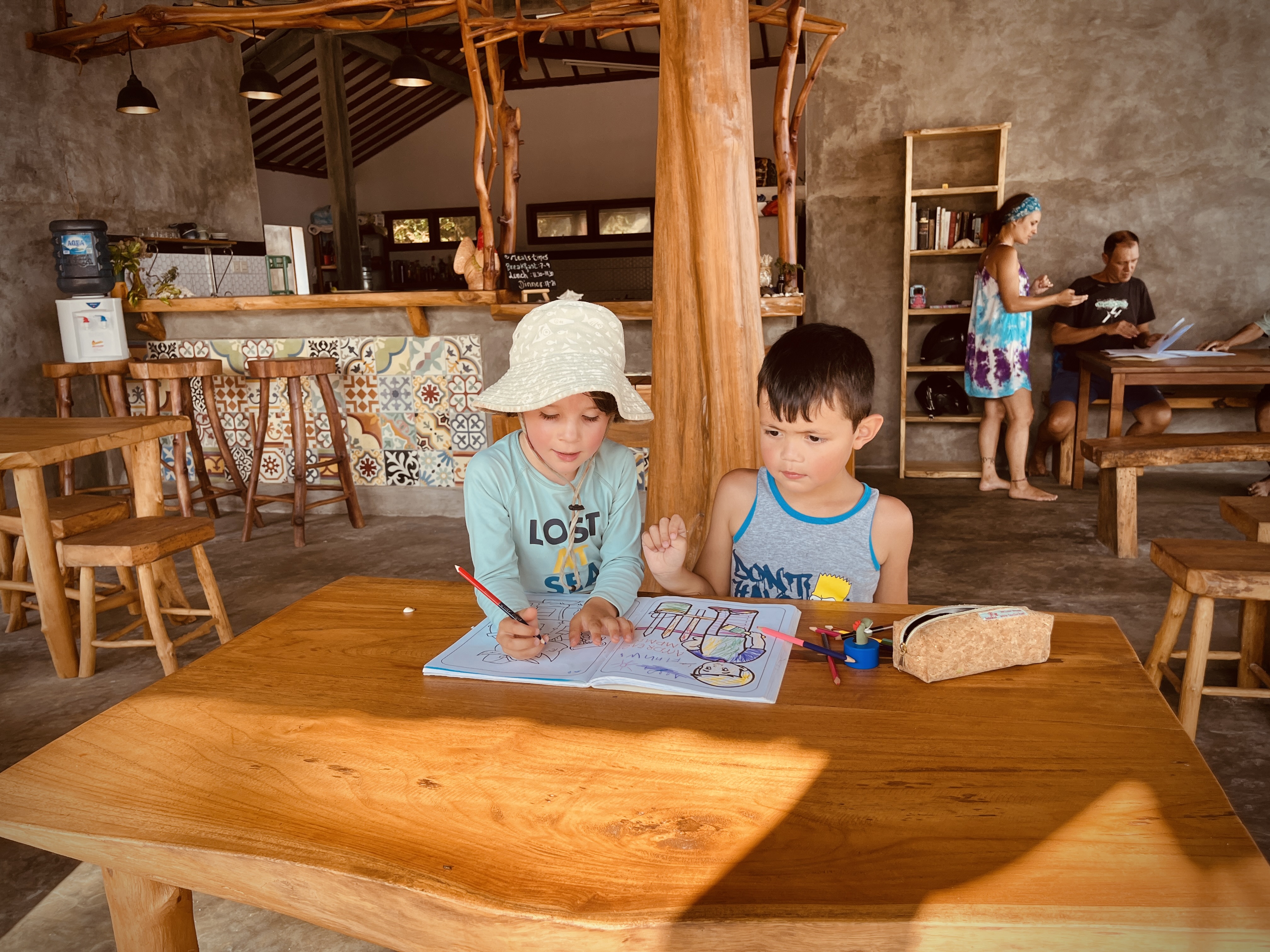
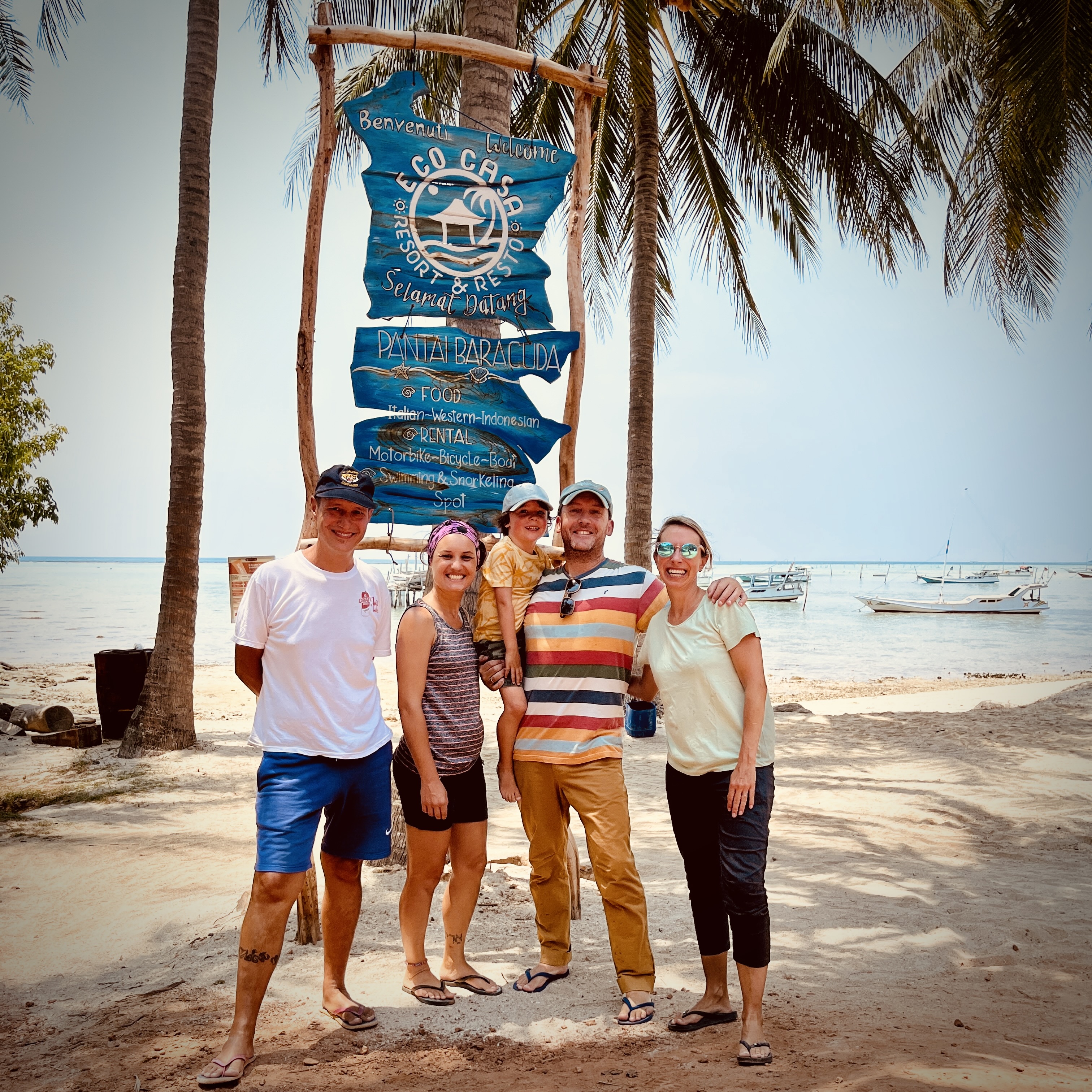
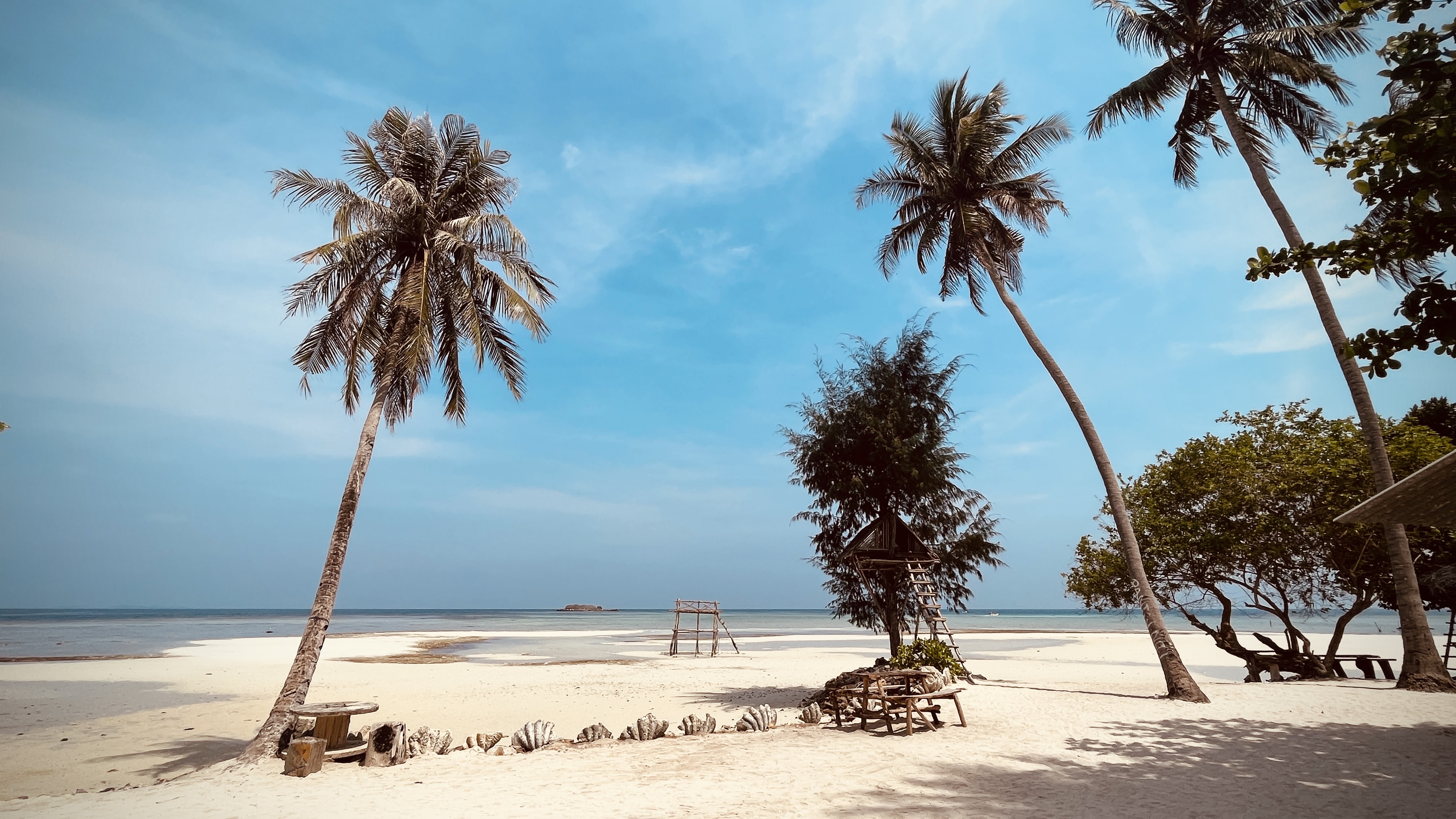
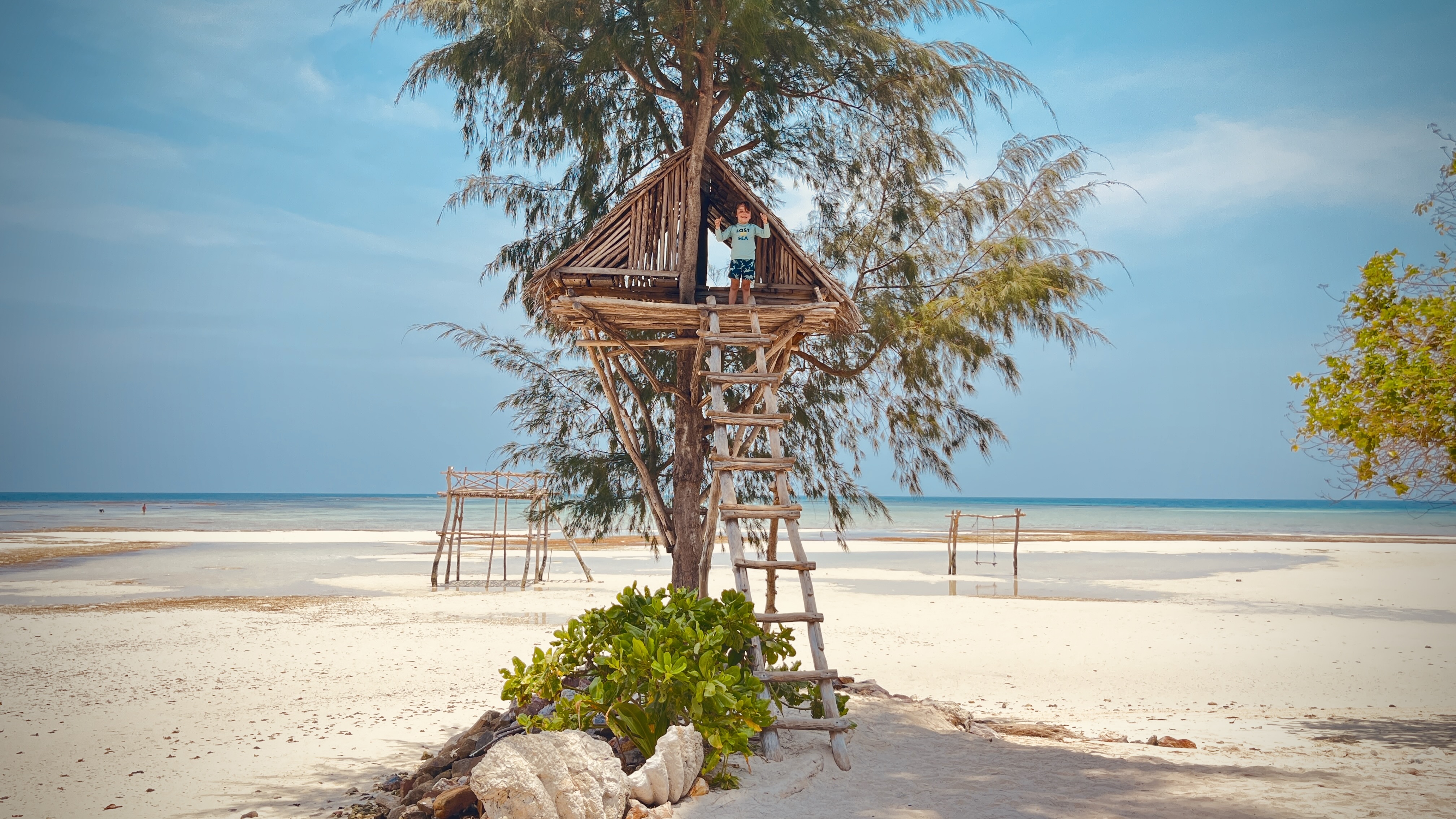
And then we arrived. If it didn’t feel so natural and effortless, you would think it had been designed for Instagram. The main building with its small restaurant and bar is directly on the beach, with two rows of five or six huts rising up a gentle slope behind. Towering coconut palms splash some shade about, and that and a steady breeze are enough to take the edge off the sun. Day time temperatures were steady around 30 degrees, with the water about the same.
It’s hard to say where the hotel ends and the beach begins, but at some point the sand dissolves gradually into water. A shallow gradient takes you out to sea: if you want, you can walk out 500 metres – and you’ll still be only hip deep. But look out for urchins! (Alex had a run of good luck but got stabbed in the foot on our last day.)
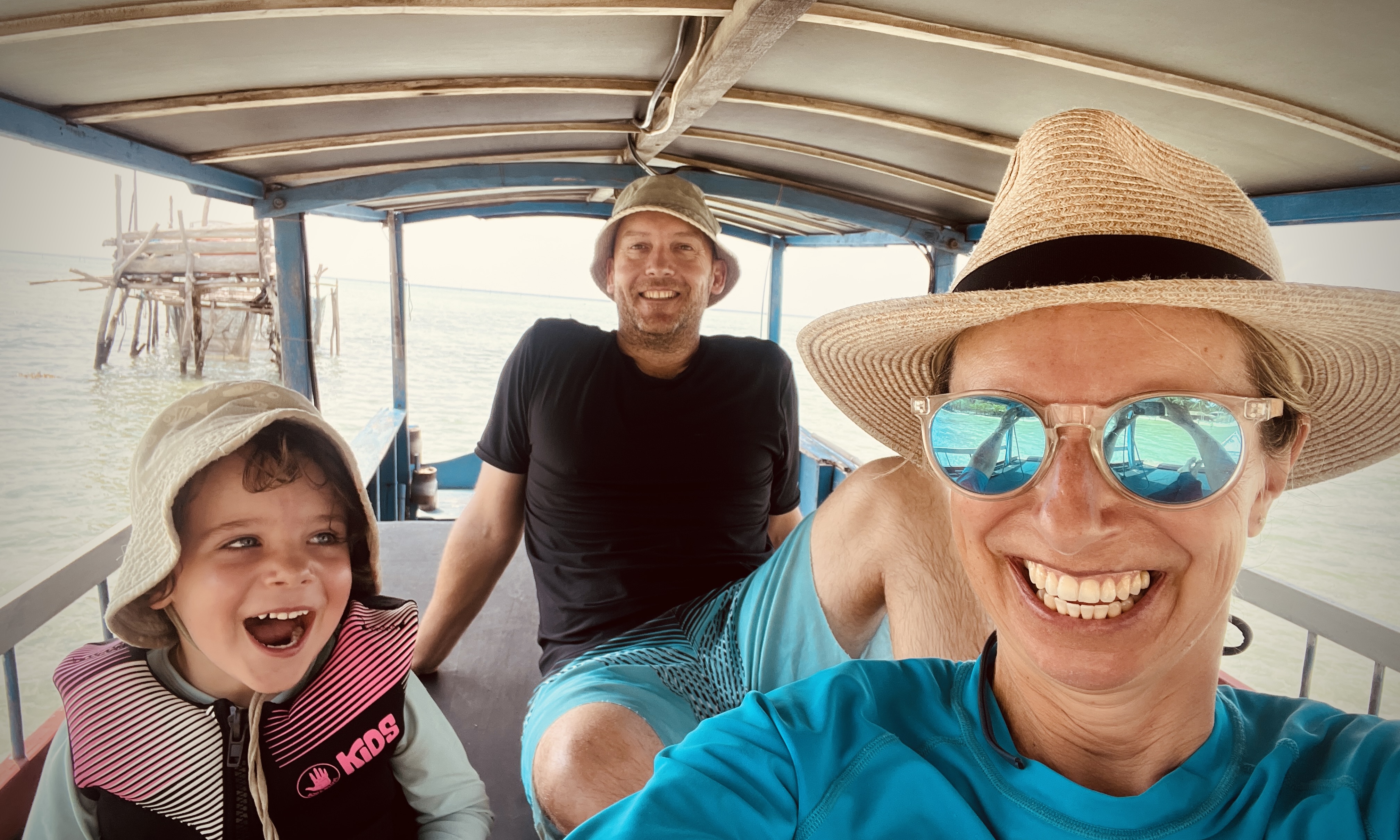
Fishing boats line the bay and in the morning and afternoon you’ll hear the distinctive chugga-chugga as they make their way to and fro. We hopped on a couple of these for island-hopping snorkel adventures.
We were surprised to find a lot of families here. Finn made many friends and we picked up some great tips for onward travel to Yogyakarta and Thailand.
Eco Casa is brand new, it only opened three months ago. Esther and Stefano, the Italian couple who own it, are amazing and it’s no surprise that it’s already booking out. Even at this early stage of our travels, it’s clear that this will be a highlight of our trip. If you are pondering a trip to Indo, we definitely recommend checking out Eco Casa.


Island hopping
The water off the beach at Eco Casa was so clear with so many corals, it seemed a bit silly to charter a boat for the day to go island hopping and snorkelling elsewhere. But never argue with a local: Esther said go and so we went. Esther organised a trip with Raul, one of the local fisherman, around several of the surrounding reef islands.
While we were snorkelling, Raul hung a line off the back of the boat and by the time we hopped back on board, he had several plump tuna in a bucket. At the next island he slathered on some sambal and threw them on the fire; a delicious meal and a special moment among many special moments.
Snorkelling was good here: the water is a steady 30 degrees and clear as gin. The coral has inevitably bleached a bit but not as badly as other places we have seen and there is still a lot of colour. We saw fish, lots of fish. Finn’s happy cry, “I found Nemo!”, and then, “Another Nemo!” … and “Another!” The coloured corals come right up at the water’s surface, ideal for snorkelling. It was like swimming in an aquarium.
The best snorkelling was on Pulau Cilik, just 15 minutes’ boat ride from Eco Casa: here.


Turtle rescue
This was a surprise, and it’s not even well known by locals. Our hosts at Eco Casa said they had heard about a conservation area where we might be able to see some critically endangered hawksbill turtles, but they weren’t sure how to get there. Other guests we spoke to had tried and failed to find the place.
Some “boring” details below, to help if you want to get there yourself and to relate a bit about what we learned. If you want to see the pictures, just skip ahead.
There is a beautiful beach on the south east side of Karimunjawa, called Pantai Bobby. It’s out of the way and not touristy at all; the guys at the kiosk do not speak English so you need to be clear and confident about what you’re looking for. You need to ask for a boat to the turtle conservation area: use the words konservasi penyu (Bahasa Indonesia for “turtle conservation”), and perahu (“boat”); you can point them to this spot on Google maps. Someone will ask you for money and suggest you get in a fishing boat: the return trip should cost around 200,000 rupiah – about AU$20.
The boat trip takes five or ten minutes, the conservation area is just the other side of the bay.
The conservation area is bare bones: a wharf and three or four simple huts between the forest and the beach. It’s not obvious that much is happening here: we were the only visitors and there was no immediate sign of life. As we disembarked, the conservation team saw us and came out to say hello.
Our guide was a university student from Jakarta, called Bintang. His name means “star” and is also the name of Indonesia’s most popular beer: two different but excellent reasons to choose such a name for your child! Bintang is studying conservation and has just started a three-month internship at the turtle conservation centre here on Karimunjawa.
Hawksbill turtles are critically endangered. Eggs were considered a delicacy on the islands around here, but eating them was banned in 2003 and now carries a prison sentence. Instead of eating them, locals from the surrounding area now drop them here. The conservation centre does not pay for the eggs, but they do reimburse costs such as fuel, to support the effort.
Under Covid there were three times as many eggs as normal dropped off, but while the fact is interesting the cause wasn’t clear to us. Maybe the drop in tourism had a dramatic affect in breeding success; maybe less competition for people’s time allowed them to find and save more eggs on their local beach; nobody we spoke to seemed to know.
Bintang took us to a nondescript shed with about twenty big buckets on the floor. Three or four seemed to contain only sand; in fact these carried buried eggs and we later saw a few of them hatching. Other buckets contained newly-hatched turtles still on sand, and still others had slightly older turtles already swimming.
Hatchlings are about 7cm head to toe. The shells are still soft and the turtles are vulnerable to predators and just generally being squished. While we were allowed to hold them gently in our hands, I can’t help feeling it might be safer for the little guys generally if this turned into more of a look-don’t-touch experience
Hatchlings are kept here for two weeks before being released. There was no release scheduled for the day of our visit but for a small fee you can release one yourself. We took up the offer; Finn picked one and named it Turtle Finn; we carried it to the water’s edge and watched Turtle Finn swim away.
It wasn’t clear to us if the turtles were kept for two weeks to help them to gain strength before release into the wild, or to give tourists a chance to pay for them to be released. After two weeks they are released regardless. Does this money go to locals or to conservation efforts, or into the back pockets of the guides? It wasn’t clear to us.
But either way – it was a highlight for Finn and an engaging education for us all.
What you should expect to pay. Nobody knew, so we couldn’t plan ahead and were lucky to have the cash on hand, but if you’re thinking of doing this you should be ready as there are no ATMs about and it’s cash only.
- 10,000 rupiah per adult entry to Pantai Bobby
- 200,000 rupiah for the return boat trip
- 10,000 rupiah per adult for entry to the turtle reserve area
- 10,000 rupiah to sponsor the release of a turtle into the wild
- In total, the whole thing cost us 250,000 rupiah (about AU$25) for the family

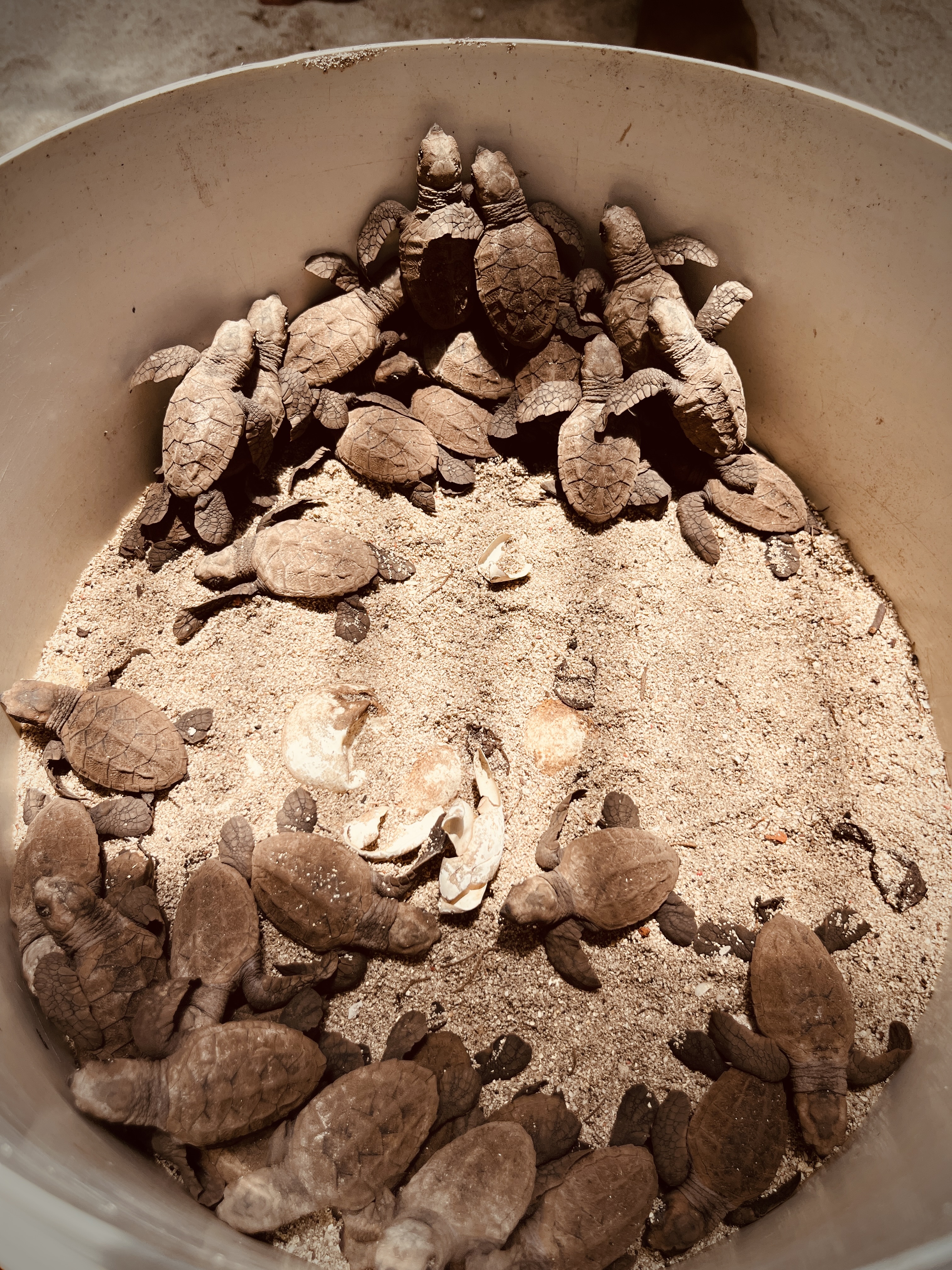
Finn got to release a hatchling into the wild.
Exploring the island
Bukit Love
This restaurant is perched near the highest point of the island clearly, clearly is designed for Instagram. It’s a shameless tourist trap but it’s quirky, the food is good and the views over the island are special.
Find it on Google maps here.

Pantai Tanjung Gelam
This was our first experience in Indonesia of shameless mass tourism. For whatever arbitrary reason, this 100m stretch of beach is where all of the package tours come. All of them, apparently at the same time. In the half hour we were there, twelve boats with about 20 people each landed here, one next to the other next to the other. The boats chug in from over the horizon, everyone hops off, they all take their selfies under the palm trees leaning over the beach, then they sardine themselves back in the tin and go back to where they came from. It’s surreal.
Avoid it on Google maps, here.
Sunset Beach
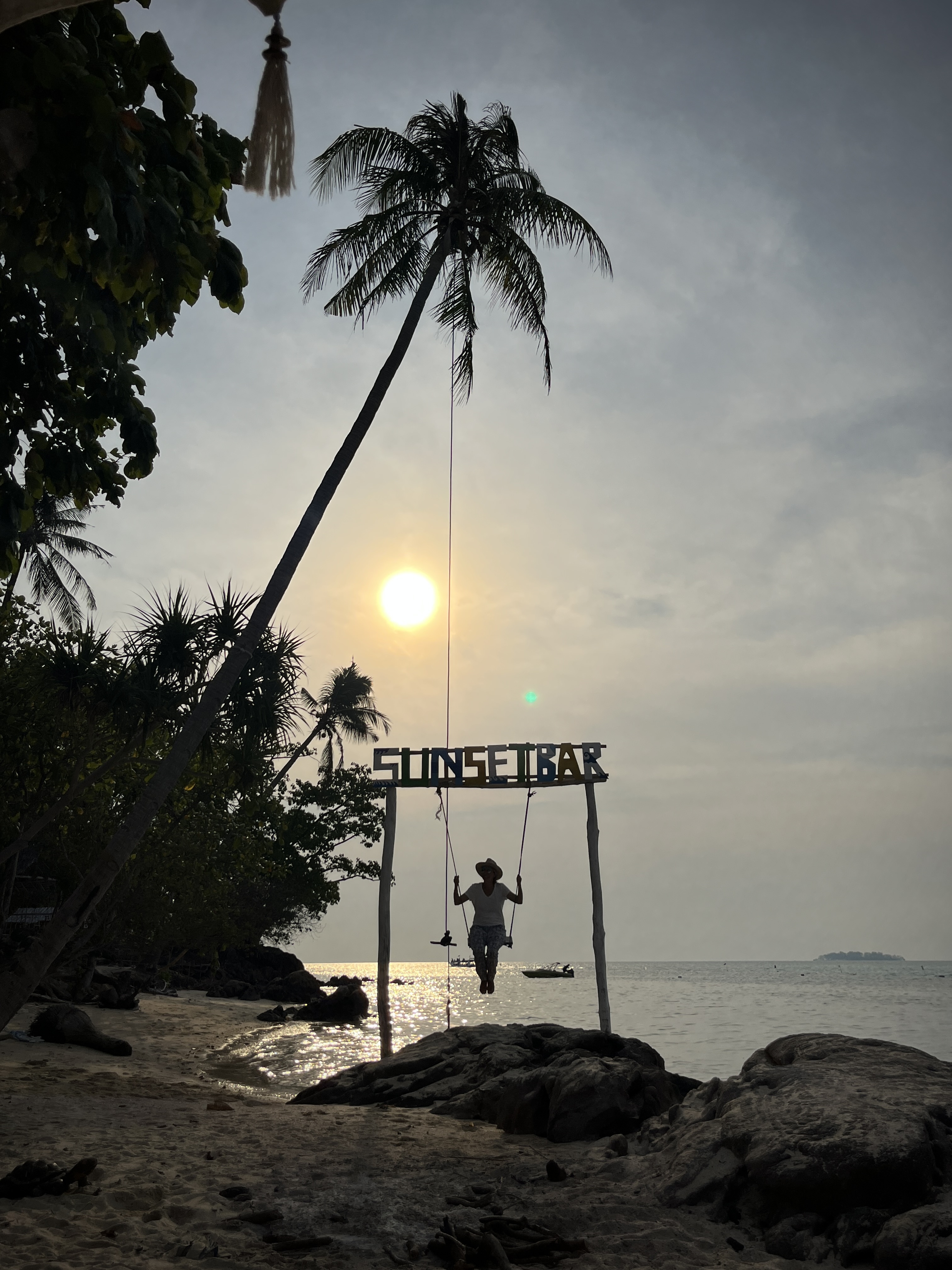
Literally just around the corner from the mass tourist siege at Tanjung Gelam, Sunset is a better beach with a quirky bar, great for snorkelling followed by a sunset and a beer. Inexplicable that this beach is missed by the tourist hordes that swamp Tanjung Gelam – but we weren’t complaining!
The manager is (randomly) a huge Borussia Dortmund fan, so if there’s a European football game on after sunset (as when we were there), they’ll set a projector up on the beach and cheer it on.
Check it out here.

Sea life is abundant. We saw clownfish, lots of starfish, sand dollars and lots and lots of fish in shin-height water: no snorkel required. Here’s a cuttlefish flashing colours and shooting ink:


 The Whiteleys in Asia