
Travel isn’t always pretty. It isn’t always comfortable. Sometimes it hurts, it even breaks your heart. But that’s okay. The journey changes you; it should change you. It leaves marks on your memory, on your consciousness, on your heart, and on your body. You take something with you. Hopefully, you leave something good behind.
Anthony Bourdain
Selong Belanak was a pleasant few days but it was so easy, so safe, so convenient, it didn’t really feel like the clean break we were looking for. Tetebatu is different.
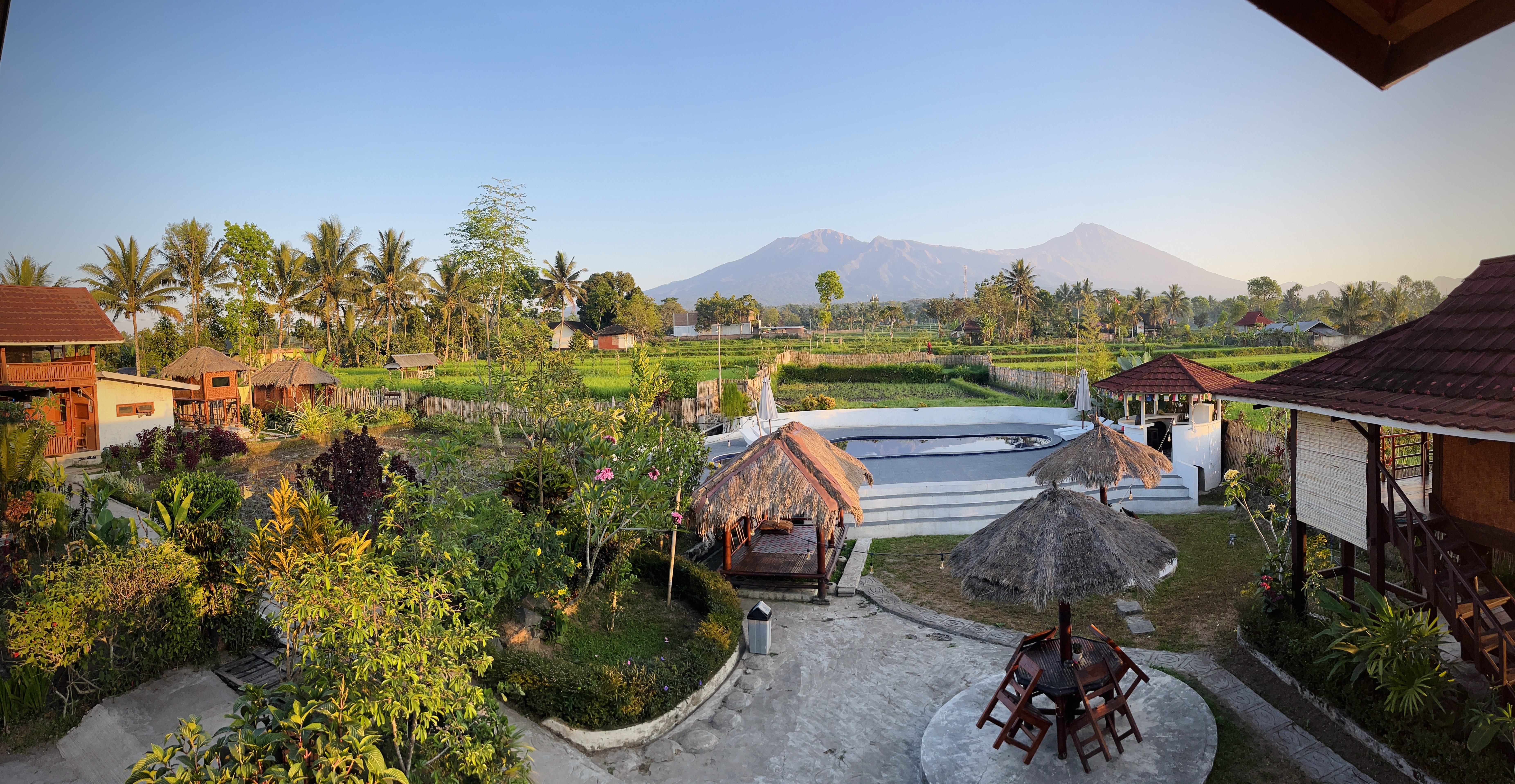
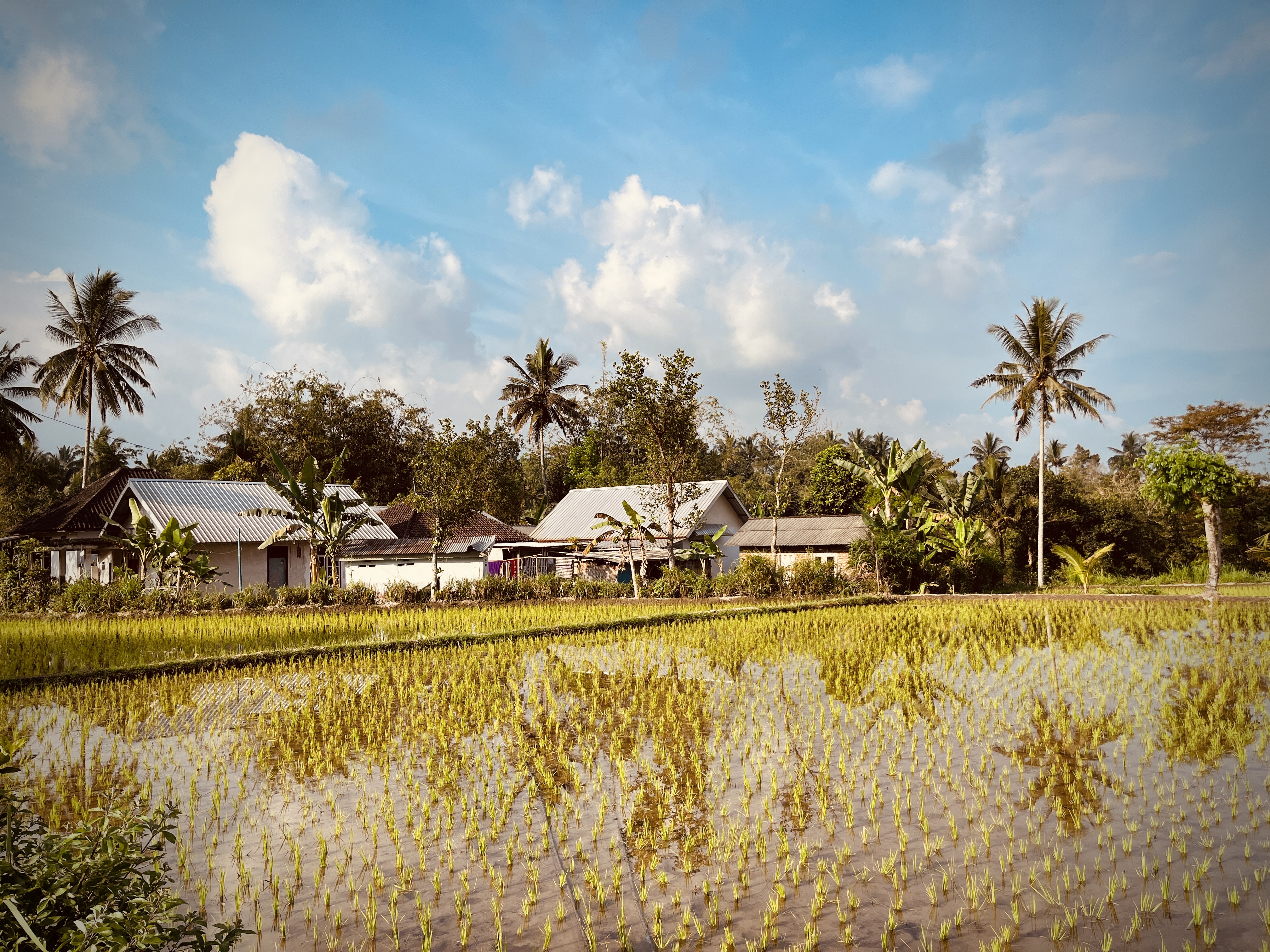
The village is surrounded by rice fields and waterfalls and tumbles down the southern slope of the Rinjani crater, in the centre of Lombok. Tourism hasn’t yet taken hold: as on Gili Gede we were a novelty, and locals in the street would stop and stare as we walked past. Everyone says hello, everybody smiles. Those who have a few words of English want to know where we are from: “Ah, Australia! Gidday mate!” said one, with a big smile. And another, gleefully: “Crocodile Dundee!”
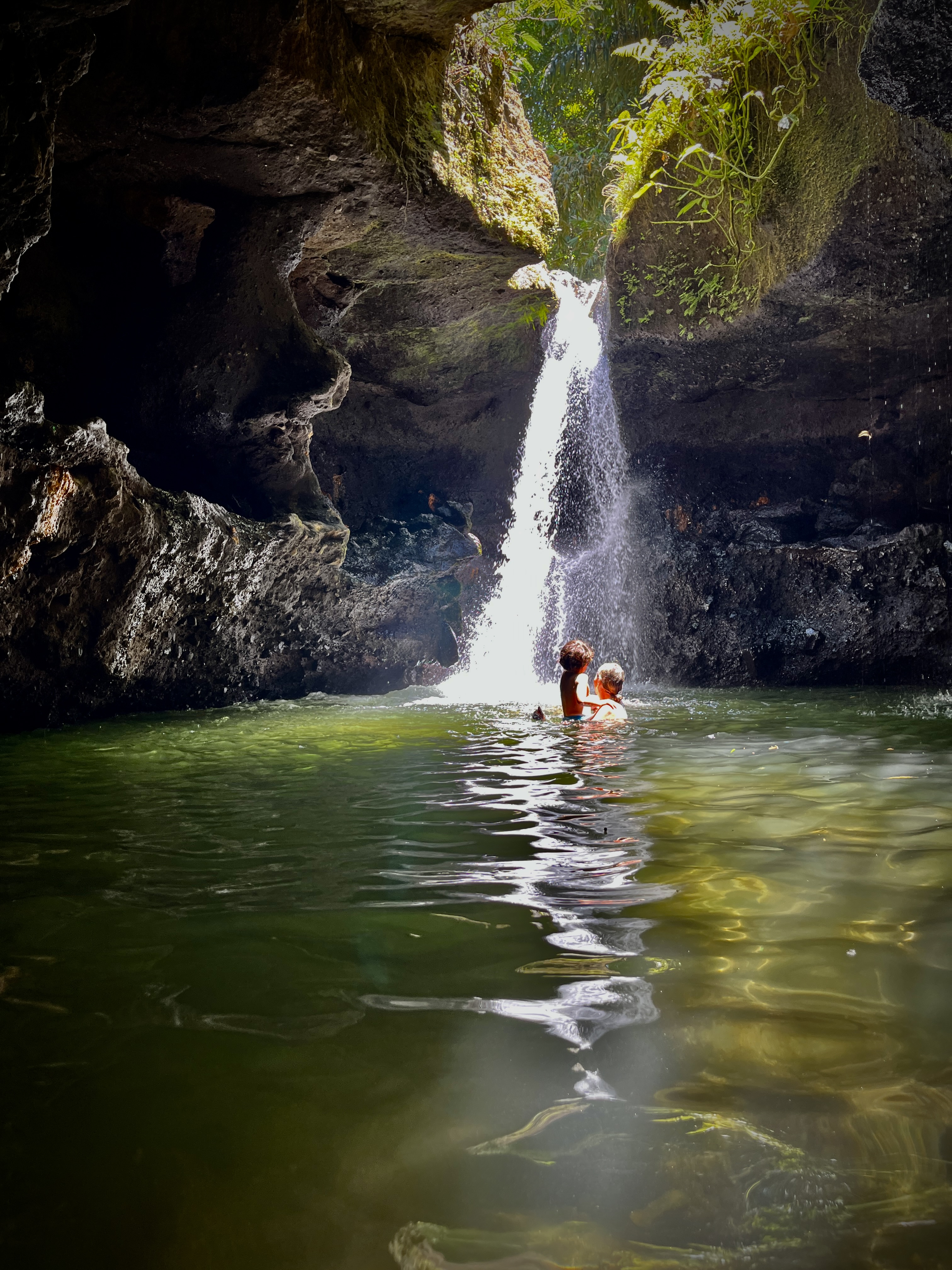
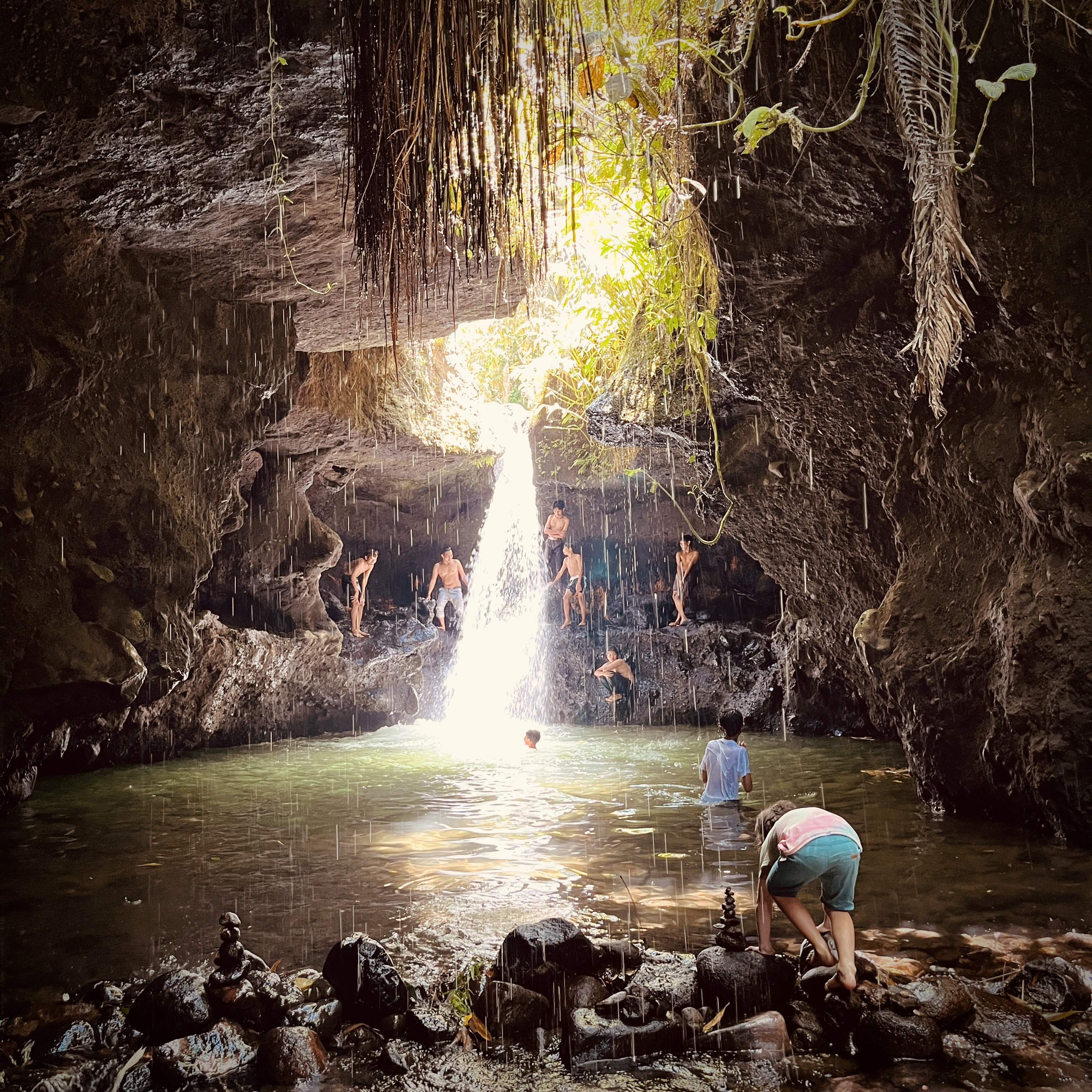
More than anywhere we’ve been so far, here the Indonesian trifecta of open hospitality, kid-focus, and foreigner-fascination had Finn in the spotlight everywhere we went. He’s a celebrity and the locals were the paparazzi. People would cross the street to say, “Hello handsome baby, what your name?” or, “So blue eyes!” The less shy would just reach out and touch his face, like Jesus; it’s a bit confronting. He is definitely not Jesus. We had one memorable moment at the Sarang Walet waterfall where a gaggle of about fifteen girls, they must have been around thirteen years old, swamped Finn completely, touching his face, chittering and laughing and squeezing in and piling on; the poor little man completely shut down. The attention junkie gets an overdose!
We had only booked a couple of days in Tetebatu because we weren’t sure what to expect: with no tourist infrastructure at all, would this be a mistake? How much actually was there to see and do? In the end we packed in a huge amount of exploration and adventure and discovery into a short time and we could have stayed far, far longer in this astonishing place with its astonishing open-hearted people.
Pondok Indah Bungalows
There are no real hotels in Tetebatu but there are homestays on booking.com. Pondok Indah Bungalows is run by Uci and her husband Salun and their family.
After the professional comfort of Driftwood Lombok, it was refreshing to have a real low-key family experience – but there is a flip side. When he showed us our room, Salun was extremely proud of the aircon unit that he had bought but not yet installed in the room: “You are very lucky, this room will be so comfortable for the next guests! My best room for you, my friends!” To be fair, it definitely was the best room: it is a solid building and even had an en suite, not to mention the imminent A/C. Other rooms are renovated rice barns and have walls of rattan and a simple mattress on the floor.
Uci’s food is simple and delicious traditional Indonesian fare. She is very proud of her Lombok coffee – laced heavily with nutmeg, cloves and ginger in the style Putin’s polonium – and I recommend trying it, if for no other reason than to appreciate how relaxing and unchallenging a regular European-style cappuccino really is.
Exploring rice fields and waterfalls
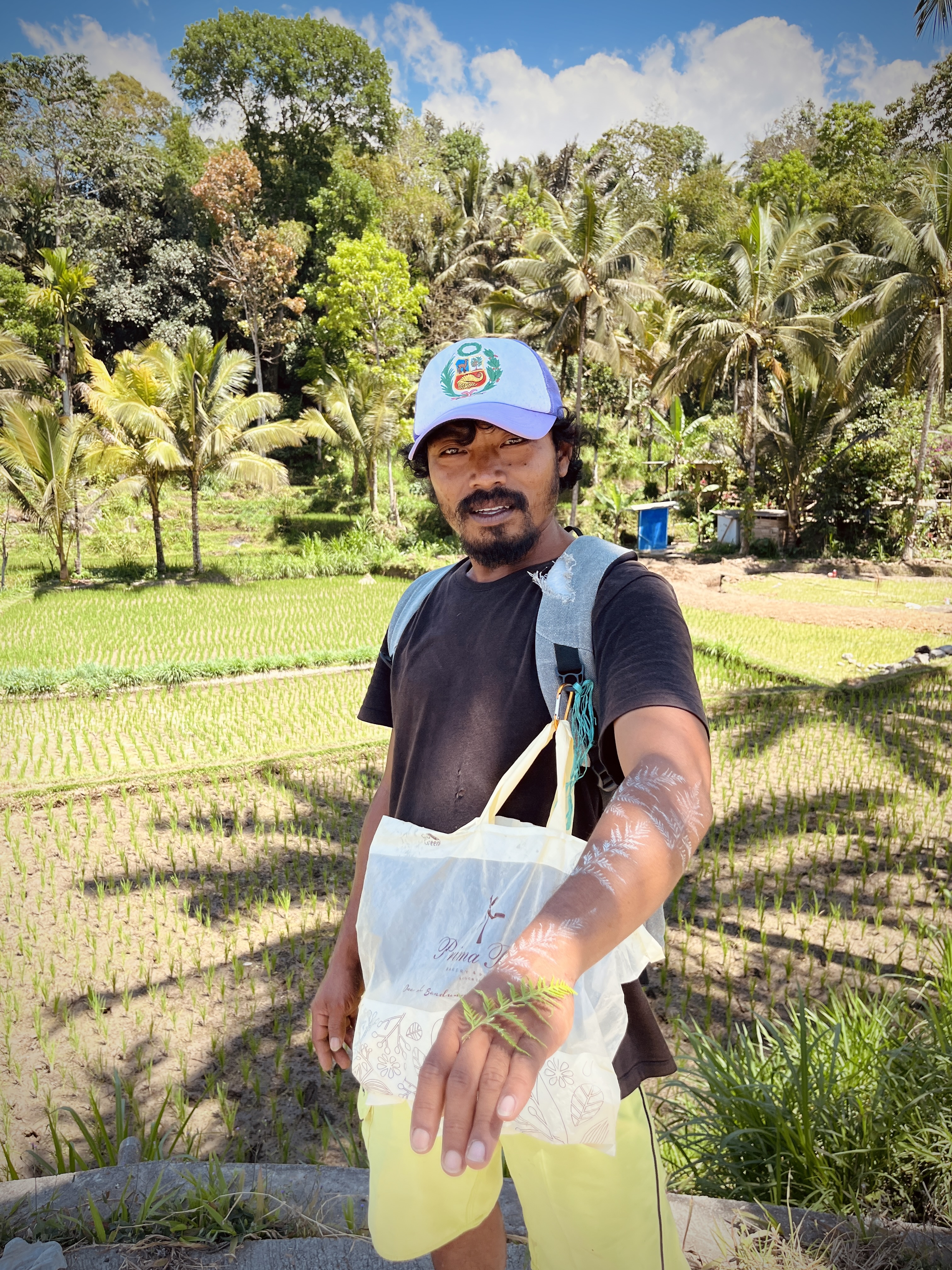
The best thing about Pondok Indah was that we had Uci’s cousin Abu as our guide for a day. Abu runs the local fuel store in Tetebatu but takes days off to show Uci’s guests around: his wife was deputising on the day he took us out.
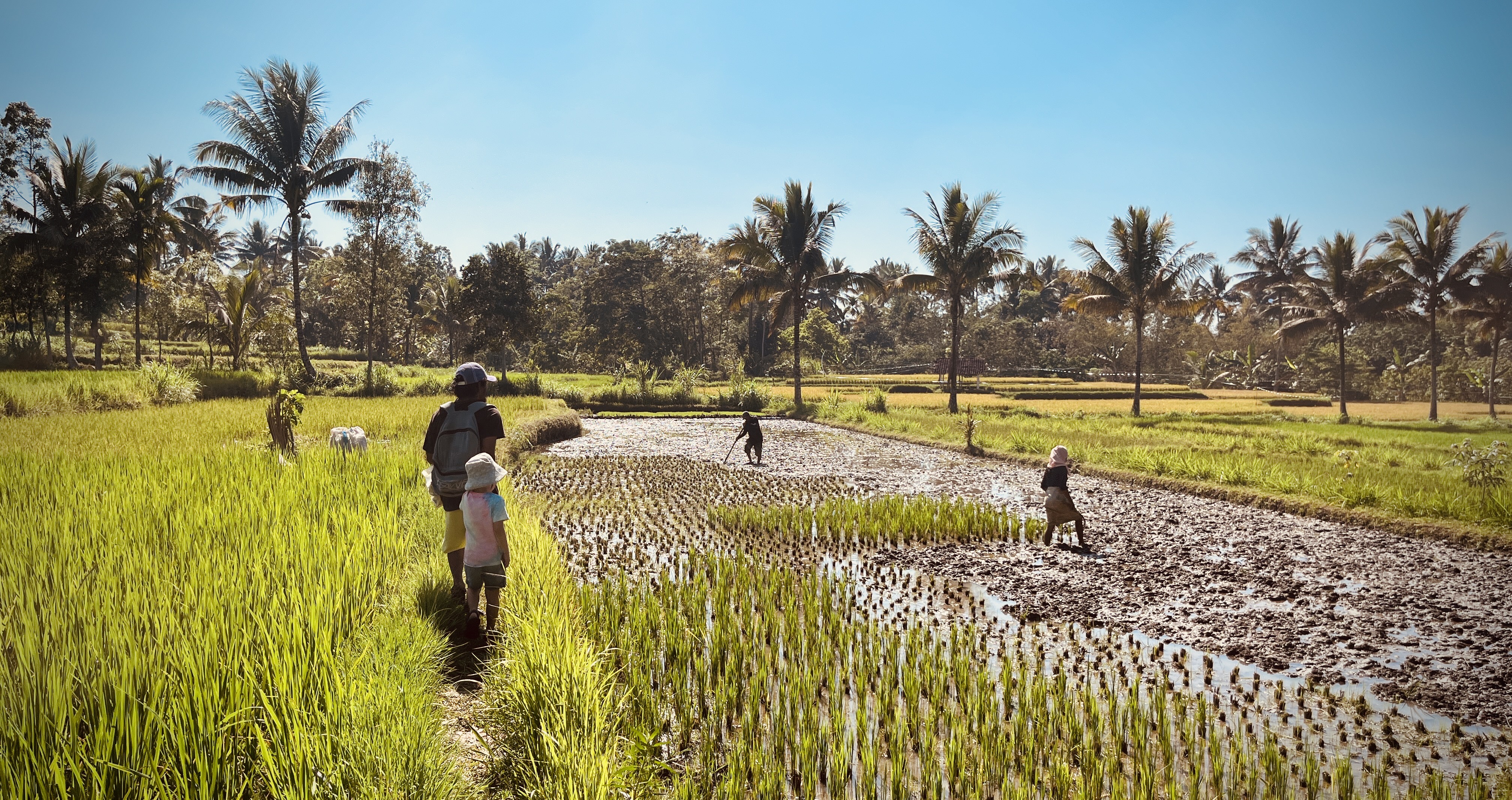
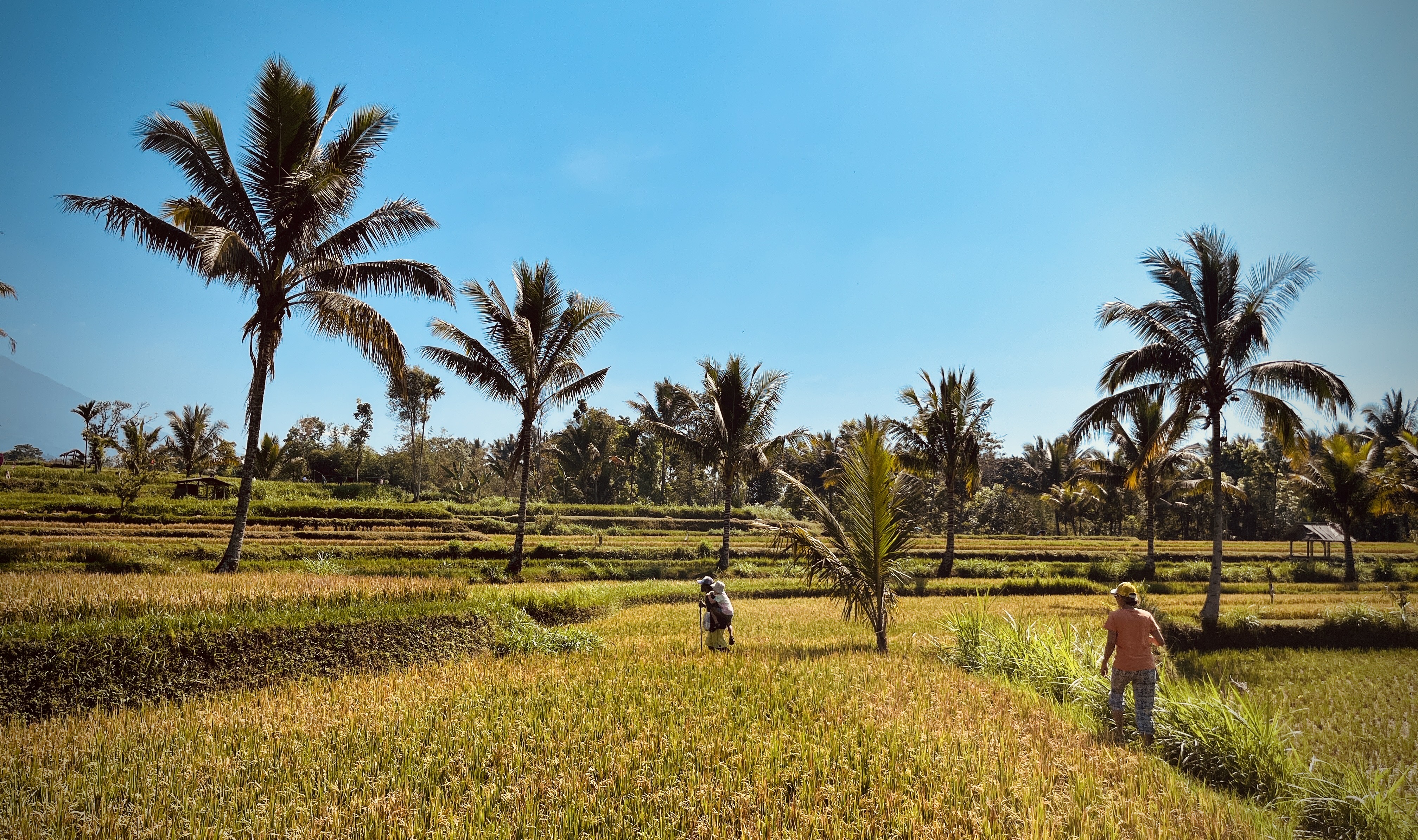
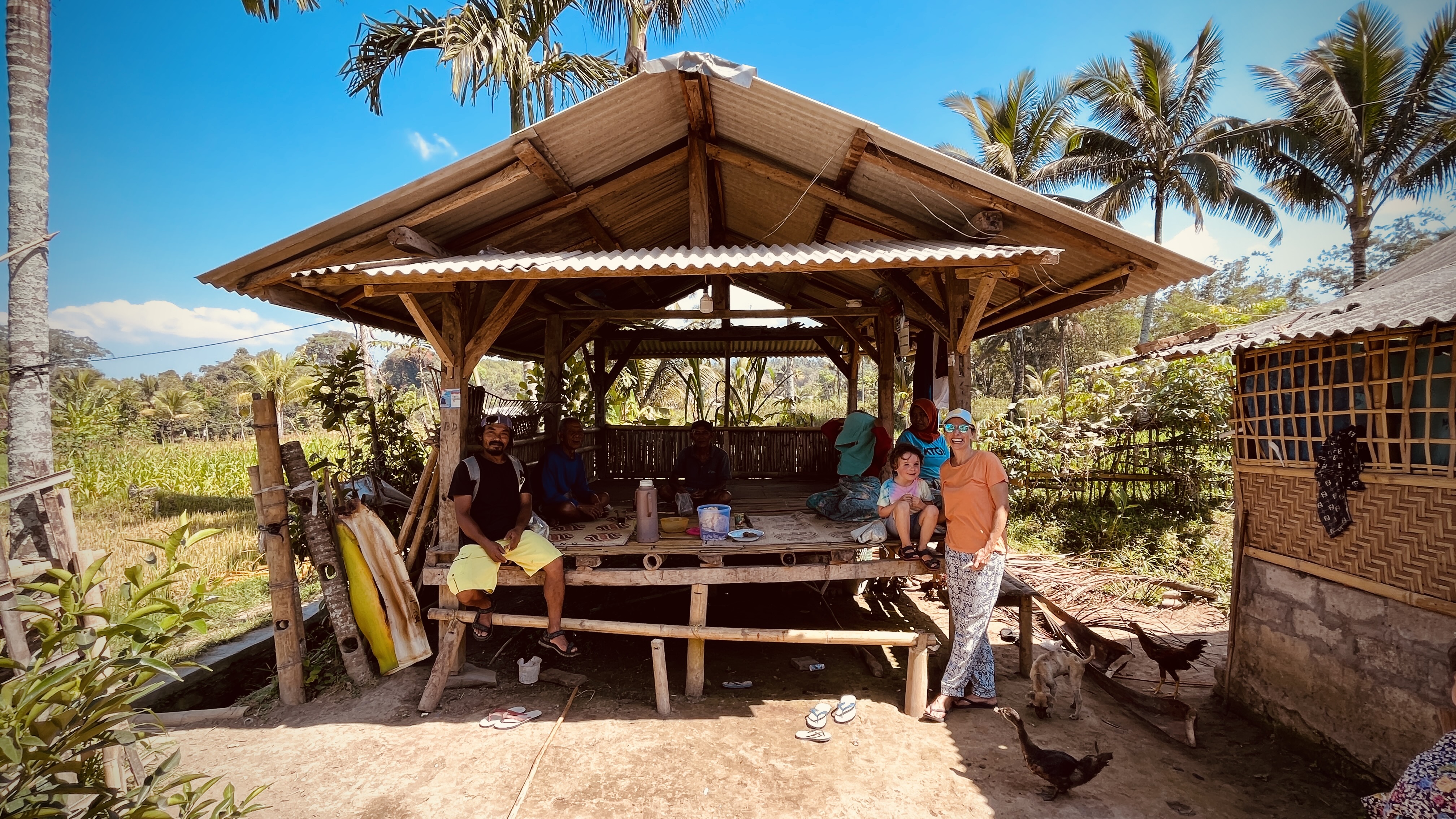
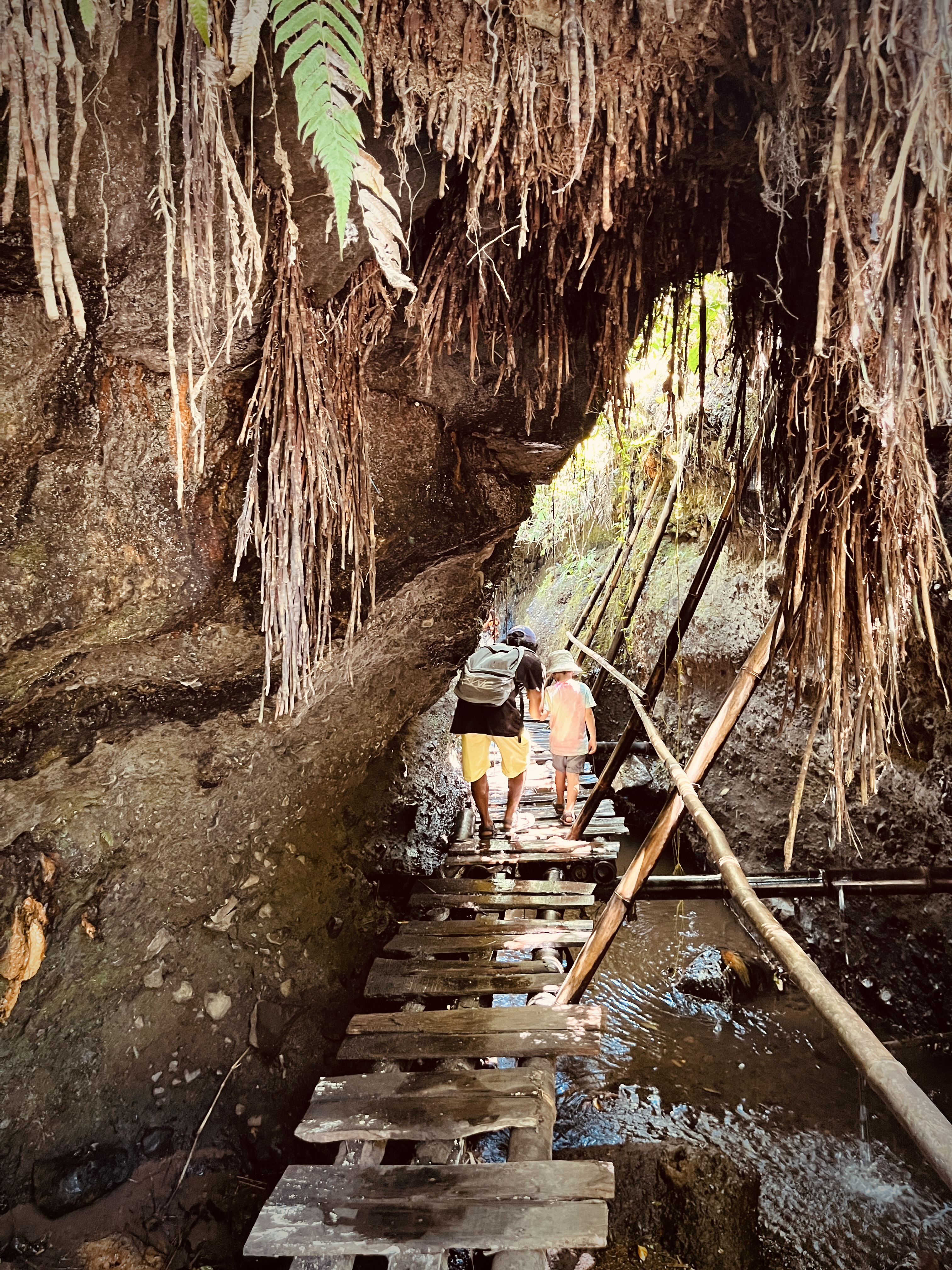
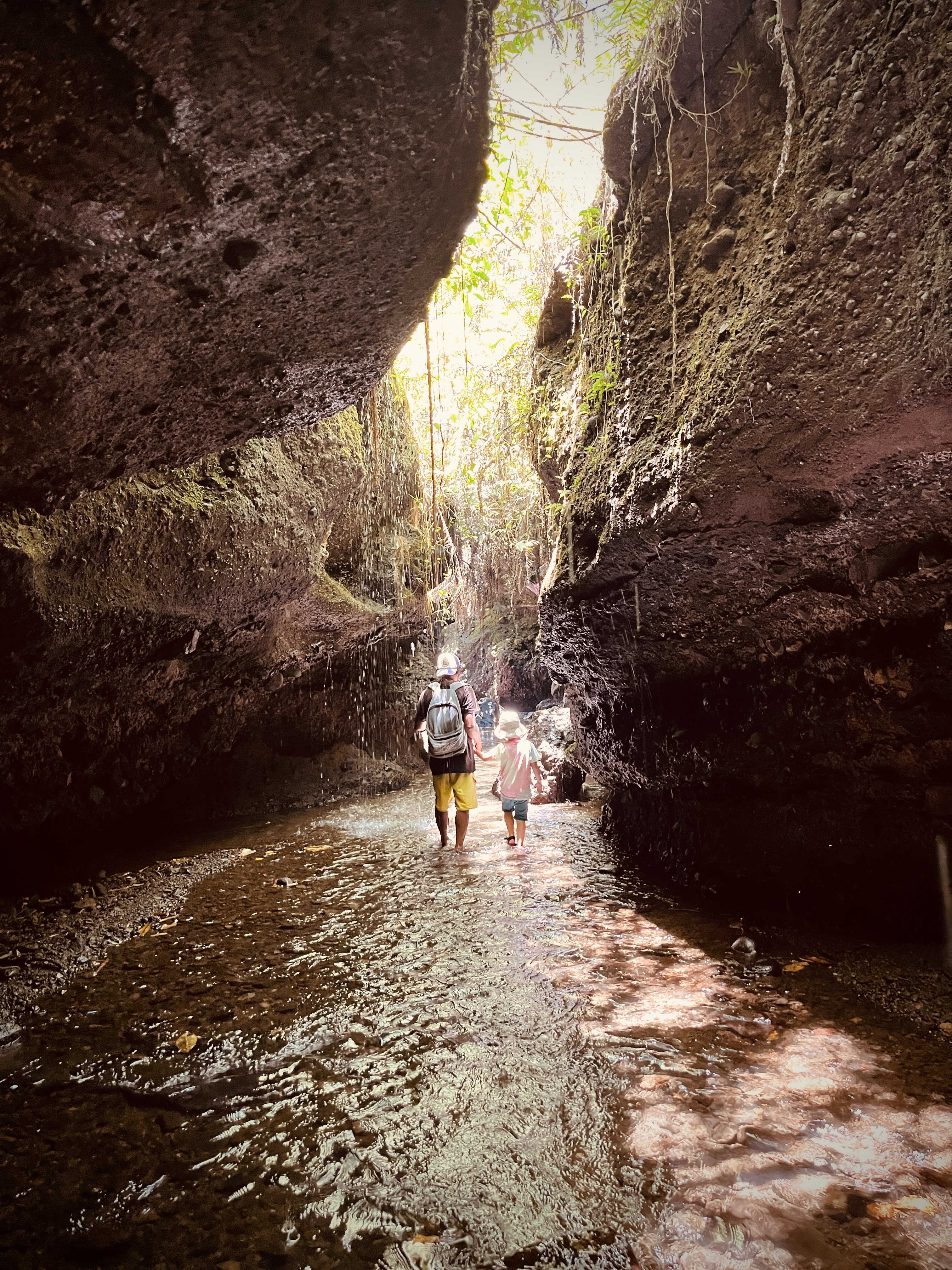
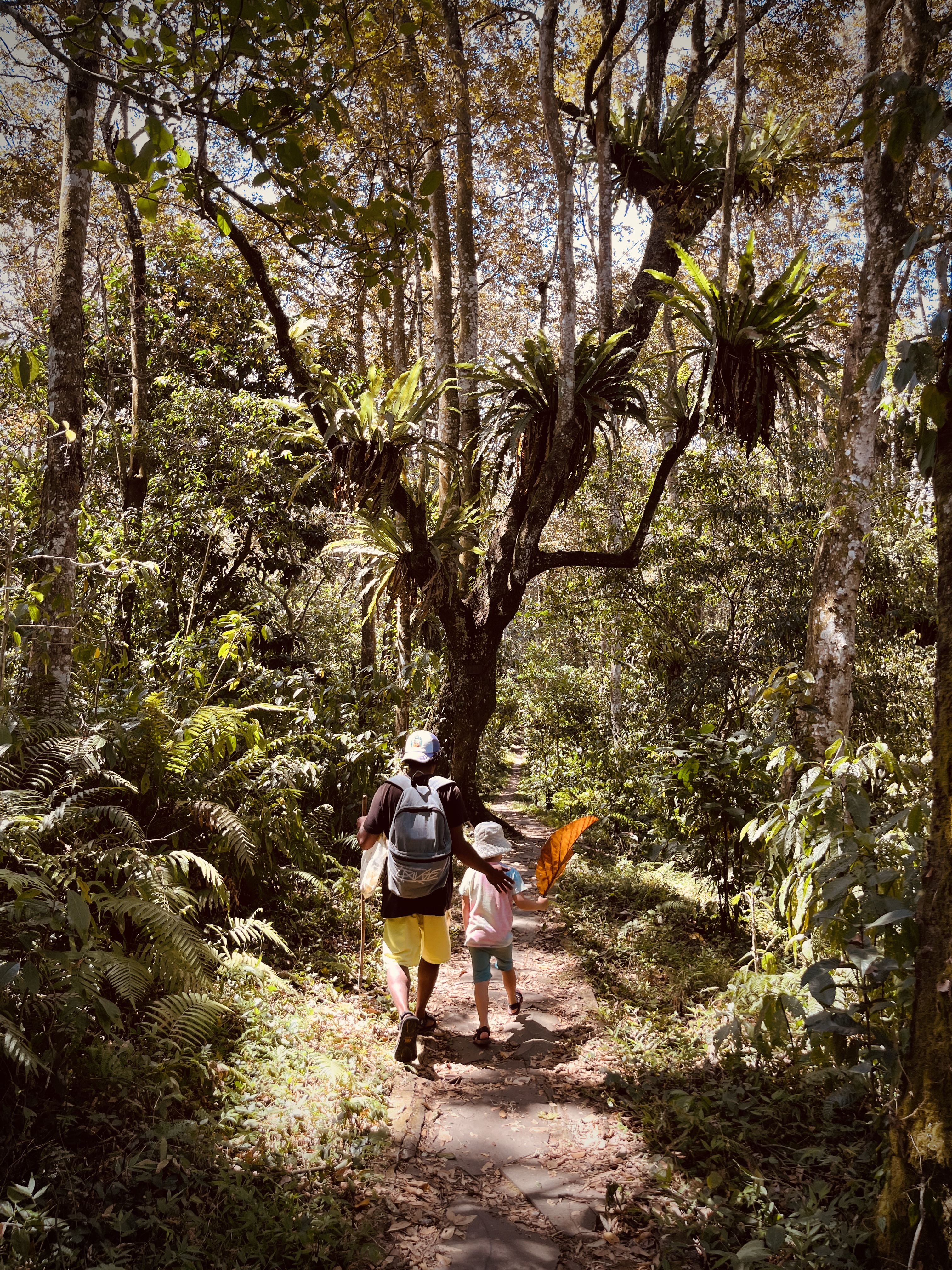
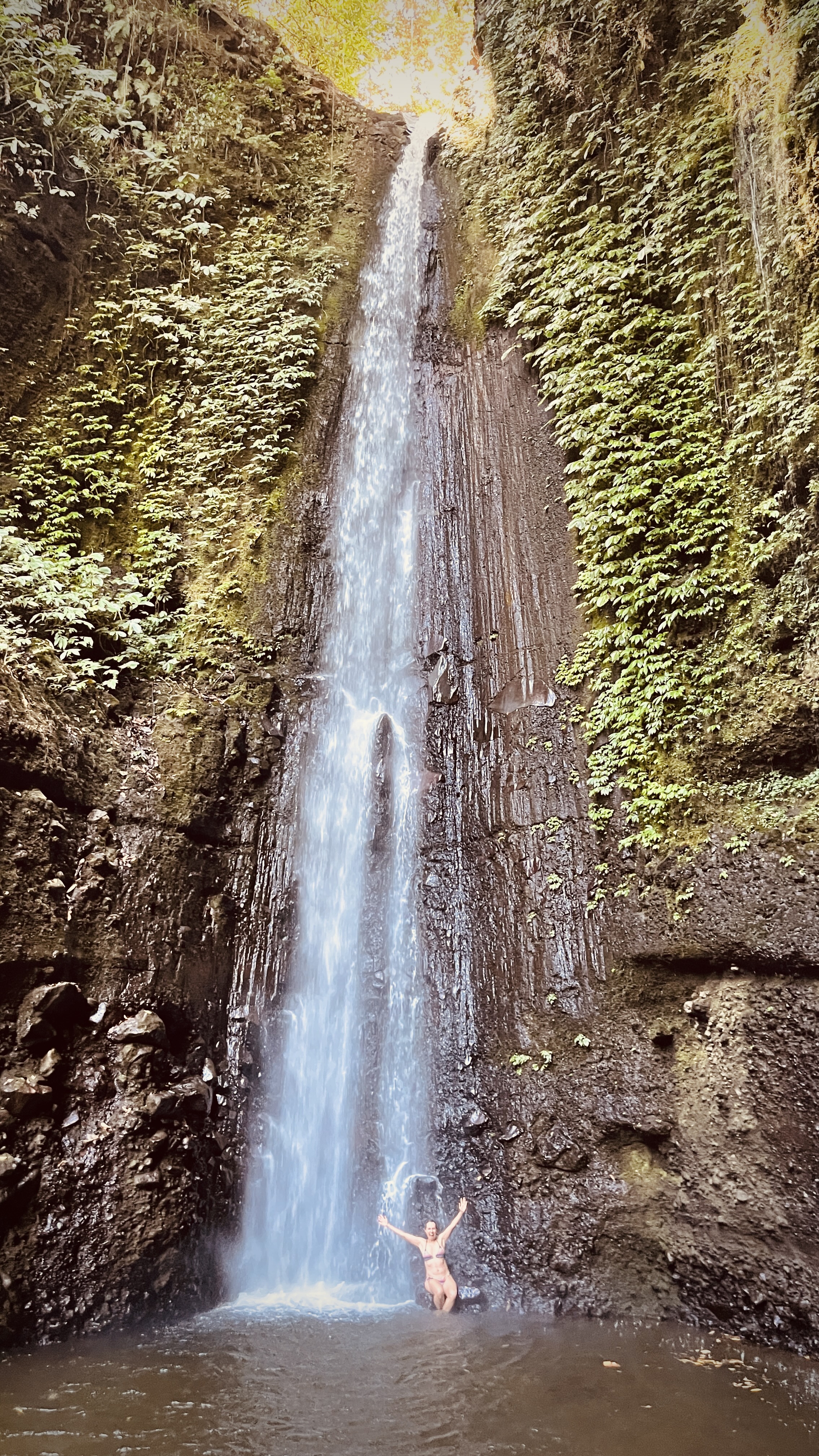
He’s got charisma and a big smile and Finn was immediately like, whoa, now this guy is cool. Half of the day he carried Finn on his back, the other half of the day they were holding hands and singing as we walked. Along the way we learned (and forgot) everything there is to know about rice farming; met a bunch of farmers in the fields and even got invited in for tea; explored hidden waterfalls and a monkey forest; and learned a bit about the push and pull between tourism and local culture.
As we walked and talked, Abu used his specially made walking stick to spike rubbish and collect it in his bag. Anyone who has been to Indonesia will know what an up-at-dawn siege and generally pointless endeavour that is, but the beautiful thing is that in his modest way Abu has inspired others in the village to do the same. The supposedly pointless endeavour is gathering steam in the community and there’s a growing appetite to preserve this wonderful place.

Thanks for reading! This is a rough draft and we will come back to polish and add further details such as where to find waterfalls, what’s good to eat, useful phrases – that sort of thing. In the meantime, if you’re thinking of heading to Tetebatu, please just ask!
 The Whiteleys in Asia