
A man walks down the street
Paul Simon, “You Can Call Me Al“
It’s a street in a strange world
Maybe it’s the third world
Maybe it’s his first time around
Doesn’t speak the language
He holds no currency
He is a foreign man
He is surrounded by the sound, the sound
Cattle in the marketplace
Scatterlings and orphanages
He looks around, around
He sees angels in the architecture
Spinning in infinity
He says, “Amen and Hallelujah!”
Bali was fun for a day but it wasn’t holiday proper. It was a necessary stepping stone to South East Asia. Lombok is where the adventure begins.
Our first stop in Lombok was Gili Gede. “Gili” is the local Sasak (the indigenous Lomboksiders) word for a little island; “Gede” is pronounced “G’day” and means big. So it’s the big little island, and if that’s confusing I don’t know what to tell you. It is kind of big … and kind of small … either way they’re not wrong, but still, I can’t help feeling they named it at the end of a long day of island-naming when all of the more descriptive names were already taken.
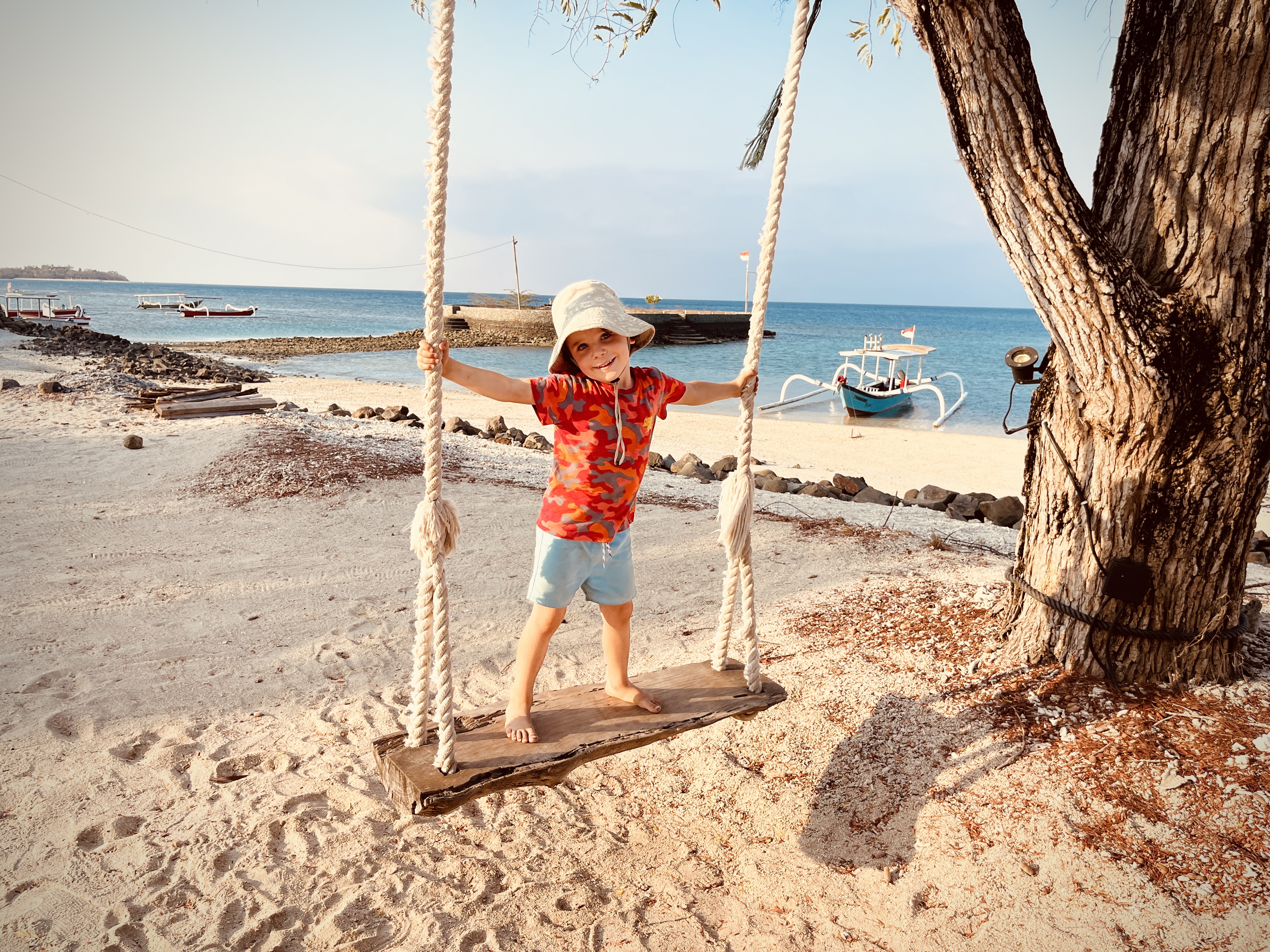
Gede is a working island and consists of five small villages scattered along a rugged 3km length. The main industries are fishing and pearl farming, and as befits a seafaring population there are no roads or cars on the island: just narrow paths, tracks and beaches. Somehow a scattering of scooters manage to hoon their way around the island, mostly driven by kids not a lot older than Finn.
The island is poor, very poor. You get a sense that tourism was on the rise before Covid hit, and there are shells of half-built abandoned hotels now taken over by bush, goats and chickens. Fishing is still the main trade here but the waters have been overfished and tourism will have to carry the island forward. There is tension between the old industry and the new: our guide took us snorkelling around the islands and had to shoo several fishermen off of the reefs to stop them from damaging the corals.
The day starts early: the rooster crows and the muezzin calls at 5am. Our homestay Bukit Tanjungan’s prime location on the water has its drawbacks as the muezzins’ loudspeakers from the mainland mosques carry well. You get the early prayers in full quadrophonic glory. Finn loves a good sleep in and at one point when a particularly tuneless kid hopped on the loudspeaker to sing his praises (we can only guess, the muezzin’s son), Finn called out in exasperation, “Can somebody please take away his microphone!”
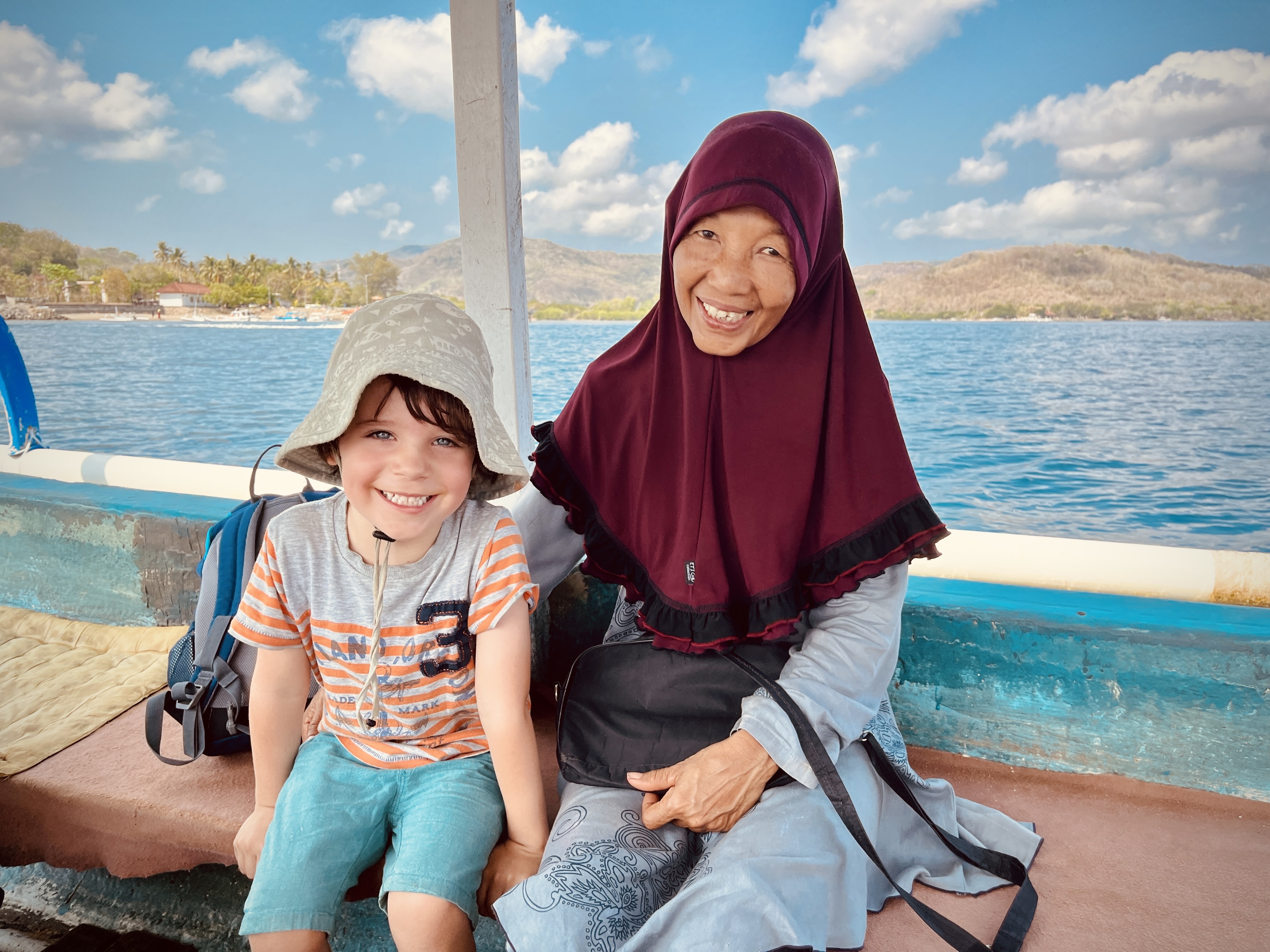
It’s a shabby old boot of a reef island but it has a stark beauty and the locals are the warmest and most welcoming you will find anywhere. Everyone says hello; people come out of their houses to say hello; kids run after you in the street and want to play. Smiles are everywhere. It set the perfect mood for an unplug and reset at the start of our great adventure.
Bukit Tanjungan
Our home for four amazing days. Find it on Google maps here.
The owners Alain and Ita are French and Indonesian respectively and – two weeks and many restaurants later – we can safely say theirs is the best kitchen you could find on Lombok. Simple dishes such as rendang or nasi goreng were done with flair and Alex even got a fillet mignon with butter echalote sauce on our last night. As food should be, it’s delicious and surprising. Ita is shy but Alain loves a drink and a chat and is full of knowledge and insights on Lombok life.
As good as Ita and Alain are with food, home maintenance is not their thing. If you care about, I don’t know, walls connecting to roofs or door handles staying on, this is not the place for you. If you can look past those quirks – it is a dream.
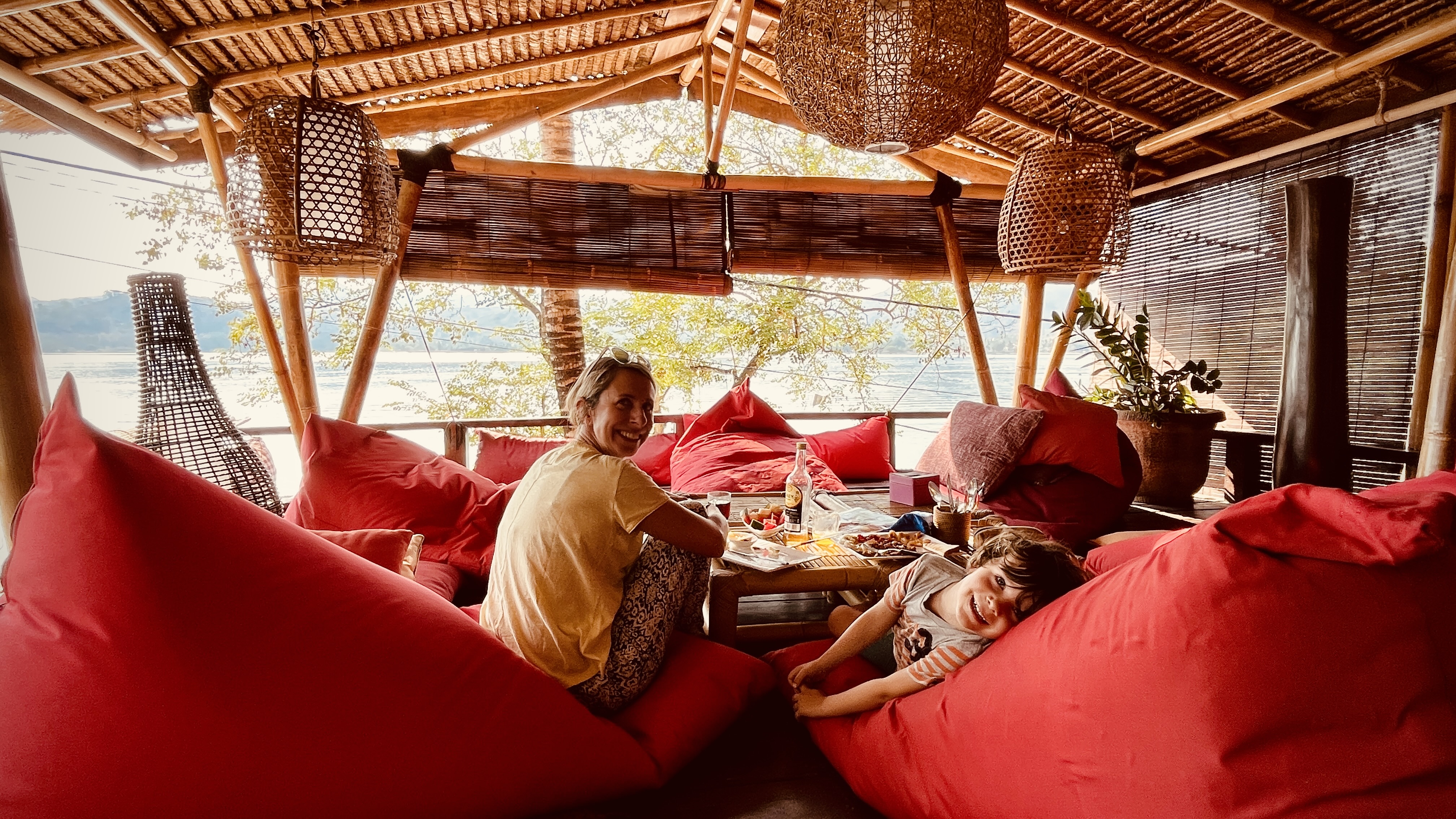
Island hopping
Alain gave us his boat for a day, to go island hopping and snorkelling around the nearby reefs and coral islands.

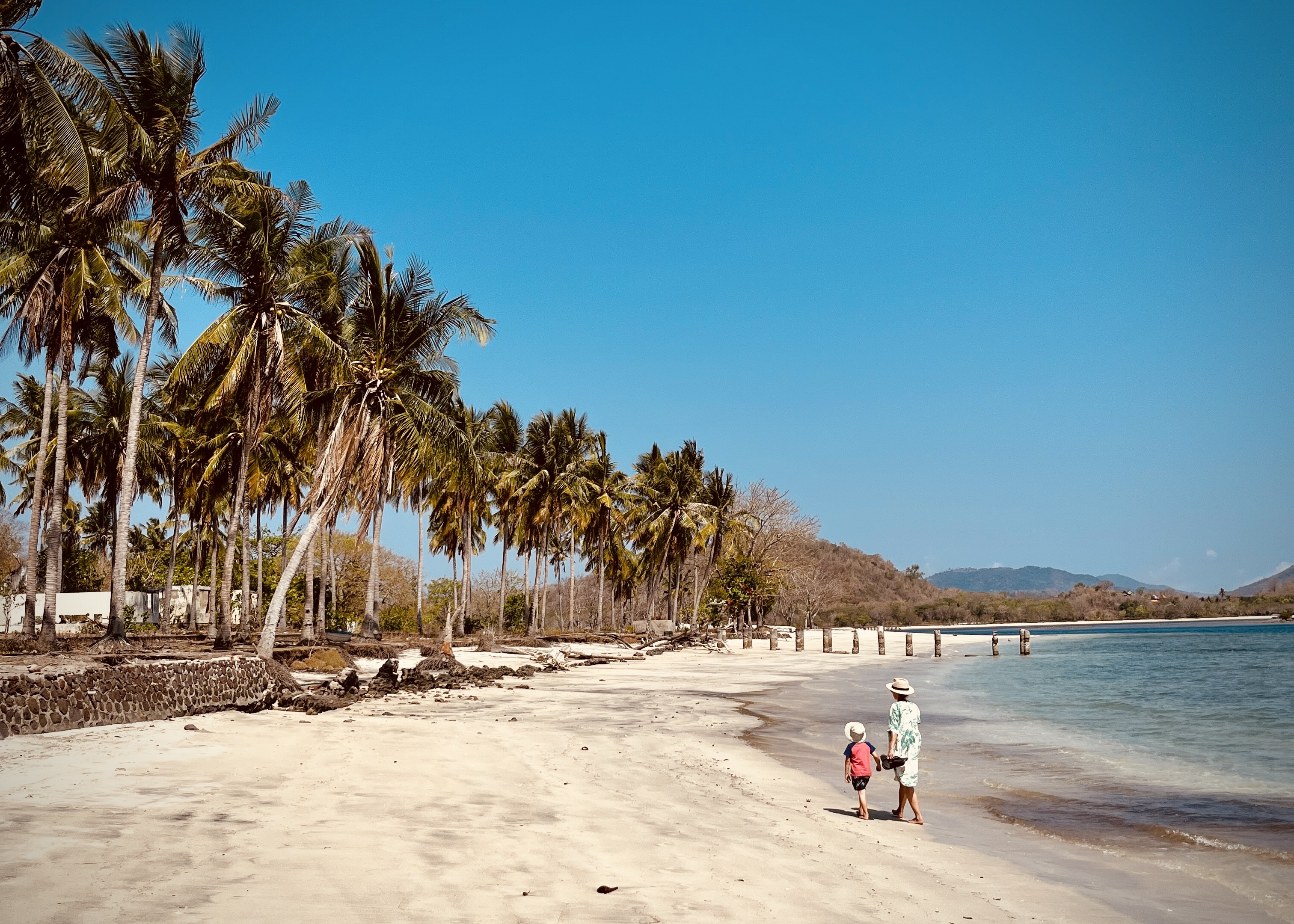
Exploring Gili Gede
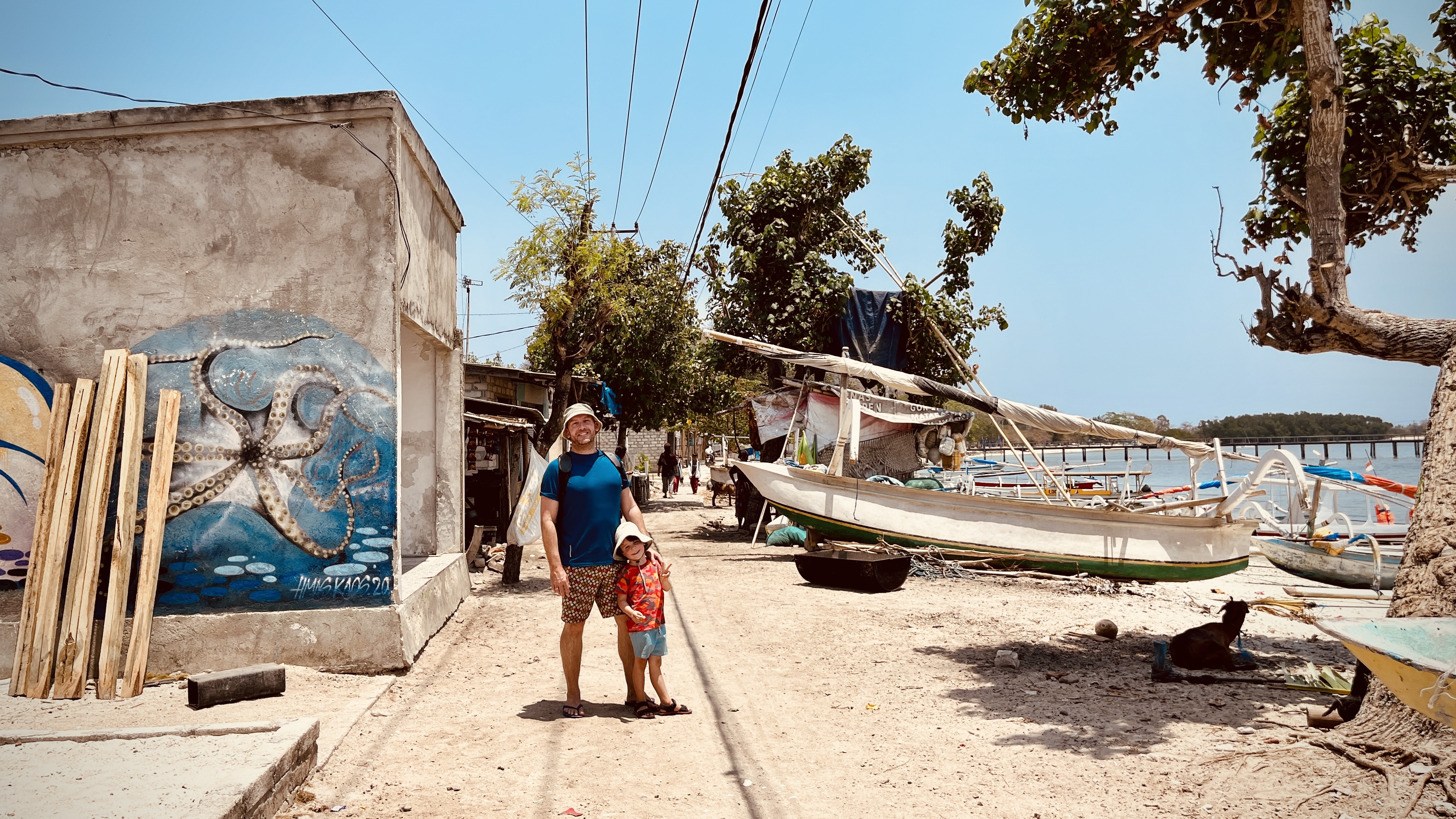
The day after our snorkel trip we set out to explore Gede on foot. We covered 9km of beaches and paths in 35 degree heat. Finn was a trooper.





 The Whiteleys in Asia